Cardiovascular Technologist: The Complete Career Guide
A cardiovascular technologist is the specialized allied-health professional who runs the tests and assists the procedures that keep cardiology moving — from ECGs and echocardiograms to standing shoulder-to-shoulder with a cardiologist in the catheterization lab.
- What is a cardiovascular technologist?
- What does a cardiovascular technologist do?
- Invasive, non-invasive, and vascular: the three tracks
- Inside the invasive track: the cath lab technologist
- Inside the non-invasive and vascular tracks
- Schooling and how to become a cardiovascular technologist
- Credentials and certification
- Salary and job outlook
- Key takeaways
What is a cardiovascular technologist?
A cardiovascular technologist (sometimes called a cardiovascular technician, CVT, or cardiac cath lab tech) is an allied-health professional trained to perform diagnostic tests on the heart and blood vessels and to assist physicians during invasive cardiac procedures. If you have ever had electrodes stuck to your chest for a tracing, had an ultrasound wand glide over your ribs to picture your heart, or been wheeled into a cath lab for a stent, a cardiovascular technologist was almost certainly part of that care.
The role sits at the crossroads of technology and bedside medicine. On any given day, a technologist might set up monitoring equipment, capture and optimize images of a beating heart, prep a sterile field, hand catheters to a cardiologist, record pressure and flow data, and reassure an anxious patient — all while watching the rhythm on the monitor for the first sign of trouble. It is hands-on, fast-paced, and genuinely consequential work.
Because "cardiovascular technologist" is an umbrella term, it helps to understand that the field branches into distinct tracks — invasive, non-invasive cardiac, and vascular — each with its own tools, credentials, and daily rhythm. This guide walks through what they do, how the specialties differ, the schooling, salary, and how to become one, and how the career connects to the deeper cardiac knowledge tested on credentialing exams.
This article is educational, written for students, career-changers, and clinicians preparing for exams such as the RCIS. It is not medical or career-placement advice; program requirements and compensation vary by region, employer, and year.
What does a cardiovascular technologist do?
Ask what a cardiovascular technologist does and the honest answer is: it depends on the specialty. But across the field, a few core responsibilities recur. Technologists prepare patients and explain procedures, operate and troubleshoot sophisticated imaging and monitoring equipment, acquire high-quality diagnostic data, and support the physician-led team during interventions.
In the electrophysiology and rhythm side of the job, a technologist must read a monitor fluently — recognizing normal sinus rhythm, catching the irregular chaos of atrial fibrillation, or sounding the alarm the instant a lethal ventricular tachycardia appears. That skill rests on solid ECG interpretation and a working command of rhythm interpretation.
Typical duties include:
- Patient preparation — verifying identity and consent, positioning, shaving and prepping access sites, placing electrodes and monitoring lines.
- Diagnostic acquisition — recording 12-lead ECGs, performing echocardiograms or vascular ultrasound, running stress tests, or capturing Holter and event-monitor data.
- Procedural assistance — scrubbing in, maintaining the sterile field, operating fluoroscopy and hemodynamic recording systems, and passing catheters, wires, and devices to the cardiologist.
- Data and hemodynamics — measuring and documenting pressures, gradients, and oxygen saturations, and recognizing when the numbers signal a problem.
- Monitoring and safety — watching vital signs and rhythm continuously, anticipating complications, and being ready to help during emergencies.
The invasive side in particular blends physiology and manual skill. Understanding pressure and flow — the material in our hemodynamics guide — is what lets a technologist tell a normal wedge tracing from a giant v wave, or know why a square-root sign matters.
Invasive, non-invasive, and vascular: the three tracks
The single most important distinction to grasp early is the split between invasive, non-invasive, and vascular cardiovascular technology. These are not just job titles — they define your training path, your credential, your work environment, and whether you spend your days behind a lead apron or beside an ultrasound cart.
| Track | What it involves | Typical setting | Common credential |
|---|---|---|---|
| Invasive cardiovascular | Assisting cardiac catheterization, angioplasty, stenting, hemodynamic monitoring | Cardiac cath lab | RCIS |
| Non-invasive cardiac | Echocardiography, stress testing, ECG, Holter monitoring | Echo lab, clinic, exercise lab | RCS / RDCS |
| Vascular | Ultrasound of arteries and veins outside the heart (carotids, legs, aorta) | Vascular lab | RVT / RVS |
Invasive technologists work in the cardiac cath lab, the high-energy suite where catheters are threaded through blood vessels into the heart. They assist with diagnostic angiograms and interventions like the stenting compared in our overview of PCI versus cardiac catheterization, help place devices such as the intra-aortic balloon pump, and record data from a Swan-Ganz catheter. The invasive path is the one most associated with the Registered Cardiovascular Invasive Specialist (RCIS) credential.
Non-invasive cardiac technologists — often called cardiac sonographers or echo techs — image the heart from outside the body. Their signature test is the echocardiogram, and their world is explored in depth in our companion guides to the echocardiogram and the broader role of the cardiovascular ultrasound technologist.
Vascular technologists (vascular sonographers) use ultrasound to study blood vessels away from the heart — carotid arteries in the neck, the abdominal aorta, and the arteries and veins of the legs — hunting for narrowing, blockages, aneurysms, and clots. It is a distinct specialty with its own registry credential.
Inside the invasive track: the cath lab technologist
The invasive cardiovascular technologist works where cardiology gets physical. In the catheterization laboratory, a cardiologist threads thin catheters from an artery in the wrist or groin up into the coronary arteries and heart chambers, and the technologist is an essential member of that team — often rotating through three roles: scrub, monitor, and circulate.
The scrub role means gowning in sterile attire and working directly at the table, handing catheters, guidewires, balloons, and stents to the physician and managing the sterile field. The monitoring role means running the hemodynamic recording system — capturing and labeling the pressure waveforms as the catheter moves from the right atrium to the right ventricle to the pulmonary artery and wedge position, or across the aortic valve into the left ventricle. The circulating role means moving around the room, fetching supplies, managing medications with the nurse, and documenting.
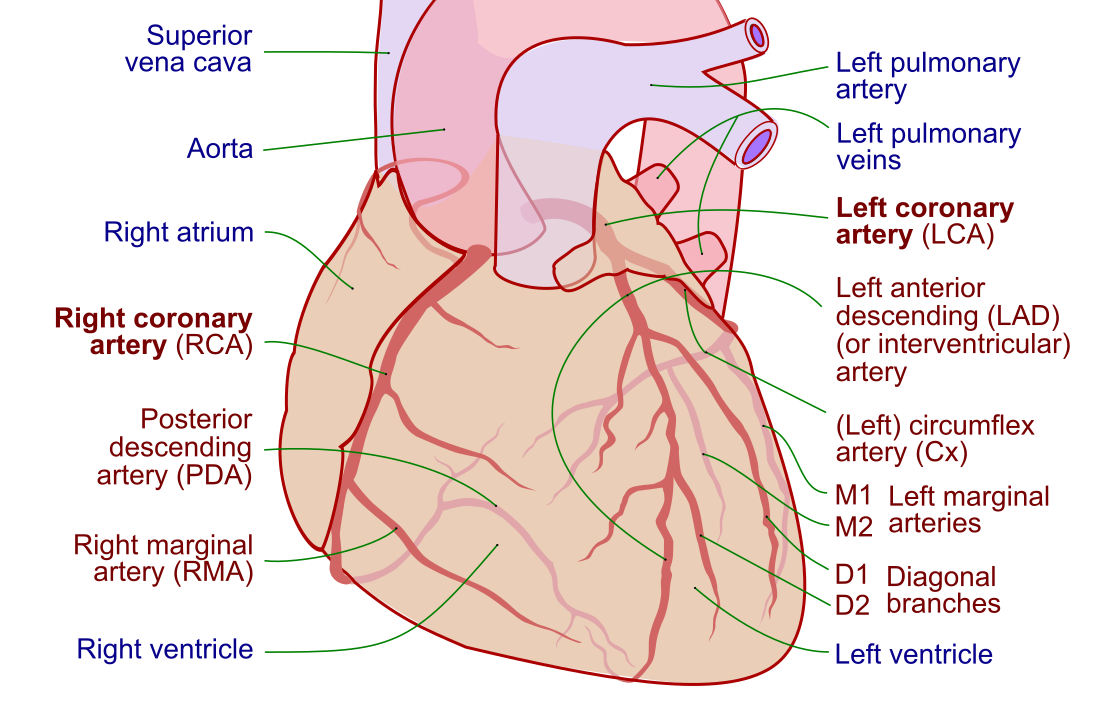
Fluency in coronary artery anatomy is non-negotiable here: the technologist must recognize which vessel is being imaged and understand why a blockage in one location threatens a large territory of muscle. That anatomy connects directly to coronary artery disease and to the acute emergency of myocardial infarction — when a STEMI patient arrives, the cath lab team may be activated within minutes, and reading the STEMI ECG quickly can shape the response.
Because the cath lab uses X-ray fluoroscopy, radiation safety is a daily discipline — lead aprons, thyroid shields, dosimeters, and the "as low as reasonably achievable" principle. Handling the pharmacology is part of the job too, from the nitroglycerin used for coronary spasm to the wider array of cath lab medications. To practice interpreting the pressure tracings central to this role, our hemodynamics practice questions are a good proving ground.
Inside the non-invasive and vascular tracks
Not every cardiovascular technologist works under fluoroscopy. The non-invasive and vascular tracks are image-driven, radiation-free, and built around the ultrasound probe rather than the catheter.
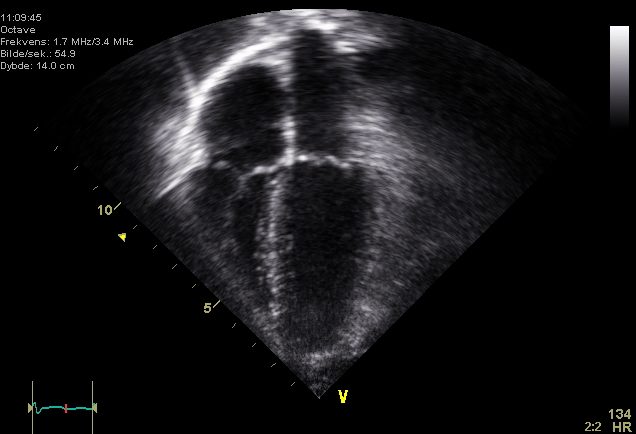
A non-invasive cardiac technologist — a cardiac sonographer — spends the day acquiring echocardiograms: sliding a transducer across a patient's chest to capture moving pictures of the chambers, valves, and walls, then adding Doppler to measure blood flow. From those images come the numbers cardiologists live by, including the ejection fraction that summarizes how forcefully the left ventricle pumps. Cardiac sonographers also run stress tests, comparing heart function at rest and under exertion to unmask coronary disease, and they capture Holter and event-monitor recordings to catch elusive arrhythmias.
A vascular technologist applies the same ultrasound skill set to the body's blood vessels outside the heart. Using grayscale imaging plus color and spectral Doppler, they assess the carotid arteries for stroke-causing plaque, the leg veins for deep vein thrombosis, the leg arteries for peripheral artery disease, and the abdominal aorta for aneurysm. It is detective work: interpreting waveform shapes and velocities to decide whether flow is normal, narrowed, or absent.
Both tracks reward pattern recognition and a steady hand. They also demand a firm grasp of cardiac anatomy and the conduction system, because interpreting what you see on the screen means understanding the structure and electrical wiring behind it. Sonography is physically demanding in its own way — years of scanning can strain the shoulder and wrist — so ergonomics matter as much as image quality.
Schooling and how to become a cardiovascular technologist
Here is the path most people follow to answer the question of how to become a cardiovascular technologist, with the schooling laid out step by step. The good news: this is one of the faster routes into a skilled, well-paid healthcare career, often achievable in about two years.
- Finish a high-school diploma or GED with a solid footing in biology, anatomy, algebra, and physics — the foundations for the physiology and imaging physics ahead.
- Complete an accredited program. Most technologists earn an associate degree (about two years) or a certificate from a program in cardiovascular technology, diagnostic cardiac sonography, or vascular technology. Look for programs accredited by CAAHEP, ideally with CoARC or JRC-CVT recognition — accreditation is what makes you eligible for the best credentialing exams and jobs.
- Choose (or specialize within) a track. Many programs let you concentrate in invasive, non-invasive echo, or vascular during clinical rotations.
- Complete supervised clinical hours. Hands-on rotations in real labs are where the classroom becomes muscle memory — and where employers often first meet future hires.
- Earn your professional credential. Sit for the registry exam that matches your track (see the credential section below). For the invasive path, that is the RCIS.
- Get licensed if your state requires it, obtain BLS/ACLS certification, and apply for jobs — hospitals, cath labs, imaging centers, and clinics all hire.
Some people enter through a related field. Nurses, radiologic technologists, respiratory therapists, and paramedics sometimes cross-train into the cath lab, and a few programs offer bachelor's degrees for those aiming at leadership or education. There is no single mandatory route, but graduating from an accredited program and holding a registry credential is the combination employers trust most.
Credentials and certification
Credentials are the currency of this field. The right registry credential signals competence, unlocks better jobs, and in many states is effectively required. Which one you pursue depends entirely on your track.
| Credential | Full name | Track | Awarding body |
|---|---|---|---|
| RCIS | Registered Cardiovascular Invasive Specialist | Invasive (cath lab) | CCI |
| RCES | Registered Cardiac Electrophysiology Specialist | Invasive (EP) | CCI |
| RCS | Registered Cardiac Sonographer | Non-invasive echo | CCI |
| RDCS | Registered Diagnostic Cardiac Sonographer | Non-invasive echo | ARDMS |
| RVT / RVS | Registered Vascular Technologist / Specialist | Vascular | ARDMS / CCI |
For the invasive track, the marquee credential is the RCIS, awarded by Cardiovascular Credentialing International (CCI). The exam tests exactly the knowledge this career demands: cardiac anatomy and physiology, hemodynamics, pharmacology, ECG and arrhythmia recognition, catheterization technique, and patient care. Passing it demonstrates you can function safely and competently in the cath lab.
Preparing for the RCIS means mastering the concepts woven throughout this site — from the ECG guide to the physiology behind conditions like heart block and procedures such as cardiac ablation and the pacemaker. Because credentialing standards and continuing-education requirements evolve, always confirm the current exam content outline and eligibility rules directly with the awarding body before you register.
Salary and job outlook
Now for the question everyone asks: the salary. Cardiovascular technologist pay is attractive for a career you can enter in about two years, though figures vary widely by specialty, credential, experience, geography, and shift.
In the United States, cardiovascular technologists and technicians broadly earn a median annual wage in roughly the $60,000 to $80,000 range, with experienced specialists and those in high-cost regions earning well above that. Two patterns hold consistently:
- Invasive (cath lab) specialists tend to command higher pay than general technicians, reflecting the complexity, credentialing, and on-call demands of the role.
- Cardiac sonographers (echo) are also well compensated, frequently overlapping with or exceeding invasive pay depending on market and credential.
On-call and shift differentials matter more here than in many allied-health jobs. Cath labs run around the clock for heart-attack emergencies, so invasive technologists often take call, and that call pay can meaningfully boost annual earnings.
The outlook is favorable. An aging population, the high prevalence of heart disease, and the steady growth of both interventional cardiology and cardiac imaging keep demand strong. The U.S. Bureau of Labor Statistics projects continued growth for cardiovascular technologists and diagnostic sonographers over the coming decade — faster than the average across all occupations. As always, treat these figures as directional; consult current BLS data and local postings for numbers specific to your area and year.
Key takeaways
- A cardiovascular technologist performs cardiac tests and assists heart procedures, working at the intersection of technology and hands-on patient care.
- What they do ranges from recording ECGs and echocardiograms to scrubbing in and recording hemodynamics during catheterization.
- The field splits into invasive (cath lab, RCIS), non-invasive cardiac (echo, RCS/RDCS), and vascular (RVT/RVS) tracks — each with distinct tools and credentials.
- Schooling is typically a two-year associate degree or certificate from a CAAHEP-accredited program, followed by supervised clinical hours.
- How to become one: finish the accredited program, complete clinical rotations, and pass the registry exam for your track (RCIS for the invasive path).
- Salary commonly falls in the ~$60,000–$80,000 range, higher for invasive specialists and experienced sonographers, with a favorable job outlook.
- Strong ECG, anatomy, and hemodynamics knowledge is the backbone of the role — and the core of the RCIS exam.
- This content is educational, not medical or career-placement advice; verify program, credential, and salary details with current official sources.
Preparing for the invasive credential?
Study the RCIS exam free with practice questions and explanations.
Open RCIS Practice →Frequently asked questions
What does a cardiovascular technologist do?
A cardiovascular technologist performs diagnostic tests on the heart and blood vessels and assists physicians during invasive cardiac procedures. Depending on their specialty, they may record ECGs and echocardiograms, run stress tests, perform vascular ultrasound, or scrub into the cath lab to help with angiograms and stenting while monitoring pressures, rhythm, and vital signs.
What is the difference between invasive and non-invasive cardiovascular technology?
Invasive cardiovascular technologists work in the cardiac cath lab, assisting procedures where catheters are threaded into the heart and blood vessels — they are typically credentialed as an RCIS. Non-invasive technologists image the heart from outside the body using ultrasound (echocardiography) and stress testing, and are credentialed as cardiac sonographers (RCS or RDCS). Vascular technology is a third track focused on ultrasound of arteries and veins outside the heart.
How do you become a cardiovascular technologist?
Most people complete an accredited associate degree or certificate program in cardiovascular technology, diagnostic cardiac sonography, or vascular technology (usually about two years), finish supervised clinical rotations, and then pass the registry exam that matches their track — the RCIS for the invasive path. Adding BLS/ACLS certification and any state license required completes the path to employment.
How long does it take to become a cardiovascular technologist?
The typical path takes about two years through an accredited associate degree or certificate program, including clinical rotations. Some accelerated certificate options exist for people already working in healthcare, and bachelor's degrees take about four years for those pursuing leadership or education roles.
How much does a cardiovascular technologist make?
In the United States, cardiovascular technologists broadly earn a median annual wage in roughly the $60,000 to $80,000 range, with invasive cath lab specialists and experienced cardiac sonographers often earning more. On-call and shift differentials, credentials, experience, and geography all influence pay, so consult current Bureau of Labor Statistics data and local postings for your area.
What is the RCIS credential?
RCIS stands for Registered Cardiovascular Invasive Specialist, a credential awarded by Cardiovascular Credentialing International (CCI) for professionals in the invasive (cath lab) track. The exam covers cardiac anatomy and physiology, hemodynamics, pharmacology, ECG and arrhythmia recognition, catheterization technique, and patient care, and it is the standard credential employers look for in cath lab technologists.
Is a cardiovascular technologist the same as a cardiac sonographer?
Not exactly. "Cardiovascular technologist" is an umbrella term, and a cardiac sonographer is one type — the non-invasive specialist who performs echocardiograms. Other cardiovascular technologists work in the invasive cath lab or in vascular ultrasound. Job titles overlap between employers, so it is important to read the required credential and duties rather than relying on the title alone.
Do cardiovascular technologists work with radiation?
Invasive cardiovascular technologists do, because the cath lab uses X-ray fluoroscopy to guide catheters. They protect themselves with lead aprons, thyroid shields, and dosimeters, and follow the ALARA (as low as reasonably achievable) principle. Non-invasive cardiac and vascular technologists use ultrasound, which involves no ionizing radiation.
What skills do you need to be a cardiovascular technologist?
Key skills include reading ECGs and recognizing arrhythmias, understanding cardiac anatomy and hemodynamics, operating imaging and monitoring equipment, maintaining sterile technique, and staying calm under pressure. Strong communication and patient-care instincts matter just as much, since technologists often reassure anxious patients and act as an extra set of clinical eyes during procedures.
Sources & further reading
- Cardiovascular Credentialing International (CCI)
- American College of Cardiology
- American Heart Association
- MedlinePlus (U.S. National Library of Medicine)
External links are provided for reference; always confirm current details with the official source.