Atrial Fibrillation (AFib): ECG, Risks & Treatment
Atrial fibrillation (AFib or AF) is the most prevalent sustained cardiac arrhythmia encountered in clinical practice and the cardiac catheterization laboratory. Characterized by chaotic, rapid atrial electrical activation leading to uncoordinated mechanical contraction, AFib substantially increases the risk of stroke, heart failure, and hemodynamic instability. This comprehensive guide covers diagnostic ECG criteria, clinical staging, stroke risk stratification, rate versus rhythm control strategies, catheter ablation, and essential RCIS exam concepts.
- What Is Atrial Fibrillation?
- Electrocardiographic Criteria and Recognition
- Pathophysiology: Triggers and Substrate Remodeling
- Clinical Classification and the 2023 ACC/AHA Stages
- Thromboembolic Risk and Anticoagulation Management
- Rate Control vs Rhythm Control Strategies
- Catheter Ablation and EP Interventions
- RCIS Exam and Cath Lab Clinical Pearls
- Key Takeaways for Exam Success
What Is Atrial Fibrillation?
Atrial fibrillation (AFib or AF) is a supraventricular tachyarrhythmia characterized by rapid, chaotic, and disorganized electrical activation of the atria with subsequent deterioration of atrial mechanical function. In a normal cardiac cycle, electrical depolarization originates in the sinoatrial (SA) node and propagates systematically across the right and left atria, culminating in a synchronous mechanical contraction known as the atrial kick. In atrial fibrillation, organized SA nodal pacemaking is supplanted by multiple wandering reentrant wavelets and rapid ectopic triggers, firing at rates typically between 400 and 600 impulses per minute.
Because the atria fibrillate rather than contract cohesively, the ventricles are subjected to a continuous, bombardment of electrical signals at the atrioventricular (AV) node. The AV node acts as an electrical gatekeeper with intrinsic decremental conduction properties, allowing only a fraction of these impulses to penetrate to the Bundle of His and Purkinje network. This variable filtering results in the hallmark physical and electrocardiographic finding of AFib: an irregularly irregular ventricular rhythm.
Hemodynamically, the loss of synchronous atrial contraction deprives the left ventricle of the final 15% to 30% of its end-diastolic filling volume (atrial kick). In patients with normal ventricular compliance, this loss may be tolerated with mild symptoms; however, in patients with non-compliant, hypertrophied ventricles (such as those with aortic stenosis, hypertensive heart disease, or diastolic heart failure), the loss of atrial kick dramatically reduces stroke volume and cardiac output, frequently precipitating acute pulmonary congestion and hypotension.
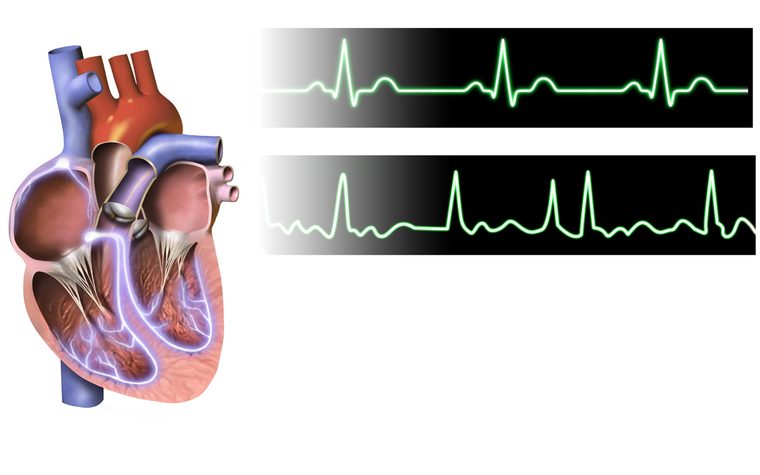
Electrocardiographic Criteria and Recognition
The definitive diagnosis of atrial fibrillation requires electrocardiographic documentation. On a 12-lead electrocardiogram or single-lead telemetry strip, AFib is defined by three classical diagnostic criteria:
- Irregularly Irregular R–R Intervals: There is no discernible pattern or recurring cycle to the spacing between QRS complexes. If caliper measurements reveal a repeating mathematical pattern, an alternative rhythm (such as atrial flutter with variable block or multifocal atrial tachycardia) must be considered.
- Absence of Discrete P Waves: Organized P waves with uniform morphology are absent. Instead, the baseline displays rapid, irregular fibrillatory waves (f-waves) varying continuously in amplitude, shape, and timing. These f-waves may appear coarse (>0.5 mm amplitude, often prominent in lead V1) or fine (<0.5 mm, creating a nearly flat baseline).
- Narrow QRS Complex (in the absence of conduction aberrancy): Because ventricular activation proceeds through the normal His-Purkinje network, the QRS duration is typically normal (<0.12 seconds, or 120 ms). However, wide QRS complexes may occur in the setting of pre-existing bundle branch block, rate-related aberrant ventricular conduction (such as Ashman phenomenon), or ventricular pre-excitation (Wolff-Parkinson-White syndrome).
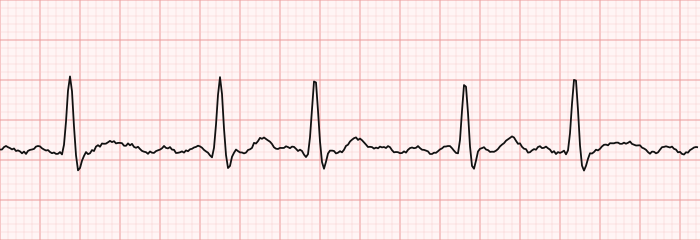
Ventricular rates in untreated atrial fibrillation typically fall into three clinical categories:
| Classification | Ventricular Rate | Clinical Implication |
|---|---|---|
| Rapid Ventricular Response (RVR) | >100 bpm (frequently 130–175 bpm) | Impairs diastolic filling time, increases myocardial oxygen demand, risk of tachycardia-induced cardiomyopathy. |
| Controlled Ventricular Response | 60–100 bpm | Optimal rate target for hemodynamic stability and symptom control. |
| Slow Ventricular Response | <60 bpm | May indicate intrinsic AV nodal disease (sick sinus syndrome / tachy-brady syndrome), excessive nodal blockade, or digoxin toxicity. |
Pathophysiology: Triggers and Substrate Remodeling
The initiation and maintenance of atrial fibrillation require both an initiating trigger and an anatomical substrate capable of sustaining reentrant circuits.
1. Triggers in the Pulmonary Veins: Landmark electrophysiology research established that over 90% of paroxysmal atrial fibrillation episodes are initiated by rapidly firing ectopic pacemakers located within myocardial sleeves that extend from the left atrium into the pulmonary veins. These muscular sleeves exhibit unique electrophysiological properties, including short action potential durations, abrupt fiber orientation shifts, and enhanced automaticity or triggered activity. Less frequently, non-pulmonary vein triggers originate in the superior vena cava, coronary sinus musculature, vein of Marshall, or left atrial posterior wall.
2. Atrial Substrate and Remodeling: Once triggered, the perpetuation of AFib depends on the presence of an altered atrial substrate. The fundamental rule of AF pathophysiology is that 'AF begets AF' — progressive electrical, structural, and autonomic remodeling occurs over time:
- Electrical Remodeling: Within hours of persistent rapid atrial rates, down-regulation of L-type calcium channels and up-regulation of potassium currents shorten the atrial effective refractory period (ERP) and eliminate physiological rate adaptation, facilitating local reentry.
- Structural Remodeling: Chronic atrial stretch, pressure overload, and aging trigger fibroblast proliferation, extracellular matrix deposition, and interstitial fibrosis. This collagen deposition uncouples adjacent myofibrils, creating areas of slow, heterogeneous conduction that sustain multiple wandering wavelets.
- Autonomic Remodeling: Hyper-innervation and localized autonomic imbalance between sympathetic and parasympathetic signaling shorten refractoriness and heighten trigger vulnerability.
Understanding these mechanisms is critical when reviewing cardiac conduction pathways and evaluating patients undergoing catheter cardiac ablation.
Clinical Classification and the 2023 ACC/AHA Stages
Historically, atrial fibrillation has been categorized based on the duration and termination pattern of individual episodes:
| Pattern | Duration & Behavior | Typical Management Focus |
|---|---|---|
| Paroxysmal AF | Terminates spontaneously or with intervention within 7 days of onset (usually <48 hours). | Early rhythm control, trigger suppression, stroke prevention. |
| Persistent AF | Continuous AF sustained for >7 days, requiring electrical or pharmacological cardioversion to terminate. | Rhythm control, cardioversion, substrate modification ablation, stroke prevention. |
| Long-Standing Persistent AF | Continuous AF lasting >12 months where a rhythm control strategy is still actively pursued. | Extensive catheter or surgical ablation, aggressive risk factor management. |
| Permanent AF | AF is accepted by patient and clinician; no further rhythm control interventions are attempted. | Rate control, anticoagulation, symptom optimization. |
The 2023 ACC/AHA/ACCP/HRS Guidelines for the Management of Atrial Fibrillation introduced a comprehensive 4-stage continuum recognizing AFib as a progressive disease requiring early lifestyle and clinical intervention:
- Stage 1 (At Risk for AF): Patients with modifiable risk factors (hypertension, obesity, sleep apnea, sedentary lifestyle, excessive alcohol) without documented arrhythmia.
- Stage 2 (Pre-AF): Evidence of structural heart changes (left atrial enlargement) or subclinical electrical irritability (frequent atrial premature complexes, short atrial runs).
- Stage 3 (AF): Documented clinical atrial fibrillation, subdivided into 3A (Paroxysmal), 3B (Persistent), 3C (Long-standing Persistent), and 3D (Successful AF Ablation).
- Stage 4 (Permanent AF): Established AF with mutual consensus to pursue rate control only.
Thromboembolic Risk and Anticoagulation Management
The most catastrophic clinical consequence of atrial fibrillation is thromboembolic stroke. In the absence of coordinated mechanical contraction, blood stasis occurs within the atria, with more than 90% of non-valvular thrombi forming inside the trabeculated Left Atrial Appendage (LAA). Clots dislodged from the LAA embolize into the systemic circulation, most frequently entering the internal carotid and middle cerebral arteries.
Stroke Risk Stratification (CHA2DS2-VASc): Clinical risk scoring guides the decision for long-term oral anticoagulation:
| Risk Factor | Condition | Points |
|---|---|---|
| C | Congestive Heart Failure / LV dysfunction (LVEF ≤40%) | 1 |
| H | Hypertension (resting BP >140/90 mmHg or treated) | 1 |
| A2 | Age ≥75 years | 2 |
| D | Diabetes Mellitus | 1 |
| S2 | Prior Stroke, Transient Ischemic Attack (TIA), or thromboembolism | 2 |
| V | Vascular Disease (prior MI, peripheral arterial disease, aortic plaque) | 1 |
| A | Age 65–74 years | 1 |
| Sc | Sex Category (Female) | 1 |
Guideline Recommendations for Anticoagulation:
- Score ≥2 in men or ≥3 in women: Oral anticoagulation is strongly recommended (Class I).
- Score = 1 in men or = 2 in women: Anticoagulation should be considered based on individual bleeding risk and patient preference (Class IIa).
- Score = 0 in men or = 1 in women: Omission of anticoagulation is reasonable (Class III).
Direct Oral Anticoagulants (DOACs) vs Warfarin: DOACs (Apixaban, Rivaroxaban, Dabigatran, Edoxaban) are preferred over Vitamin K antagonists (Warfarin) for non-valvular AF due to lower rates of intracranial hemorrhage, predictable pharmacokinetics, and lack of routine INR monitoring. Warfarin remains mandatory for patients with moderate-to-severe mitral stenosis or mechanical prosthetic heart valves (valvular AFib).
Left Atrial Appendage Occlusion (LAAO): For patients with high thromboembolic risk who have clear contraindications to long-term oral anticoagulation (e.g., recurrent life-threatening gastrointestinal bleeding), percutaneous transcatheter LAA occlusion devices (such as the Watchman FLX or Amulet) provide mechanical exclusion of the appendage deployed via transseptal catheterization in the cath lab.
Rate Control vs Rhythm Control Strategies
A fundamental therapeutic decision in managing atrial fibrillation is choosing between rate control (controlling the ventricular response while allowing AF to persist) and rhythm control (restoring and maintaining sinus rhythm). Landmark trials (AFFIRM, RACE) demonstrated comparable mortality between the two in older patients; however, contemporary evidence (EAST-AFNET 4) strongly demonstrates that early rhythm control improves cardiovascular outcomes, reduces stroke, and preserves cognitive function in newly diagnosed AFib.
| Therapeutic Domain | Goals & Indications | Primary Pharmacological & Interventional Tools |
|---|---|---|
| Rate Control | Symptom reduction, prevention of tachycardia-induced cardiomyopathy, hemodynamic stabilization. Target resting HR <110 bpm (lenient) or <80 bpm if symptomatic. | Beta-blockers (Metoprolol, Esmolol), Non-DHP CCBs (Diltiazem, Verapamil), Digoxin (adjunct, esp. in heart failure), Amiodarone (refractory cases). |
| Rhythm Control | Restoration of sinus rhythm, elimination of symptoms, improvement in exercise tolerance, prevention of atrial remodeling. Indicated in symptomatic patients, heart failure, and younger individuals. | Direct Current Cardioversion (DCCV), Antiarrhythmic Drugs (Class IC: Flecainide, Propafenone; Class III: Amiodarone, Sotalol, Dofetilide, Dronedarone), Catheter Ablation. |
The 48-Hour Cardioversion Rule: When planning electrical or pharmacological cardioversion, timing is paramount:
- If AF duration is <48 hours and the patient is low risk, immediate cardioversion can proceed, followed by 4 weeks of anticoagulation.
- If AF duration is ≥48 hours or unknown, immediate cardioversion carries a significant stroke risk from dislodging pre-existing LAA thrombi. The patient must receive either:
- At least 3 consecutive weeks of therapeutic anticoagulation prior to cardioversion; OR
- A Transesophageal Echocardiogram (TEE) to visually exclude LAA thrombus immediately before the procedure.
- Following successful cardioversion, a minimum of 4 weeks of therapeutic anticoagulation is required regardless of baseline CHA2DS2-VASc score due to atrial stunning (delayed return of mechanical function).
Catheter Ablation and EP Interventions
Catheter ablation has evolved into a first-line rhythm-control strategy for symptomatic paroxysmal and persistent atrial fibrillation refractory or intolerant to antiarrhythmic therapy.
Pulmonary Vein Isolation (PVI): The anatomical cornerstone of AF ablation is the electrical disconnection of all four pulmonary veins from the left atrium, preventing ectopic triggers from propagating into the atrial myocardium. This is accomplished using several advanced energy modalities:
- Radiofrequency (RF) Ablation: Point-by-point thermal heating using 3D electroanatomical mapping systems (CARTO, EnSite) with contact-force sensing catheters to create contiguous, transmural linear scars around the pulmonary vein ostia.
- Cryoballoon Ablation: Cryothermal cooling (-40°C to -60°C) applied via an inflatable balloon catheter seated at the antrum of each pulmonary vein, achieving circumferential transmural lesion creation in a single freeze application.
- Pulsed Field Ablation (PFA): A breakthrough non-thermal modality utilizing high-voltage electrical fields (irreversible electroporation) to destabilize cell membranes with high tissue selectivity for myocardium, minimizing collateral damage to adjacent esophagus, phrenic nerve, and pulmonary vein structures.
AV Node Ablation with Permanent Pacemaker ('Ablate and Pace'): For elderly or frail patients with medically refractory rapid AFib who are poor candidates for PVI, radiofrequency ablation of the AV node coupled with implantation of a permanent pacemaker provides complete rate regularization and symptom relief, though anticoagulation must still be maintained.
RCIS Exam and Cath Lab Clinical Pearls
Cardiovascular technologists in the cardiac cath and EP labs must master the hemodynamic, pharmacological, and procedural implications of atrial fibrillation:
- Hemodynamic Waveform Interpretation:
- Right Atrial (RA) and PCWP waveforms lack an a wave (atrial contraction) and show prominent v waves and brisk y descents.
- Left ventricular end-diastolic pressure (LVEDP) measurements must be averaged over multiple cardiac cycles due to beat-to-beat variability in diastolic filling times.
- Fick and thermodilution cardiac output measurements become less reliable during rapid irregular rhythms; thermodilution requires at least 3 to 5 consistent iced/room-temperature saline injections.
- Intraprocedural Anticoagulation: During left-heart and transseptal procedures (PVI, LAAO, MitraClip), continuous unfractionated heparin is administered to maintain an Activated Clotting Time (ACT) >300–350 seconds to prevent thromboembolism on transseptal sheaths and wires.
- Pre-excitation Warning (WPW with AFib): AFib conducting down an accessory pathway (Wolff-Parkinson-White) produces an irregularly irregular, wide-complex tachycardia with variable delta waves at rates exceeding 250–300 bpm. AV nodal blocking agents (adenosine, beta-blockers, diltiazem, verapamil, digoxin) are strictly contraindicated as they shunt all conduction down the accessory pathway, precipitating ventricular fibrillation. The drug of choice is IV Procainamide, or immediate synchronized cardioversion if unstable.
- Post-PVI Complications to Monitor: Cardiac tamponade (transseptal puncture or LA perforation), phrenic nerve injury (diaphragmatic paralysis), pulmonary vein stenosis, and atrio-esophageal fistula (presents 1–4 weeks post-procedure with fever, dysphagia, and stroke).
Key Takeaways for Exam Success
- Atrial fibrillation is characterized by absent P waves, an irregularly irregular R-R interval, and an undulating fibrillatory baseline.
- Loss of atrial kick reduces stroke volume and cardiac output by 15% to 30%, especially in patients with stiff or failing ventricles.
- Over 90% of paroxysmal AF triggers arise from the pulmonary vein sleeves within the left atrium.
- Stroke risk is stratified using the CHA2DS2-VASc score; non-valvular AF indicates DOAC preference over Warfarin.
- The 48-hour cardioversion rule requires either 3 weeks of prior anticoagulation or a TEE to exclude LAA thrombus before elective cardioversion, followed by 4 weeks of mandatory anticoagulation.
- In WPW with pre-excited AFib, AV nodal blockers are contraindicated; use procainamide or synchronized cardioversion.
- During transseptal procedures, maintain ACT >300–350 seconds to prevent catheter-induced thrombosis.
Frequently asked questions
What are the three main ECG criteria for atrial fibrillation?
The three classic ECG criteria are: (1) Irregularly irregular R-R intervals with no repeating cycle, (2) Absence of discrete P waves with replacement by fibrillatory f-waves, and (3) Narrow QRS complexes unless underlying bundle branch block, rate-dependent aberrancy (Ashman phenomenon), or pre-excitation is present.
Why does atrial fibrillation increase the risk of stroke?
Because the atria do not contract effectively, blood pools and stagnates within the left atrium, particularly in the left atrial appendage (LAA). This stasis promotes thrombus formation. If a clot dislodges, it travels through the arterial circulation and lodges in cerebral vessels, causing an ischemic stroke.
What is the CHA2DS2-VASc score and how is it scored?
CHA2DS2-VASc is a clinical risk assessment tool: Congestive heart failure (1), Hypertension (1), Age ≥75 (2), Diabetes (1), Prior Stroke/TIA (2), Vascular disease (1), Age 65-74 (1), and Female sex (1). Scores ≥2 in men or ≥3 in women warrant oral anticoagulation.
What is the difference between rate control and rhythm control in AFib?
Rate control accepts the presence of AFib and uses medications (beta-blockers, diltiazem, verapamil, digoxin) to keep the ventricular rate <110 bpm. Rhythm control actively restores and maintains normal sinus rhythm through electrical cardioversion, antiarrhythmics (amiodarone, flecainide), or catheter ablation (PVI).
What is the 48-hour rule for cardioversion in atrial fibrillation?
If AFib has lasted ≥48 hours or is of unknown duration, elective cardioversion requires either 3 weeks of therapeutic anticoagulation or a transesophageal echocardiogram (TEE) to rule out left atrial thrombus, followed by 4 weeks of anticoagulation post-procedure to guard against atrial stunning.
Why are AV nodal blockers contraindicated in AFib with Wolff-Parkinson-White (WPW)?
In pre-excited AFib, blocking the AV node with drugs like adenosine, diltiazem, verapamil, or beta-blockers directs all electrical traffic through the accessory pathway, which lacks decremental conduction. This can accelerate ventricular rates beyond 300 bpm and trigger fatal ventricular fibrillation.
What is Pulmonary Vein Isolation (PVI)?
PVI is a catheter ablation procedure that creates circumferential scar tissue around the ostia of the pulmonary veins in the left atrium using radiofrequency, cryoablation, or pulsed field ablation. This electrically disconnects the ectopic triggers that initiate atrial fibrillation.
How does atrial fibrillation affect cardiac pressure waveforms in the cath lab?
In AFib, atrial contraction is lost, which eliminates the 'a' wave on right atrial (RA) and pulmonary capillary wedge pressure (PCWP) waveforms. Furthermore, systolic arterial pressures and ventricular diastolic filling pressures vary from beat to beat depending on the preceding R-R interval.
What is the target ACT during transseptal left-heart procedures in AFib patients?
During transseptal procedures such as AFib catheter ablation or Left Atrial Appendage Occlusion (Watchman), an Activated Clotting Time (ACT) >300–350 seconds must be maintained with continuous intravenous heparin to prevent thromboembolic formation on intra-cardiac sheaths and catheters.
Sources & further reading
- Cardiovascular Credentialing International (CCI)
- American College of Cardiology
- American Heart Association
- MedlinePlus (U.S. National Library of Medicine)
External links are provided for reference; always confirm current details with the official source.