RCIS Programs & Invasive Cardiovascular Technology Schools
If you want to work in the cardiac cath lab, the road usually starts with the right school. This guide breaks down accredited RCIS and cardiovascular technology programs, what they cost in time and prerequisites, whether online options are real, and how to choose one you won't regret.
What "RCIS programs" actually means
People search for RCIS programs expecting to find schools that hand you an RCIS at graduation. It's worth clearing up that small confusion first, because it changes how you shop. RCIS — Registered Cardiovascular Invasive Specialist — is a professional credential awarded by Cardiovascular Credentialing International (CCI) after you pass an exam. No school awards it. What schools actually offer is an education program in cardiovascular technology (or invasive cardiovascular technology) that makes you eligible to sit for that exam and prepares you to pass it.
So when someone says "RCIS program," they almost always mean an accredited cardiovascular technology program with an invasive track. Finish the program, meet CCI's eligibility requirements, pass the exam, and you become an RCIS. The credential is what employers hiring for a busy cardiac cath lab want to see; the program is how you get there.
These programs teach the science and skills that invasive work demands: cardiac anatomy and physiology, hemodynamics, ECG interpretation, pharmacology, radiation safety, and hands-on catheterization technique, all layered onto supervised clinical rotations. This article is educational career guidance, not medical or licensing advice — always confirm current requirements directly with CCI and any program before you enroll.
Accreditation: why CAAHEP matters most
If you take one thing from this guide, make it this: accreditation is the single most important feature of any program you consider. For cardiovascular technology, the gold standard is programmatic accreditation by CAAHEP (the Commission on Accreditation of Allied Health Education Programs), granted on the recommendation of its cardiovascular review committee, the JRC-CVT.
Why does it matter so much? Because CCI's most direct eligibility pathway to the RCIS exam runs through graduation from a CAAHEP-accredited program. Attending an unaccredited school can quietly force you onto a slower eligibility route that leans on years of documented work experience instead — or leave you without a clean pathway at all. Many hospitals also prefer, or effectively require, graduates of accredited programs. In short, accreditation protects the very outcome you're paying for.
A quick vocabulary note that trips people up: institutional accreditation (the college as a whole being accredited) is not the same as programmatic accreditation (CAAHEP accrediting the specific cardiovascular program). You want both, but for RCIS eligibility the programmatic CAAHEP stamp on the invasive track is the one that carries weight.
Types of programs and how long they take
There isn't one single mold. Accredited cardiovascular technology programs come in a few shapes, and the right one depends on your background and how fast you want to move. Here's how the common formats compare on length.
| Program type | Typical length | Best suited to |
|---|---|---|
| Associate degree (AAS) in cardiovascular technology | ~2 years | Most newcomers to the field |
| Certificate / post-primary certificate | ~12–22 months | People who already hold a healthcare credential (RN, RT, etc.) |
| Bachelor's degree in cardiovascular technology | ~4 years | Those wanting depth, research, or a leadership track |
| Hospital-based invasive program | ~12–24 months | Learners who want heavy clinical immersion |
The two-year associate degree is the workhorse route and the most common entry point. It bundles general-education credits with the cardiovascular coursework and clinical hours, and it graduates you eligible for the RCIS exam. Certificate programs compress the timeline for people who already have a healthcare foundation — a nurse or radiologic technologist can often skip the general-ed layer and focus purely on the cardiovascular content. Bachelor's programs are less common but appeal to people who want the extra science and a runway toward management or education.
Add the credential step on top and the real-world timeline usually lands around two to four years from your first course to a credentialed job. After graduation, most candidates take a few months of focused review before sitting the exam. Program length is only half the picture; the clinical rotations woven through those months are where classroom theory becomes reflex.
Prerequisites and admission requirements
Admissions vary by school, but the prerequisites cluster around a predictable set of expectations. Knowing them early lets you knock out gaps before you apply rather than losing a cycle.
- High school diploma or GED as the baseline, ideally with solid grades in biology, chemistry, physics, and math.
- College-level prerequisite courses for many associate and certificate programs — commonly anatomy and physiology, algebra or college math, medical terminology, and sometimes physics or introductory chemistry.
- A minimum GPA, frequently in the 2.5–3.0 range for prerequisite coursework, though competitive programs set the bar higher.
- Healthcare exposure — some programs ask for job shadowing, an observation day, or documented time in a clinical setting to confirm you know what you're signing up for.
- Background check, drug screen, immunizations, and CPR/BLS certification, which clinical sites mandate before you can touch patients.
- An entrance exam or interview at more selective programs.
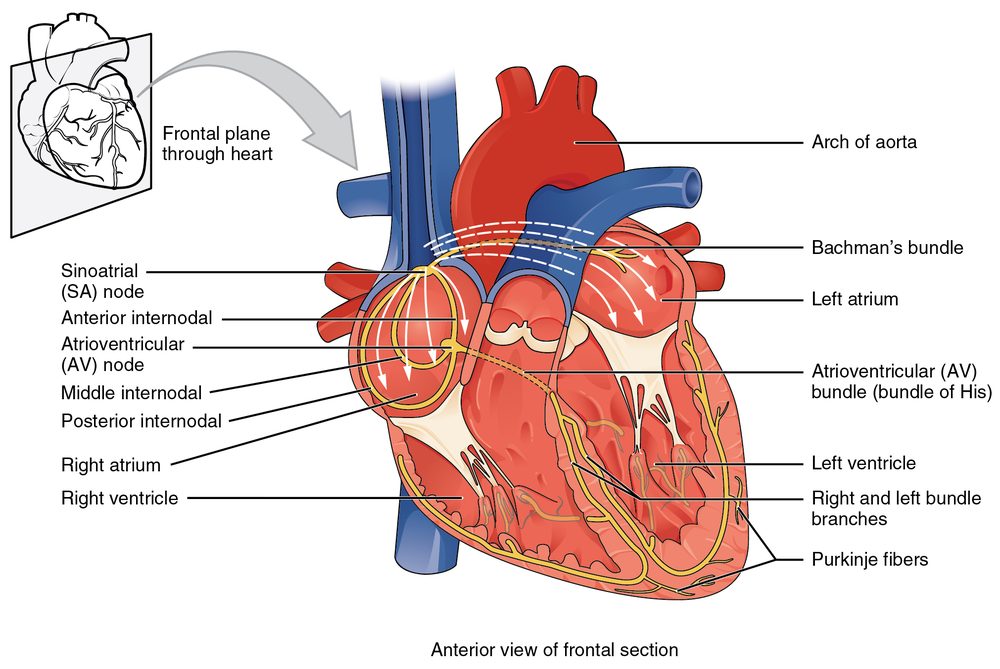
For certificate tracks aimed at credentialed professionals, the prerequisite is the credential itself — an active RN, RRT, RCVT, or similar — which substitutes for much of the general coursework. Because a strong grounding in cardiac science makes everything downstream easier, it helps to arrive already comfortable with the basics. Reviewing a solid cardiac anatomy guide and getting your head around the conduction system before day one turns a brutal first semester into a manageable one.
Are online RCIS programs a real option?
This is one of the most-searched questions, and the honest answer is nuanced. A fully online cardiovascular technology program does not exist — and shouldn't. Invasive cardiac work is hands-on by definition: you cannot learn to manage a sterile field, thread equipment, monitor live pressures, or handle an emergent case through a screen. The clinical and lab components have to happen in person, in a real cath lab, with real patients and supervisors.
What does exist is hybrid delivery. Many accredited programs now teach the didactic portion — anatomy, physiology, hemodynamics, ECG, pharmacology, radiation physics — online or in a flexible format, while requiring you to complete clinical rotations at an approved site near you. That blend can be a real gift for working adults and people who don't live next to a program, because it decouples the lecture hours from a fixed campus schedule while still delivering the mandatory hands-on training.
There's also a distinct online niche worth separating out: exam-prep and review courses. These aren't accredited programs and don't make you eligible for anything; they're study tools for people already eligible, helping them pass the RCIS exam. They're genuinely useful in that role, but don't confuse a prep course with an education program — only the latter satisfies CCI's education pathway.
You can absolutely start building the knowledge base online right now, for free, while you research programs. Working through hemodynamics practice questions and drilling ECG strips gets you fluent in the material long before your first lecture.
What you'll actually study
Curricula differ in the details, but accredited invasive programs converge on the same core competencies — the ones the RCIS exam and the job both demand. Expect the coursework to spiral through these domains, revisiting each at greater depth as clinicals ramp up.
- Cardiovascular anatomy and physiology — chambers, valves, and especially the coronary artery anatomy you'll navigate on angiograms.
- Hemodynamics — pressures, waveforms, and derived numbers like cardiac output, cardiac index, and systemic vascular resistance. This is a heavily tested, high-yield domain.
- Electrocardiography — rhythm interpretation, recognizing atrial fibrillation, ventricular tachycardia, and heart block, and reading a STEMI at a glance.
- Pharmacology — the cath-lab medications that change the physiology you're monitoring, from anticoagulants to vasoactive drugs.
- Radiation physics and safety — because invasive work happens under fluoroscopy.
- Procedures and equipment — how a diagnostic angiogram differs from an intervention, covered in depth when you compare PCI versus diagnostic catheterization.
- Patient care, sterile technique, and emergency response — the human and safety skills that keep a lab running.
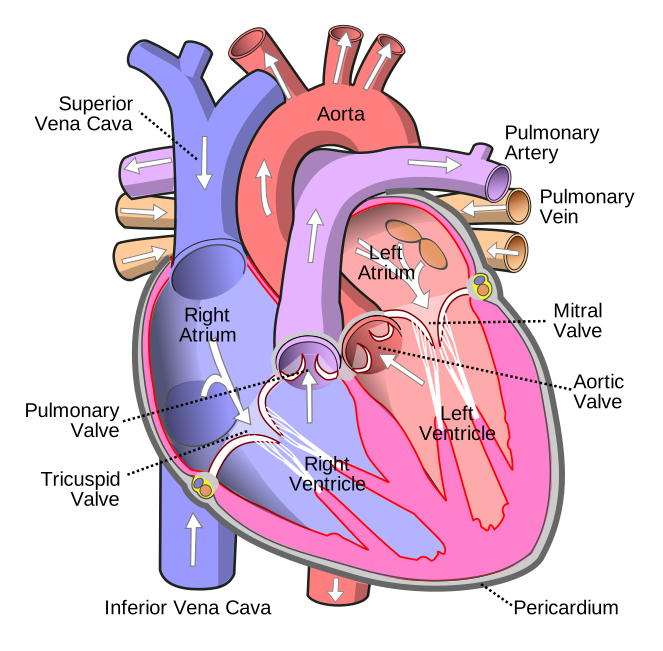
The theme running through all of it is integration: the ECG, the pressure waveform, and the drug on the pump are not separate facts but a single story about one patient. Programs that teach them together — and clinicals that let you see them together — produce technologists who anticipate rather than merely react.
How to choose the right program
Once you've filtered to accredited programs, several factors separate a good fit from a costly mistake. Here's how to choose, roughly in order of importance.
- Accreditation, confirmed. Non-negotiable, and specifically the CAAHEP-accredited invasive track. Everything else is secondary to this.
- Credentialing exam pass rates. Ask for the program's RCIS exam pass rate. A strong, consistent rate signals a curriculum that actually prepares you, not just graduates you.
- Clinical placement. Does the program guarantee clinical sites, or do you have to find your own? Guaranteed, high-quality rotations in busy labs are worth a lot. Ask how many cases students typically log.
- Job-placement outcomes. Where do graduates end up, and how quickly? Programs with strong hospital relationships often feed graduates straight into local labs.
- Format and location. Does a hybrid didactic schedule fit your life? Are clinical sites a reasonable commute? Logistics sink more students than coursework does.
- Cost and financial aid. Compare total cost — tuition, fees, equipment, background checks — against outcomes, not just sticker price. A pricier program with a 90% pass rate can be the better value.
- Cohort size and support. Smaller cohorts often mean more hands-on time and closer mentorship.
Weigh these against your own priorities. Someone tied to a city by family will rank location and hybrid scheduling highly; a recent graduate free to relocate might chase the program with the best pass rate anywhere. There's no universally best school — only the best fit for your constraints and goals.
From graduation to RCIS credential
Finishing the program is a milestone, not the finish line. To turn your education into the credential employers want, you'll apply to CCI for exam eligibility, sit the RCIS exam, and pass it. Graduation from your accredited program is what unlocks the most direct eligibility pathway; CCI confirms the current requirements, which can evolve, so verify them as you approach the end of school.
Most candidates give themselves a focused window — often a couple of months — to review before test day. The exam spans the same domains your program covered, with hemodynamics, ECG, and procedural knowledge featuring heavily. This is where deliberate, question-based practice pays off. Drilling banks of hemodynamics problems and ECG questions turns shaky recall into automatic recognition, and working through the ECG interpretation fundamentals closes the gaps a fast-moving program inevitably leaves.
Once you pass, you're an RCIS — and the credential travels well. It qualifies you for cath-lab roles, and many technologists later add a second credential (echo, EP, or vascular) to broaden their options. If the electrophysiology world appeals, procedures like cardiac ablation and devices like the pacemaker point toward the RCES pathway; if imaging draws you, the cardiovascular ultrasound technologist route overlaps with echo credentials. Your first RCIS is often just the first of several doors.
Key takeaways
- "RCIS programs" means accredited cardiovascular technology programs with an invasive track — no school awards the RCIS itself; you earn it by passing CCI's exam after you graduate.
- CAAHEP accreditation of the invasive track is the most important thing to verify, because it unlocks the most direct RCIS exam eligibility pathway and is preferred by employers.
- Length ranges from ~12-month certificates (for existing healthcare pros) to ~2-year associate degrees (the common route) to ~4-year bachelor's degrees; plan on two to four years total including exam prep.
- Prerequisites typically include a diploma/GED, science and math coursework, a minimum GPA, health and background clearances, and sometimes shadowing or an entrance exam.
- Fully online invasive programs don't exist — clinical hours must be in person — but hybrid programs teach the didactic portion online, and separate online prep courses help you pass the exam.
- To choose well, prioritize accreditation, RCIS pass rates, guaranteed clinical placement, job outcomes, format, and total cost over sticker price.
- This article is educational career guidance, not medical or licensing advice; always confirm current requirements with CCI, CAAHEP, and each program.
Start preparing while you study
Practise the exact domains your program covers — free.
Open Practice Hub →Frequently asked questions
Are there fully online RCIS programs?
No. There is no fully online cardiovascular technology program that makes you eligible for the RCIS, because invasive cardiac work requires hands-on clinical training that can't happen through a screen. What you can find are hybrid programs that deliver the classroom portion (anatomy, hemodynamics, ECG, pharmacology) online while requiring in-person clinical rotations at an approved site. Separately, online RCIS exam-prep courses exist, but those are study tools, not accredited education programs.
How long does an RCIS program take?
Most people finish in about two years through an associate degree, which is the common entry point. Certificate programs for those who already hold a healthcare credential can take roughly 12 to 22 months, while a bachelor's degree runs about four years. Once you add a few months of focused exam preparation after graduation, a realistic end-to-end timeline from first course to credentialed job is about two to four years.
What does CAAHEP accreditation mean and why does it matter?
CAAHEP is the Commission on Accreditation of Allied Health Education Programs, and it accredits specific cardiovascular technology programs on the recommendation of the JRC-CVT committee. It matters because graduating from a CAAHEP-accredited invasive program unlocks the most direct pathway to sit for the RCIS exam, and many hospitals prefer or require accredited-program graduates. Attending an unaccredited program can force you onto a slower experience-based eligibility route or leave you without a clean pathway.
What are the prerequisites for an RCIS program?
Typical prerequisites include a high school diploma or GED, college-level coursework such as anatomy and physiology and college math, and a minimum GPA often around 2.5 to 3.0. Programs also commonly require a background check, drug screen, up-to-date immunizations, and CPR/BLS certification before clinical rotations, and some ask for job shadowing or an entrance exam. Certificate tracks instead require an existing healthcare credential like an RN or RRT. Requirements vary by school, so check each program's current admissions page.
Do I need a degree to become an RCIS?
In practice you need to complete an accredited education program, and for most people that's an associate degree in cardiovascular technology. Certificate programs are an option if you already hold a related healthcare credential, and they don't award a new degree but do satisfy the education pathway. While CCI has an alternative experience-based eligibility route, graduating from a CAAHEP-accredited program is the cleanest and most reliable way to qualify for the RCIS exam and to be hired.
How do I choose the best RCIS program?
Start by confirming the invasive track is currently CAAHEP-accredited, then compare programs on RCIS exam pass rates, clinical placement (guaranteed sites and case volume), job-placement outcomes, format and location, and total cost versus outcomes. Ask admissions reps pointed questions about recent pass rates and whether they arrange your clinical rotations. The best program is the one whose accreditation, results, and logistics fit your specific goals and constraints, not simply the cheapest or nearest.
Is an RCIS program hard?
It's demanding but manageable with preparation. The coursework moves quickly through dense material like hemodynamics, ECG interpretation, pharmacology, and radiation physics, and the clinical rotations add the pressure of real patients and sterile technique. Students who arrive already comfortable with cardiac anatomy and basic ECG tend to have a much smoother first semester, which is why reviewing those fundamentals and drilling practice questions before you start pays off substantially.
What's the difference between an RCIS program and RCIS certification?
An RCIS program is the accredited education you complete at a school — the coursework and clinical rotations in cardiovascular technology. RCIS certification is the credential awarded by Cardiovascular Credentialing International (CCI) after you pass its exam. The program makes you eligible and prepares you; passing the exam is what actually makes you a Registered Cardiovascular Invasive Specialist. No school confers the RCIS directly.
Can I get into an RCIS program with a healthcare background?
Yes, and it can shorten your path considerably. Many programs offer certificate or advanced-standing tracks for people who already hold a credential such as a registered nurse or radiologic technologist. These tracks let you skip much of the general-education layer and focus on the cardiovascular-specific content and clinicals, often finishing in roughly 12 to 22 months instead of two years. Confirm each program's specific advanced-standing requirements when you apply.
Sources & further reading
- Cardiovascular Credentialing International (CCI)
- American College of Cardiology
- American Heart Association
- MedlinePlus (U.S. National Library of Medicine)
External links are provided for reference; always confirm current details with the official source.