Pacemaker: Types, How It Works & Why It's Needed
A pacemaker is a small implanted device that watches the heart's own electrical activity and delivers a tiny, precisely timed impulse whenever the natural rhythm runs too slow or fails to conduct — turning a dangerously sluggish heartbeat back into a reliable one.
What Is a Pacemaker?
A pacemaker is an implantable electronic device that generates small electrical pulses to make the heart contract when its own rhythm is too slow or unreliable. At its simplest, the system has two parts: a pulse generator — a sealed titanium can holding a battery and a tiny computer — and one or more insulated leads that carry the impulse from the generator to the heart muscle and carry the heart's own signals back for the device to read.
The device does two jobs at once. It senses the heart's intrinsic electrical activity beat by beat, and it paces — fires an impulse — only when the heart fails to produce a beat on its own within an expected window. Because it holds its fire whenever the native rhythm is adequate, a modern pacemaker is best thought of as a demand backup rather than a metronome that overrides the heart. Understanding how the heart normally generates and conducts its own signals, covered in our overview of the cardiac conduction system, makes every pacemaker concept easier to follow.
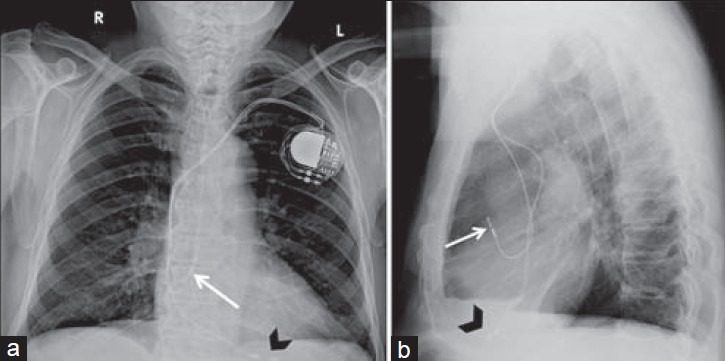
Pacemakers are among the most common cardiac implants worldwide, and for the registered cardiovascular invasive specialist they show up constantly — on chest films, on the monitor as a paced rhythm, and as a device the lab may implant or interrogate. This article is educational content written for RCIS exam preparation; it is not medical advice, and every clinical decision belongs to the treating team following current guidelines.
Why Someone Needs a Pacemaker: Bradycardia and Block
Pacemakers exist to fix a heart that beats too slowly or conducts too poorly. The umbrella term is bradycardia — a resting heart rate under 60 beats per minute — but the number alone is not the problem. A trained athlete may sit comfortably at 45 bpm; what matters is whether the slow rate causes symptoms such as fatigue, lightheadedness, fainting (syncope), shortness of breath, or confusion, and whether the slowing is expected to persist.
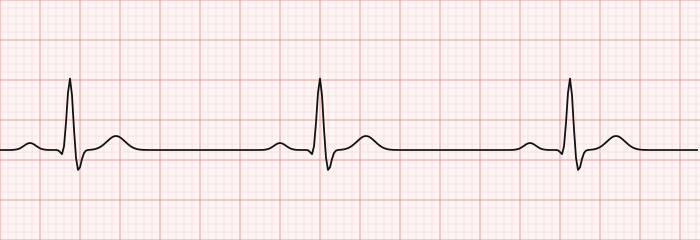
Current guidance from the major cardiology societies reserves permanent pacing for bradycardia that is both symptomatic and not caused by a reversible problem — because low potassium, an overdose of rate-slowing drugs, hypothyroidism, or acute ischemia can all mimic a pacing indication yet resolve once treated. The classic durable indications include:
- Sick sinus syndrome — a failing sinus node that produces inappropriately slow rates, long pauses, or alternating fast-slow rhythms.
- High-grade AV block — second-degree (Mobitz II) and third-degree (complete) heart block, where impulses from the atria fail to reach the ventricles.
- Symptomatic chronotropic incompetence — the heart cannot speed up appropriately with exertion.
- Slow ventricular response in atrial fibrillation with symptomatic pauses.
How a Pacemaker Works
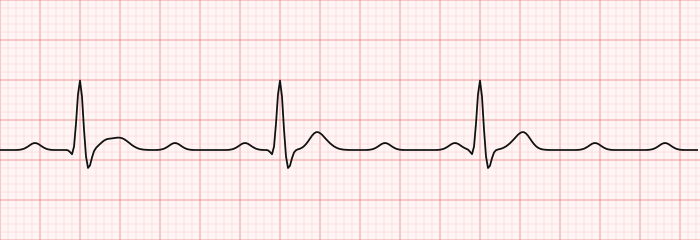
To understand how a pacemaker works, picture a continuous loop of listening and, only when necessary, acting. The lead tip rests against the endocardium (the inner heart lining), and through it the generator constantly samples the local electrical signal. This is sensing. When the device detects a native beat, it does nothing and simply resets its internal timer. This is why a healthy intrinsic rhythm passes through a pacemaker untouched.
If the timer runs out before a native beat arrives — meaning the heart has failed to fire on schedule — the generator delivers a brief, low-energy electrical pulse. That impulse depolarizes the nearby muscle, the wave of depolarization spreads, and the chamber contracts. A successful pulse that produces a heartbeat is said to have achieved capture. Sensing and capture are the two functions every pacemaker check verifies, and failures of either are the core troubleshooting scenarios on the RCIS blueprint.
Two more ideas complete the picture. First, the pulse must exceed the capture threshold — the minimum energy needed to reliably depolarize the muscle — and the device is programmed with a safety margin above it to preserve battery life without losing capture. Second, most modern devices are rate-responsive: a sensor (usually detecting body motion or breathing) recognizes exertion and raises the paced rate so the patient can climb stairs or exercise. That mimics the way a healthy sinus node speeds up, and it is why understanding rate, filling, and output — reviewed in our hemodynamics guide — matters when a device is programmed.
| Function | What it means | Why it matters |
|---|---|---|
| Sensing | Detecting the heart's own beats | Prevents the device from firing on top of native beats |
| Pacing | Delivering an impulse when no beat occurs | Restores an adequate heart rate |
| Capture | A pulse that actually produces a contraction | Confirms the impulse is doing its job |
| Threshold | Minimum energy needed for capture | Sets programmed output and battery drain |
| Rate response | Raising the paced rate with activity | Allows normal exertion in patients who cannot speed up on their own |
Types of Pacemaker
The main types of pacemaker are distinguished by how many chambers they pace and sense. Choosing between them is a matter of matching the device to the patient's specific conduction problem.
- Single-chamber pacemaker — one lead, placed in either the right atrium or (more often) the right ventricle. An atrial lead suits isolated sinus node disease with intact AV conduction; a ventricular lead suits atrial fibrillation with a slow ventricular response.
- Dual-chamber pacemaker — two leads, one in the right atrium and one in the right ventricle. This is the most common configuration because it preserves the natural timing between atrial and ventricular contraction (AV synchrony), which improves filling and comfort. It is the standard choice for AV block with a functioning sinus node.
- Biventricular pacemaker (cardiac resynchronization therapy, CRT) — three leads, adding one that paces the left ventricle through a coronary vein. CRT is used in selected heart-failure patients with a wide QRS and reduced ejection fraction to make the two ventricles contract in a coordinated way rather than out of step.
Two newer categories are worth knowing. Leadless pacemakers are self-contained capsules implanted directly inside the right ventricle with no separate generator pocket or leads, reducing lead- and pocket-related complications. Conduction system pacing — pacing the His bundle or left bundle branch area — aims to recruit the heart's own fast-conducting fibers for a more physiologic contraction and is an evolving alternative to conventional right-ventricular pacing; the long-term outcome data are still maturing.
A separate but related device is the implantable cardioverter-defibrillator (ICD), which includes pacemaker functions but adds the ability to deliver a shock for dangerous fast rhythms like ventricular tachycardia. Many patients carry a combined CRT-D that resynchronizes and defibrillates in one device.
| Type | Leads | Typical indication |
|---|---|---|
| Single-chamber (atrial) | 1 (RA) | Sinus node disease, intact AV conduction |
| Single-chamber (ventricular) | 1 (RV) | Atrial fibrillation with slow ventricular rate |
| Dual-chamber | 2 (RA + RV) | AV block with functioning sinus node |
| Biventricular (CRT) | 3 (RA + RV + LV) | Heart failure, wide QRS, low EF |
| Leadless | 0 external leads | Selected single-chamber RV pacing |
Pacing Modes and the NBG Code
Pacemaker behavior is described by a standardized letter code (the NBG code) that the RCIS exam expects you to read. The first three positions carry the everyday meaning:
- Position I — chamber paced: A (atrium), V (ventricle), D (dual, both), O (none).
- Position II — chamber sensed: A, V, D, or O.
- Position III — response to sensing: I (inhibited — a sensed beat holds off pacing), T (triggered), D (both inhibited and triggered), O (none).
A fourth letter, R, marks rate-responsiveness. So VVIR means the device paces the ventricle, senses the ventricle, is inhibited by a sensed ventricular beat, and adjusts rate with activity. DDD paces and senses both chambers with both response types — the flexible dual-chamber default. AAI paces and senses only the atrium, inhibited by a native atrial beat.
| Position | Meaning | Common letters |
|---|---|---|
| I | Chamber paced | A, V, D, O |
| II | Chamber sensed | A, V, D, O |
| III | Response to sensing | I, T, D, O |
| IV | Rate modulation | R (or O) |
Reading a Paced ECG
The signature of a paced ECG is the pacing spike — a thin, sharp, nearly vertical line marking the instant the device fires. What follows the spike tells you which chamber was paced.
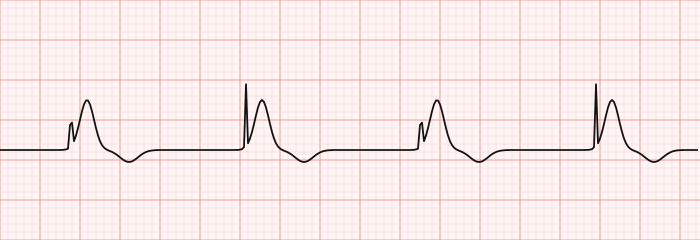
- Atrial pacing: a spike immediately before a P wave. Capture is confirmed by a P wave following the spike.
- Ventricular pacing: a spike immediately before a wide QRS. Because the impulse starts in the right ventricle and spreads muscle-to-muscle rather than down the normal His-Purkinje highway, the paced QRS is wide and usually shows a left-bundle-branch-block-like pattern.
- Dual-chamber pacing: two spikes — one before the P wave, one before the QRS — with a programmed AV delay between them.
Confirming capture is the essential read: every spike that is supposed to produce a beat should be immediately followed by the appropriate waveform. If shoring up the underlying pattern recognition would help, our primers on ECG interpretation and ECG rhythm interpretation lay the groundwork, and the broader RCIS ECG guide puts paced rhythms in context alongside intrinsic ones.
Pacemaker Malfunctions and Troubleshooting
Three classic malfunctions appear on both the monitor and the exam, and each has a recognizable ECG fingerprint.
- Failure to capture — a pacing spike appears but is not followed by the expected P wave or QRS. The impulse fired but did not depolarize the muscle. Causes include lead dislodgement, a rising capture threshold (from fibrosis, ischemia, or metabolic changes), or output set too low.
- Failure to sense (undersensing) — the device does not "see" a native beat and fires a spike anyway, sometimes landing inappropriately close to an intrinsic complex. On the strip you see pacing spikes marching through where they should have been inhibited.
- Oversensing — the device mistakes noise, muscle activity, or a T wave for a real beat and inappropriately withholds pacing, producing pauses. This is the mirror image of undersensing.
A distinct failure is failure to output, where no spike appears at all when one is due — pointing to battery depletion, a lead fracture, or a loose connection. Sorting these apart is exactly the kind of stepwise reasoning the RCIS blueprint rewards.
| Problem | ECG clue | Common cause |
|---|---|---|
| Failure to capture | Spike present, no resulting beat | Lead dislodgement, high threshold, low output |
| Failure to sense (undersense) | Spikes fire despite native beats | Lead issue, low sensitivity setting |
| Oversensing | Unexpected pauses, pacing withheld | Noise, T-wave or myopotential sensing |
| Failure to output | No spike when one is due | Battery depletion, lead fracture |
Implantation and the Cath Lab Role
Permanent pacemakers are implanted in an electrophysiology or cath lab under local anesthesia with sedation. The operator gains venous access — commonly the axillary or subclavian vein — and, under fluoroscopy, advances the leads into the right heart, fixing the tip to the endocardium with either an active screw-in helix or passive tines. The generator is then tucked into a small pocket beneath the skin below the collarbone. Familiarity with the vascular route and chamber anatomy, covered in our cardiac anatomy guide, is part of supporting these cases.
Before closing, the team measures the electrical basics at implant: the capture threshold, the sensed signal amplitude, and lead impedance — the numbers that confirm the leads are well-seated and will pace and sense reliably. A chest X-ray afterward documents lead position and screens for pneumothorax.
A temporary pacemaker is a different animal used for short-term or emergency slowing — for example, acute high-grade block during an acute myocardial infarction or after cardiac surgery. Transvenous temporary wires, transcutaneous pads, and epicardial wires left after surgery all serve as a bridge until the rhythm recovers or a permanent device is placed. For the cardiovascular invasive specialist, knowing where the pacemaker fits among cath-lab tools — alongside the Swan-Ganz catheter, intra-aortic balloon pump, and catheter ablation — rounds out the picture of what happens in the room.
Living With a Pacemaker
Most patients return to normal activity within days. The device is checked periodically — increasingly through remote monitoring that transmits data from home — to track battery status, lead performance, and any recorded arrhythmias. A typical generator battery lasts several years to over a decade depending on how often the device paces; when it nears end of life, only the generator is usually replaced, and the existing leads are reused when they test well.
Everyday electronics such as microwaves, cell phones, and household appliances are generally safe, though patients are advised to keep phones and strong magnets a short distance from the generator. Stronger electromagnetic sources — some industrial equipment and certain medical procedures — warrant caution, and MRI in particular requires a device confirmed to be MRI-conditional and a specific scanning protocol. These are practical counseling points rather than exam minutiae, but they explain why patients carry a device identification card.
This section is general education, not personal medical advice. Device-specific instructions come from the manufacturer and the patient's care team.
Key Takeaways
- A pacemaker senses the heart's own beats and paces only when the intrinsic rhythm is too slow or fails to conduct — a demand backup, not a fixed metronome.
- The main indication is symptomatic, irreversible bradycardia — chiefly sick sinus syndrome and high-grade AV block — after reversible causes are excluded.
- Understanding how a pacemaker works comes down to sensing, pacing, and confirming capture, with a programmed threshold and optional rate response.
- The core types of pacemaker are single-chamber, dual-chamber, and biventricular (CRT), plus newer leadless and conduction-system devices.
- The NBG code (e.g., VVIR, DDD) encodes chamber paced, chamber sensed, response to sensing, and rate modulation.
- On a paced ECG, find the pacing spike, note whether it precedes a P wave, a QRS, or both, and confirm capture; paced ventricular beats are wide.
- The three classic malfunctions are failure to capture, failure to sense, and oversensing — triaged by asking whether a spike is present and whether it produced a beat.
- This is educational content for RCIS preparation, not medical advice.
Practise paced-rhythm recognition
Spot pacing spikes and bradyarrhythmias with instant feedback.
Practise ECG Strips →Frequently asked questions
What does a pacemaker actually do?
A pacemaker continuously monitors the heart's electrical activity and delivers a small, precisely timed electrical impulse whenever the heart's own rhythm is too slow or fails to conduct a beat. Because it only fires when needed, it restores an adequate heart rate without overriding the heart when the natural rhythm is fine.
What is the difference between a single-chamber and dual-chamber pacemaker?
A single-chamber pacemaker uses one lead, placed in either the right atrium or the right ventricle. A dual-chamber pacemaker uses two leads — one in the right atrium and one in the right ventricle — so it can preserve the natural timing between the upper and lower chambers (AV synchrony), which improves filling. Dual-chamber is the usual choice for AV block when the sinus node still works.
How does a pacemaker know when to fire?
The pacemaker senses each native heartbeat through its lead and resets an internal timer. If a native beat does not arrive before the timer runs out, the device concludes the heart missed a beat and delivers a pacing impulse. A sensed native beat inhibits pacing, which is why a healthy rhythm passes through untouched.
What does a paced rhythm look like on an ECG?
The hallmark is a pacing spike — a thin, sharp vertical line — right before the paced waveform. A spike before a P wave means atrial pacing; a spike before a wide QRS means ventricular pacing; two spikes with a delay between them means dual-chamber pacing. Each spike should be immediately followed by the expected complex, which confirms capture.
What heart rate is considered bradycardia?
Bradycardia is a resting heart rate under 60 beats per minute. However, the rate alone does not require treatment — well-trained athletes can be much slower without any problem. A pacemaker is considered when a slow rate is causing symptoms such as fainting, dizziness, or fatigue and is not due to a reversible cause like medications or electrolyte imbalance.
What are the most common pacemaker malfunctions?
The three classic problems are failure to capture (a spike appears but no beat follows), failure to sense or undersensing (the device fires despite the heart's own beats), and oversensing (the device mistakes noise or a T wave for a beat and withholds pacing, causing pauses). A related issue is failure to output, where no spike appears at all when one is due.
How long does a pacemaker battery last?
A typical pacemaker generator lasts several years up to about a decade or more, depending on how frequently the device actually paces. When the battery nears the end of its life, usually only the generator is replaced in a minor procedure, and the existing leads are reused if they still test well.
Can a person with a pacemaker use everyday electronics or have an MRI?
Everyday electronics such as microwaves, cell phones, and household appliances are generally safe, though patients are advised to keep phones and strong magnets a little distance from the generator. MRI requires a device that is specifically labeled MRI-conditional along with a defined scanning protocol, so patients should always confirm compatibility with their care team beforehand.
What is the difference between a pacemaker and an ICD?
A pacemaker treats slow rhythms by delivering small pacing impulses. An implantable cardioverter-defibrillator (ICD) includes those same pacing functions but adds the ability to deliver a much larger shock to stop a dangerous fast rhythm such as ventricular tachycardia or fibrillation. Some patients receive a combined device that both resynchronizes the heart and can defibrillate.
Sources & further reading
- Cardiovascular Credentialing International (CCI)
- American College of Cardiology
- American Heart Association
- MedlinePlus (U.S. National Library of Medicine)
External links are provided for reference; always confirm current details with the official source.