Ejection Fraction: Normal Range & What It Means
Ejection fraction is the single number clinicians reach for first when they ask, "How well is this heart pumping?" It is the percentage of blood the left ventricle squeezes out with each beat — and it drives how heart failure is classified, treated, and tracked over time.
What is ejection fraction?
Ejection fraction (EF) is the proportion of blood inside a filled ventricle that gets pumped out with each heartbeat, expressed as a percentage. When a doctor says a patient "has an EF of 55%," they mean the left ventricle ejected 55% of the blood it held at the end of filling. The rest stays behind — and that residual volume is completely normal. A healthy heart never empties itself fully.
The formula is simple and worth memorizing:
EF = (Stroke Volume ÷ End-Diastolic Volume) × 100
Break it into its parts. End-diastolic volume (EDV) is how much blood fills the ventricle at the end of diastole, just before it contracts. End-systolic volume (ESV) is what remains after the squeeze. The difference between them is the stroke volume — the amount actually ejected. So EF can also be written as (EDV − ESV) ÷ EDV × 100. If a ventricle fills with 120 mL and pumps out 66 mL, the EF is 55%.
Because ejection fraction is a ratio, it stays meaningful across body sizes in a way that a raw volume does not. That is why it has become the default shorthand for systolic (pumping) function on nearly every echo report and cardiology note. It is not, however, the whole story — a point we will return to more than once.
This article is educational and written for students and clinicians preparing for exams such as the RCIS — it is not medical advice. Anyone concerned about their own heart function should talk to their clinician.
What is a normal ejection fraction?
A normal ejection fraction for the left ventricle sits between roughly 50% and 70%. That range is remarkably consistent across guidelines from the American Heart Association, the American College of Cardiology, and the European Society of Cardiology. Contrary to what many patients assume, a normal heart does not eject 100% of its blood, and it does not need to.
| Ejection fraction | Category | What it usually means |
|---|---|---|
| 50–70% | Normal | Preserved systolic function |
| 41–49% | Mildly reduced (HFmrEF) | Borderline / early dysfunction |
| ≤ 40% | Reduced (HFrEF) | Weakened pump |
| ≥ 50% with HF symptoms | Preserved (HFpEF) | Stiff, poorly filling ventricle |
| > 70–75% | Supranormal / hyperdynamic | Can signal HCM, severe MR, or a small hypovolemic ventricle |
Notice that an unusually high number is not automatically a good thing. An EF above about 75% can appear in hypertrophic cardiomyopathy, in significant mitral regurgitation (where blood leaks backward, inflating the apparent output), or simply in a small, underfilled ventricle. Context always matters — the number is a clue, not a verdict.
One important caveat: EF is not perfectly reproducible. A visually estimated "eyeballed" echo EF can vary by 5–10 percentage points between readers, so a change from 55% to 50% on two separate scans may be measurement noise rather than a real decline. This is why clinicians look at trends, symptoms, and multiple data points rather than reacting to a single reading.
How is ejection fraction measured?
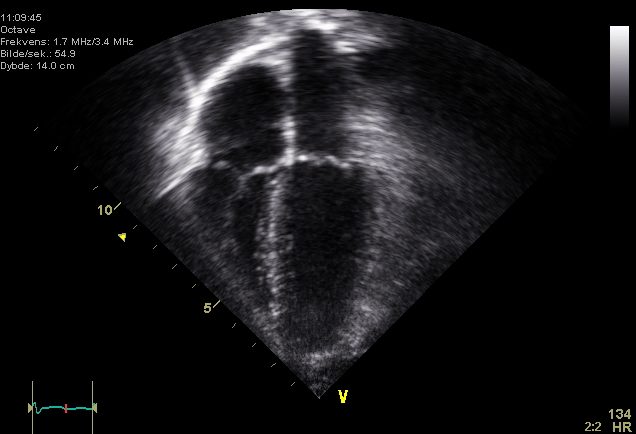
The workhorse for measuring EF is the transthoracic echocardiogram (TTE) — a non-invasive ultrasound of the heart. It is cheap, fast, radiation-free, and repeatable, which is exactly why it dominates. Within echo there are several methods, and they are not equally precise:
- Visual ("eyeball") estimate — a trained reader assigns an EF by inspection. Fast, but the least reproducible.
- Biplane method of disks (modified Simpson's rule) — the software traces the ventricular border in two views and models the chamber as a stack of disks. This is the recommended 2D standard.
- 3D echocardiography — captures the whole chamber volume and avoids geometric assumptions; more accurate when image quality allows.
When echo images are poor or a more precise number is needed, other modalities step in:
| Method | Notes |
|---|---|
| Cardiac MRI | The reference standard — most accurate and reproducible, but costly and less available. |
| Nuclear (MUGA / gated SPECT) | Highly reproducible EF; involves a radioactive tracer. |
| CT angiography | Can derive EF when a gated study is already being done. |
| Left ventriculogram | Contrast injected in the cath lab; the classic invasive method. |
In the invasive setting, the left ventriculogram is where cath lab teams historically read EF directly from a contrast injection into the left ventricle. Understanding the pressures and volumes behind that view ties into broader hemodynamics principles and how output is derived. For the imaging side of the workflow, the cardiovascular ultrasound technologist is the person acquiring and optimizing those echo windows, while the cardiac cath lab handles the invasive angiographic assessment.
How EF connects to stroke volume and cardiac output
Ejection fraction never lives in isolation. It sits inside the chain that produces cardiac output, and understanding that chain prevents a common misconception: that a low EF always means low output, or that a normal EF guarantees a healthy heart.
Start with the building blocks. Stroke volume is the blood ejected per beat. Multiply it by heart rate and you get cardiac output — total flow per minute. Index that to body surface area and you get cardiac index, which lets you compare a small patient to a large one fairly. EF, meanwhile, tells you what fraction of the filled ventricle was ejected, not the absolute amount.
Here is where it gets interesting. A dilated ventricle with an enormous end-diastolic volume can maintain an acceptable stroke volume even with a low EF, because a small fraction of a very large volume is still a decent amount of blood. Conversely, a small, stiff ventricle can have a beautiful EF of 65% and still deliver a poor stroke volume because it barely filled in the first place. That paradox is the whole reason ejection fraction and stroke volume must be read together.
The downstream circulation matters too. The resistance the ventricle pumps against — its afterload, captured by systemic vascular resistance — directly shapes how much blood a given contraction can push out. Raise afterload sharply and EF can fall even if the muscle itself has not changed. This is why heart failure management so often centers on offloading the ventricle rather than only strengthening it.
HFrEF vs HFpEF: the central distinction
The reason ejection fraction gets so much attention is that it splits heart failure into fundamentally different diseases that need different treatments. The comparison every clinician and RCIS candidate must know cold is HFrEF vs HFpEF.
| Feature | HFrEF (reduced) | HFpEF (preserved) |
|---|---|---|
| Ejection fraction | ≤ 40% | ≥ 50% |
| Core problem | Systolic — weak squeeze | Diastolic — stiff, poor filling |
| Ventricle shape | Often dilated, thin-walled | Often thick, small cavity |
| Typical patient | Post-MI, dilated cardiomyopathy | Older, hypertensive, diabetic, obese |
| Evidence for drug therapy | Strong, well established | More limited, evolving |
HFrEF — heart failure with reduced ejection fraction — is the classic "weak pump." The muscle cannot contract forcefully enough, so a smaller fraction of blood leaves with each beat. It commonly follows a myocardial infarction that has killed contractile tissue, or a dilated cardiomyopathy. The good news is that HFrEF has a deep, well-proven toolkit of medications.
HFpEF — heart failure with preserved ejection fraction — is the trickier sibling. The EF looks normal (50% or higher), yet the patient has all the classic heart failure symptoms: breathlessness, fatigue, fluid retention. The problem is diastolic: the ventricle has become stiff and cannot relax and fill properly, so pressures back up into the lungs even though the squeeze itself is fine. HFpEF is strongly linked to aging, hypertension, diabetes, obesity, and atrial fibrillation.
Between them sits HFmrEF — mildly reduced ejection fraction, 41–49%. Formally recognized in current guidelines, this intermediate group often behaves more like HFrEF and increasingly receives similar therapy, though the evidence base is still maturing. The categories should be seen as a spectrum, not rigid boxes; patients move between them as their hearts recover or decline.
What causes a low ejection fraction?
A low ejection fraction means the left ventricle is pumping out a smaller-than-normal share of its blood, typically 40% or below. It is a sign, not a diagnosis — the job is always to find the cause. The usual suspects fall into a few groups:
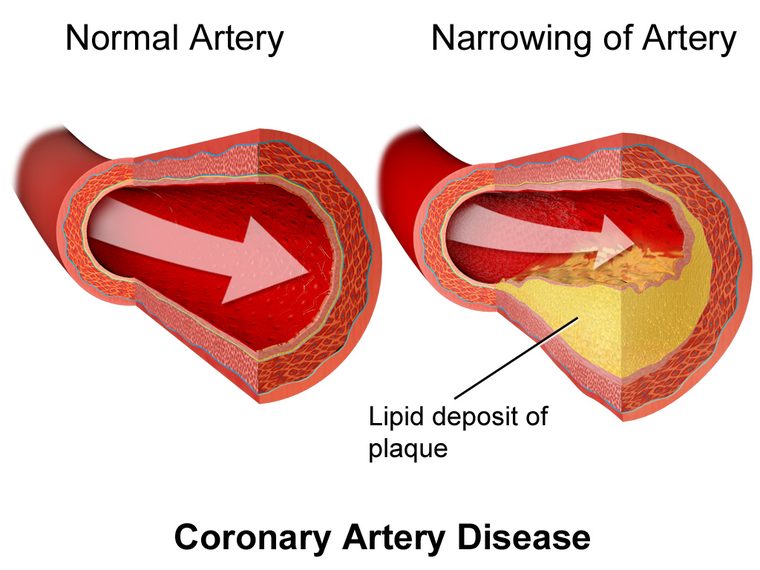
- Ischemic heart disease — the most common cause. Blocked coronary arteries starve heart muscle, and a completed heart attack leaves scar that cannot contract. Underlying coronary artery disease is the driver.
- Dilated cardiomyopathy — the ventricle enlarges and weakens, from causes including viral myocarditis, genetics, alcohol, chemotherapy, or thyroid disease.
- Uncontrolled hypertension — years of high afterload eventually exhaust the muscle.
- Valvular disease — severe regurgitation or stenosis overloads the ventricle over time.
- Arrhythmia-mediated dysfunction — persistent fast rhythms such as poorly controlled atrial fibrillation or frequent ectopy can lower EF, and this form is often reversible once the rhythm is controlled.
Symptoms of a low EF track with congestion and low output: shortness of breath (especially lying flat), swelling in the legs and abdomen, fatigue, and reduced exercise tolerance. But some people with a genuinely low EF feel surprisingly well, which is exactly why imaging matters — you cannot reliably guess EF from how a patient looks. A markedly reduced EF also raises the risk of dangerous rhythms such as ventricular tachycardia, which is part of why an EF at or below 35% is a threshold for considering a defibrillator.
Treatment and what the number predicts
Once a low EF is confirmed, treatment is guideline-directed and, for HFrEF, genuinely transformative. Modern therapy for reduced EF rests on "four pillars" that together improve survival and can actually raise the EF over months:
- ARNI or ACE inhibitor / ARB — offloads the ventricle and blocks harmful remodeling.
- Beta-blocker — slows the heart and protects it from adrenaline-driven stress.
- Mineralocorticoid receptor antagonist — blocks aldosterone.
- SGLT2 inhibitor — a newer class that benefits heart failure across the EF spectrum.
These are covered in more depth in our overview of heart failure medications. When a low EF persists despite optimal drugs, device therapy enters the picture: an implantable cardioverter-defibrillator for sudden-death prevention, or cardiac resynchronization therapy (a specialized pacemaker) to coordinate a dyssynchronous ventricle. If ischemia is the culprit, restoring blood flow through PCI or bypass surgery can recover hibernating muscle and improve function.
For HFpEF, the toolkit has historically been thinner, but that is changing. SGLT2 inhibitors now have solid evidence in preserved EF, and management otherwise focuses on controlling blood pressure, treating the underlying conditions, and managing fluid — an area where the evidence base is still evolving and worth watching.
As a prognostic marker, EF is powerful but imperfect. A lower EF broadly correlates with higher mortality and hospitalization risk, and it drives major treatment decisions. Yet plenty of patients with severely reduced EF live for years with good therapy, and many HFpEF patients with "normal" numbers do poorly. EF is one crucial data point among symptoms, biomarkers, functional capacity, and imaging — never the sole basis for a prognosis.
Key takeaways
- Ejection fraction is the percentage of the filled left ventricle ejected per beat: EF = stroke volume ÷ end-diastolic volume × 100.
- A normal ejection fraction is 50–70%. A healthy heart never empties completely, and an unusually high EF can be abnormal.
- Heart failure is classified by EF: reduced (HFrEF, ≤40%), mildly reduced (HFmrEF, 41–49%), and preserved (HFpEF, ≥50% with symptoms).
- HFrEF vs HFpEF is a systolic (weak squeeze) versus diastolic (stiff, poor filling) problem, and they are treated differently.
- A low ejection fraction is most often caused by coronary artery disease and prior heart attack; ischemic, arrhythmic, and valvular causes are worth chasing because some are reversible.
- Transthoracic echocardiography is the first-line measurement; cardiac MRI is the most accurate.
- EF must be read alongside stroke volume, cardiac output, and afterload — it is a clue, not the complete picture.
- This content is educational, not medical advice.
Related calculator
Work out stroke volume, the numerator behind ejection fraction.
Stroke Volume Calculator →Frequently asked questions
What is a normal ejection fraction?
A normal left ventricular ejection fraction is 50 to 70%. Values of 41 to 49% are mildly reduced (HFmrEF), and 40% or below is reduced (HFrEF). A healthy heart does not eject 100% of its blood — leaving some behind each beat is entirely normal.
What does a low ejection fraction mean?
A low ejection fraction means the left ventricle is pumping out a smaller share of its blood than it should, usually 40% or less. It is a sign of impaired systolic function, most often from coronary artery disease and prior heart attack, and it warrants a search for the underlying cause since some causes are reversible.
What is the difference between HFrEF and HFpEF?
HFrEF (heart failure with reduced ejection fraction, 40% or below) is a systolic problem — the ventricle is too weak to squeeze effectively. HFpEF (preserved ejection fraction, 50% or above with symptoms) is a diastolic problem — the ventricle is stiff and fills poorly even though the squeeze itself looks normal. They are treated differently.
How is ejection fraction calculated?
Ejection fraction equals stroke volume divided by end-diastolic volume, multiplied by 100. Stroke volume is end-diastolic volume minus end-systolic volume, so EF is the percentage of the filled ventricle that gets ejected with each beat.
What is the most accurate way to measure ejection fraction?
Cardiac MRI is the reference standard and the most accurate, reproducible method. However, transthoracic echocardiography is the most common and first-line test because it is fast, non-invasive, radiation-free, and inexpensive.
Can a low ejection fraction improve?
Yes. With guideline-directed medical therapy — such as an ARNI or ACE inhibitor, a beta-blocker, a mineralocorticoid receptor antagonist, and an SGLT2 inhibitor — many patients with reduced EF see meaningful improvement over months. Correcting the underlying cause, such as treating ischemia or controlling a fast arrhythmia, can also recover function.
Is an ejection fraction of 65% or higher always good?
Not necessarily. While 50 to 70% is normal, an EF above roughly 75% can be abnormal — it may reflect hypertrophic cardiomyopathy, significant mitral regurgitation that inflates the apparent output, or a small, underfilled ventricle. The number always has to be interpreted in context.
What ejection fraction is considered severe heart failure?
There is no single cutoff, but an EF at or below 35% is generally regarded as severely reduced and is a common threshold for considering an implantable defibrillator to prevent sudden cardiac death. Symptoms, functional capacity, and other findings are weighed alongside the number.
Does a normal ejection fraction rule out heart failure?
No. Patients with HFpEF have a preserved (normal-looking) ejection fraction of 50% or higher yet still have genuine heart failure driven by a stiff, poorly filling ventricle. A normal EF confirms the pump strength but does not exclude heart failure.
Sources & further reading
- Cardiovascular Credentialing International (CCI)
- American College of Cardiology
- American Heart Association
- MedlinePlus (U.S. National Library of Medicine)
External links are provided for reference; always confirm current details with the official source.