Heart Failure Medications: The Four Pillars of GDMT
Heart failure treatment has been transformed over the past decade — what was once a two-drug regimen is now a four-pillar strategy that keeps patients alive, out of the hospital, and feeling better. Understanding the modern medications for heart failure, how they fit together, and why each one earns its place is essential knowledge for anyone working in cardiovascular care.
- What heart failure medications are and why they matter
- The four pillars of GDMT: the modern standard
- Pillar one: ACE inhibitors, ARBs, and ARNI
- Pillar two: beta-blockers
- Pillar three: mineralocorticoid receptor antagonists
- Pillar four: SGLT2 inhibitors
- Diuretics: relieving congestion and symptoms
- Beyond the pillars: other important agents
- Starting, titrating, and monitoring therapy
- Heart failure medications on the RCIS exam
- Key takeaways
What heart failure medications are and why they matter
Heart failure is not a single disease but a syndrome — the end result of a heart that can no longer pump or fill well enough to meet the body's needs. For decades, treatment focused mostly on relieving symptoms: getting fluid off, easing breathlessness, helping people feel less waterlogged. That still matters enormously. But the biggest shift in modern cardiology is that we now have medications that change the trajectory of the disease itself, slowing or even reversing the remodeling that makes a failing heart worse over time.
The distinction that drives every treatment decision is ejection fraction — the percentage of blood the left ventricle squeezes out with each beat. Patients with a reduced ejection fraction (HFrEF, generally 40% or below) benefit from a well-defined set of life-prolonging drugs. Those with preserved ejection fraction (HFpEF) have historically had fewer proven options, though that picture is changing fast. If the concept feels abstract, our primer on ejection fraction explains exactly what the number means and how it is measured.
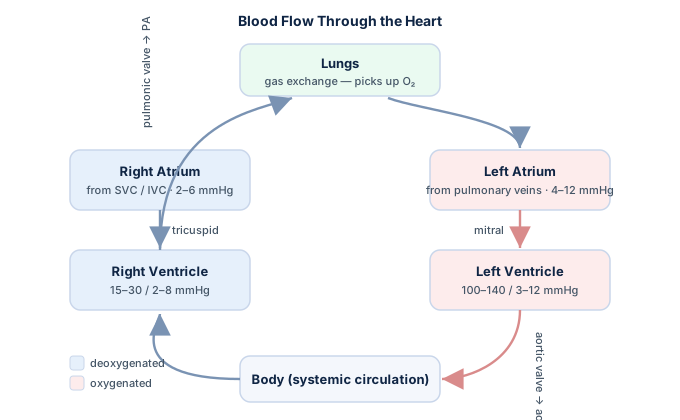
Why does the drug choice matter so much? Because a failing heart triggers a cascade of hormonal responses — the renin-angiotensin-aldosterone system and the sympathetic nervous system — that were designed for short-term survival but become destructive when switched on for months and years. Modern heart failure medications work largely by interrupting that cascade. This is educational material, not medical advice; the treating clinician tailors every regimen to the individual patient.
The four pillars of GDMT: the modern standard
If you learn one framework about heart failure therapy, make it this one. Current guidelines for heart failure with reduced ejection fraction are built around four pillars of guideline-directed medical therapy (GDMT) — four distinct drug classes that each independently reduce death and hospitalization, and whose benefits stack when used together.
| Pillar | Drug class | Core benefit |
|---|---|---|
| 1 | ARNI (or ACE inhibitor / ARB) | Blocks the renin-angiotensin system; ARNI adds beneficial natriuretic peptides. |
| 2 | Beta-blocker (evidence-based) | Blunts sympathetic overdrive; slows heart rate; reverses remodeling. |
| 3 | MRA (mineralocorticoid receptor antagonist) | Blocks aldosterone; reduces fibrosis and fluid retention. |
| 4 | SGLT2 inhibitor | Reduces hospitalization and death across the ejection-fraction spectrum. |
The shorthand you will hear on rounds and see on exams is "ARNI, beta-blocker, MRA, SGLT2" — the four pillars. A newer emphasis in guideline thinking is that these should be started early and together, in low doses, rather than maximizing one drug before adding the next. Getting a patient on all four foundational classes, even at modest doses, appears to matter more than pushing any single one to its ceiling.
The physiology behind why these drugs help is the same physiology that governs the pressures and flows measured in the cath lab. A stronger grasp of core concepts like cardiac output and systemic vascular resistance makes it far easier to reason about what each pillar is actually doing to the failing circulation.
Pillar one: ACE inhibitors, ARBs, and ARNI
The first pillar targets the renin-angiotensin-aldosterone system (RAAS), the hormonal axis that a failing heart activates and that, left unchecked, drives vasoconstriction, sodium retention, and harmful cardiac remodeling. Three related drug options block this system with increasing sophistication.
- ACE inhibitors (enalapril, lisinopril, ramipril) block the conversion of angiotensin I to angiotensin II. They were the original cornerstone of heart failure therapy and reduce mortality substantially. The classic side effect is a dry cough, caused by bradykinin buildup.
- ARBs (losartan, valsartan, candesartan) block the angiotensin II receptor directly. They are the standard alternative for patients who cannot tolerate an ACE inhibitor's cough.
- ARNI — angiotensin receptor-neprilysin inhibitor (sacubitril/valsartan) — is the preferred agent in this pillar for most patients with HFrEF. It pairs an ARB with a neprilysin inhibitor, which raises levels of beneficial natriuretic peptides that promote vasodilation and sodium excretion.
Landmark trial evidence showed ARNI to be superior to a standard ACE inhibitor at reducing cardiovascular death and heart failure hospitalization, which is why guidelines now favor it as first-line in appropriate patients. A critical safety rule: because both ARNI and ACE inhibitors can cause angioedema, you must allow a 36-hour washout when switching from an ACE inhibitor to ARNI. The two are never given together.
By lowering the resistance the left ventricle pumps against, these agents reduce afterload and ease the heart's workload — the same afterload concept that determines how hard the ventricle must work to generate a given stroke volume with each beat.
Pillar two: beta-blockers
For decades it seemed counterintuitive to give a drug that slows and weakens contraction to a heart that is already failing to pump. Yet beta-blockers are among the most powerful life-prolonging medications in heart failure — a triumph of evidence over intuition. The catch is that only three beta-blockers have proven mortality benefit in HFrEF, and the class is not interchangeable.
| Evidence-based beta-blocker | Notes |
|---|---|
| Carvedilol | Also blocks alpha receptors, adding vasodilation. |
| Metoprolol succinate (extended-release) | The succinate salt specifically — not the tartrate. |
| Bisoprolol | Highly beta-1 selective. |
The mechanism is about protecting the heart from chronic sympathetic overdrive. In heart failure, the body floods the circulation with adrenaline-like signals to prop up output, but sustained sympathetic stimulation is toxic to myocardium — it accelerates remodeling, provokes arrhythmias, and burns oxygen. Beta-blockers shield the heart from this, slow the heart rate to allow better filling, and over months actually improve ejection fraction, a phenomenon called reverse remodeling.
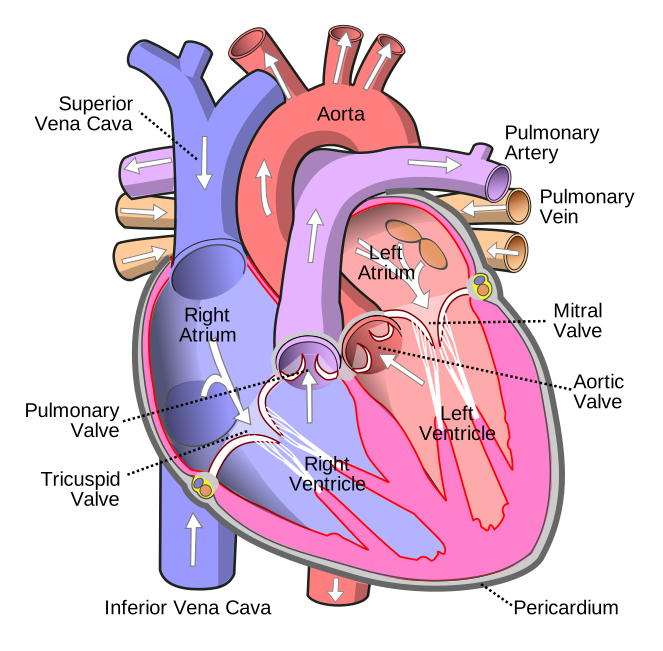
Two rules govern their use. First, start low and go slow: beta-blockers are initiated at low doses and titrated gradually, because too much too fast can transiently worsen heart failure. Second, they are started when the patient is euvolemic and stable, not during an acute decompensation with active fluid overload. Because beta-blockers slow conduction, understanding the cardiac conduction system helps explain why they can cause bradycardia and why they are used cautiously in patients with significant heart block.
Pillar three: mineralocorticoid receptor antagonists
The third pillar blocks aldosterone, the final hormone in the RAAS cascade. Even when ACE inhibitors or ARBs are on board, aldosterone levels often creep back up over time — a phenomenon called aldosterone escape — so blocking the receptor directly adds independent benefit. The two mineralocorticoid receptor antagonists (MRAs) used in heart failure are spironolactone and eplerenone.
Aldosterone does more than retain sodium and water. It drives fibrosis in the heart and blood vessels, promotes potassium and magnesium loss, and contributes to the stiff, scarred myocardium of advanced disease. Blocking it reduces hospitalization and death in HFrEF, and it also helps control fluid retention. Spironolactone is the older, less selective agent and can cause gynecomastia (breast tenderness in men) because it also blocks androgen receptors; eplerenone is more selective and avoids that effect.
Note that MRAs are diuretic in a sense — they promote sodium and water loss — but they are used at doses aimed at their neurohormonal, anti-remodeling benefit rather than as a primary tool for decongestion. That distinction between a life-prolonging pillar and a symptom-relieving diuretic is an important one, and it sets up the separate role that loop diuretics play.
Pillar four: SGLT2 inhibitors
The newest pillar is also the most surprising. SGLT2 inhibitors — dapagliflozin and empagliflozin, the "gliflozins" — were developed as diabetes drugs that lower blood sugar by dumping glucose into the urine. Almost by accident, large cardiovascular trials revealed they dramatically reduce heart failure hospitalization and death, and the benefit appears whether or not the patient has diabetes.
What makes this pillar remarkable is its breadth. The other three pillars are firmly established for reduced ejection fraction, but SGLT2 inhibitors have shown benefit across the ejection-fraction spectrum — including patients with preserved ejection fraction (HFpEF), a group that had almost no proven disease-modifying therapy before. This is a genuine landmark: for the first time, a drug class meaningfully helps HFpEF patients.
Exactly how they work in heart failure is still being unraveled and is an area of active research. Proposed mechanisms include a gentle diuretic and natriuretic effect, improved cardiac energy metabolism, reduced myocardial stiffness, and favorable effects on the kidney. What is clear is the clinical result: fewer hospitalizations, fewer deaths, and slower decline in kidney function. Because the evidence here is still maturing, guidelines are evolving, and future recommendations may broaden further.
The arrival of this class is a good reminder that heart failure pharmacology is not static. Staying current matters, and for those preparing for credentialing exams, our hemodynamics practice questions are updated to reflect how these evolving therapies interact with the pressures and outputs measured invasively.
Diuretics: relieving congestion and symptoms
If the four pillars are what keep heart failure patients alive, diuretics are what keep them comfortable. Loop diuretics — furosemide (Lasix), bumetanide, torsemide — are the workhorses for relieving the fluid overload that causes breathlessness, leg swelling, and the heavy, drowning sensation of pulmonary congestion. It is worth being precise about their role: diuretics treat symptoms by removing excess fluid, but they have not been shown to prolong life the way the four pillars do.
Loop diuretics act on the thick ascending limb of the loop of Henle, blocking sodium reabsorption and forcing large volumes of water out with it. They are titrated to the patient's fluid status — more during a congestion flare, less when the patient is dry. Getting this balance right is an art: too little leaves the patient congested; too much causes dehydration, low blood pressure, and kidney injury.
- Electrolyte loss is the main hazard. Loops waste potassium and magnesium, which can provoke dangerous arrhythmias, so these are monitored and replaced.
- Diuretic resistance can develop, where escalating doses stop working; strategies include switching agents, adding a thiazide-type diuretic for sequential blockade, or IV dosing.
- Volume depletion can worsen kidney function and drop blood pressure, so diuretics are balanced against the vasodilating pillars.
In acute decompensated heart failure, the physiology of congestion becomes vivid on invasive monitoring — a high wedge pressure reflecting fluid backing up into the lungs. If you want to see how these pressures are measured and interpreted, our guides on the Swan-Ganz catheter and the broader principles of cardiovascular hemodynamics connect the bedside diuretic decision to the numbers on the monitor.
Beyond the pillars: other important agents
The four pillars and diuretics cover most patients, but several other medications fill specific roles, and knowing when each applies is part of a complete picture of heart failure therapy.
| Agent | Role in heart failure |
|---|---|
| Hydralazine + isosorbide dinitrate | A vasodilator combination with proven mortality benefit, especially in self-identified Black patients and as an alternative when RAAS blockers are not tolerated. |
| Ivabradine | Slows the sinus node to lower heart rate in patients still tachycardic on a maximally tolerated beta-blocker (in sinus rhythm). |
| Digoxin | An older inotrope that can reduce hospitalizations and help rate control; used selectively, with careful attention to its narrow therapeutic window. |
| Vericiguat | A soluble guanylate cyclase stimulator for higher-risk patients after a recent decompensation. |
| IV inotropes (dobutamine, milrinone) | Reserved for advanced, low-output states to support circulation, often as a bridge to advanced therapies. |
These agents are layered on selectively rather than given to everyone. Digoxin in particular demands respect: its therapeutic and toxic doses sit close together, and toxicity can trigger dangerous rhythms — a reason to keep skills in reading the ECG sharp when it is in use. In the sickest patients, drug therapy alone is not enough, and mechanical support such as the intra-aortic balloon pump or discussions of advanced options enter the picture. For patients whose failing hearts also generate life-threatening rhythms, recognizing ventricular tachycardia becomes a parallel priority alongside their medication regimen.
Starting, titrating, and monitoring therapy
Knowing the drugs is only half the job; knowing how to start and safely escalate them is the other half. The modern approach has shifted from a slow, sequential build-up to getting patients onto all four foundational pillars quickly, often at low doses, then up-titrating as tolerated. The reasoning is simple: each pillar saves lives independently, so delaying any of them costs benefit.
Several practical principles guide the process:
- Blood pressure and heart rate set the pace. The RAAS blockers and beta-blockers all lower these, so there is a limit to how aggressively they can be pushed at once. Sequencing and dose choices work around the patient's hemodynamics.
- Kidney function and potassium are the guardrails. ACE/ARB/ARNI and MRAs all affect them, so labs are checked at initiation and after each change.
- Volume status guides the diuretic. Beta-blockers are started once the patient is decongested, and diuretic doses are constantly adjusted to keep the patient neither wet nor dry.
- Symptoms and repeat imaging track response. An echocardiogram months later may show improved ejection fraction, which can change decisions about devices.
Because so many of these decisions hinge on the ventricle's function and filling, a solid command of the underlying physiology pays off. Reviewing how a failing pump translates into altered cardiac index and the pressure patterns seen in shock states gives context for why blood pressure and output limit how fast therapy can advance. And when medications reach their ceiling, an echocardiogram often guides the next step toward devices or advanced care.
Heart failure medications on the RCIS exam
Heart failure pharmacology is fertile ground for exam questions because it is both clinically central and rapidly evolving. The Registered Cardiovascular Invasive Specialist exam and similar credentialing tests tend to probe a predictable set of themes, so focused study pays dividends.
- The four pillars by name and class: ARNI/ACE/ARB, evidence-based beta-blocker, MRA, and SGLT2 inhibitor. Expect to identify which class a drug belongs to.
- The three proven beta-blockers: carvedilol, metoprolol succinate, and bisoprolol — and the trap that metoprolol tartrate is not one of them.
- The ARNI washout rule: the 36-hour gap when switching from an ACE inhibitor, and the fact that ARNI and ACE inhibitors are never combined.
- Potassium and MRAs: why combining an MRA with a RAAS blocker raises hyperkalemia risk.
- Diuretics relieve symptoms, pillars prolong life: a distinction test-writers love.
The strongest approach is to connect each drug to the physiology it manipulates rather than memorizing lists. When you understand that the four pillars all interrupt the same destructive neurohormonal cascade, the details fall into place. Pair that conceptual study with targeted drilling: our RCIS hemodynamics practice questions and the broader hemodynamics study guide reinforce how these medications reshape the pressures and outputs you will encounter in the lab. Learn the mechanism, attach the drugs and their cautions to it, then test yourself until the reasoning is automatic.
Key takeaways
- Heart failure therapy is built on four pillars of GDMT: an ARNI (or ACE inhibitor/ARB), an evidence-based beta-blocker, an MRA, and an SGLT2 inhibitor — each independently reduces death and hospitalization.
- Start early and together: current thinking favors getting patients on all four classes at low doses rather than maximizing one before adding the next.
- ARNI is preferred over an ACE inhibitor for most HFrEF patients, but requires a 36-hour washout when switching from an ACE inhibitor to avoid angioedema.
- Only carvedilol, metoprolol succinate, and bisoprolol have proven mortality benefit among beta-blockers; start low and go slow when the patient is stable.
- MRAs block aldosterone and add anti-remodeling benefit but demand close potassium and kidney monitoring, especially alongside RAAS blockers.
- SGLT2 inhibitors help across the ejection-fraction spectrum, including preserved EF — a genuinely new and still-evolving frontier.
- Diuretics relieve congestion and symptoms but do not prolong life the way the pillars do; they are titrated to fluid status.
- Educational only: this is study material, not medical advice — real treatment decisions belong to the patient's clinician.
Practise cardiovascular pharmacology
Test heart-failure and cath-lab drugs with explanations.
Practise Pharmacology →Frequently asked questions
What are the four pillars of heart failure medication?
The four pillars of guideline-directed medical therapy (GDMT) for heart failure with reduced ejection fraction are: an ARNI (sacubitril/valsartan) or an ACE inhibitor/ARB, an evidence-based beta-blocker (carvedilol, metoprolol succinate, or bisoprolol), a mineralocorticoid receptor antagonist or MRA (spironolactone or eplerenone), and an SGLT2 inhibitor (dapagliflozin or empagliflozin). Each class independently reduces death and hospitalization, and their benefits add up when used together.
What is the difference between an ACE inhibitor, an ARB, and an ARNI?
All three block the renin-angiotensin system, but at different points. ACE inhibitors (like lisinopril) block the conversion of angiotensin I to angiotensin II and can cause a dry cough. ARBs (like valsartan) block the angiotensin II receptor directly and avoid that cough. ARNI (sacubitril/valsartan) combines an ARB with a neprilysin inhibitor, which raises beneficial natriuretic peptides; it is preferred over an ACE inhibitor for most patients with reduced ejection fraction because it further reduces cardiovascular death and hospitalization.
Which beta-blockers are used in heart failure?
Only three beta-blockers have proven survival benefit in heart failure with reduced ejection fraction: carvedilol, metoprolol succinate (the extended-release form, not the tartrate), and bisoprolol. They are started at low doses when the patient is stable and free of active fluid overload, then titrated up slowly. Over months they slow the heart, protect it from harmful sympathetic overdrive, and can improve ejection fraction through reverse remodeling.
Do diuretics treat heart failure or just the symptoms?
Loop diuretics such as furosemide relieve the symptoms of heart failure by removing excess fluid, easing breathlessness and swelling, but they have not been shown to prolong life the way the four foundational pillars do. They are essential for comfort and for managing congestion, and are titrated to the patient's fluid status, but they are symptom-control agents rather than disease-modifying therapy.
Why are SGLT2 inhibitors used in heart failure if they are diabetes drugs?
SGLT2 inhibitors like dapagliflozin and empagliflozin were developed to lower blood sugar, but large trials found they dramatically reduce heart failure hospitalization and death — benefits that appear whether or not the patient has diabetes. Remarkably, they help across the ejection-fraction spectrum, including patients with preserved ejection fraction who previously had few proven options. Their exact mechanism in heart failure is still being studied and likely involves diuretic, metabolic, and kidney-protective effects.
Why do you have to monitor potassium with heart failure medications?
Several heart failure drugs raise potassium: ACE inhibitors, ARBs, ARNI, and especially mineralocorticoid receptor antagonists (MRAs). When these are combined — which is common in a four-pillar regimen — potassium can climb to dangerous levels (hyperkalemia), which itself can trigger life-threatening heart rhythms. Guidelines advise checking potassium and kidney function before starting these drugs, shortly after starting or increasing a dose, and periodically thereafter.
What is the 36-hour washout rule for ARNI?
When switching a patient from an ACE inhibitor to an ARNI (sacubitril/valsartan), you must wait 36 hours between the last ACE inhibitor dose and the first ARNI dose. Both drugs can cause angioedema, a dangerous swelling reaction, and overlapping them increases that risk. ARNI and ACE inhibitors are never taken together. Switching from an ARB to ARNI does not require the same washout.
Can heart failure medications improve ejection fraction?
Yes. In many patients with reduced ejection fraction, the four pillars — particularly beta-blockers and RAAS blockers — can improve the ejection fraction over months through a process called reverse remodeling, where the heart gradually becomes smaller and stronger. A follow-up echocardiogram often shows this improvement, which can influence later decisions about implantable devices. Not every patient recovers function, but a meaningful proportion do with sustained therapy.
What medications are used for heart failure with preserved ejection fraction (HFpEF)?
Historically, HFpEF had few proven disease-modifying treatments, and management focused on controlling blood pressure, treating fluid overload with diuretics, and managing underlying conditions. That has changed: SGLT2 inhibitors now have strong evidence in HFpEF and are recommended, making them the first drug class shown to clearly benefit this group. MRAs may also help selected patients. The evidence in HFpEF is still evolving, so guidance continues to develop.
Sources & further reading
- Cardiovascular Credentialing International (CCI)
- American College of Cardiology
- American Heart Association
- MedlinePlus (U.S. National Library of Medicine)
External links are provided for reference; always confirm current details with the official source.