Echocardiogram: What It Shows, Types & What to Expect
An echocardiogram is an ultrasound of the beating heart — the single most useful, radiation-free imaging test in cardiology, and the one that answers most bedside questions about how well a heart is pumping, filling, and functioning.
What is an echocardiogram?
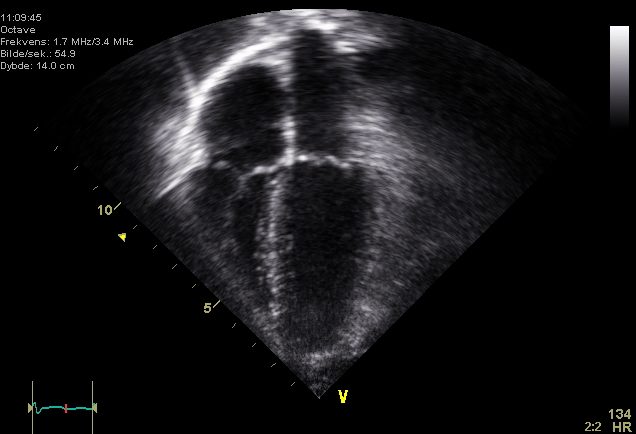
An echocardiogram — often shortened to "echo" — is a heart ultrasound. A transducer sends high-frequency sound waves into the chest, those waves bounce off cardiac structures, and a computer reconstructs the returning echoes into moving images of the heart in real time. There is no radiation, no ionizing exposure, and no recovery period. That combination of safety, speed, and rich information is exactly why echo has become the workhorse of cardiac imaging.
Unlike a still X-ray, an echo is dynamic. It shows the heart contracting and relaxing, valves opening and snapping shut, and blood flowing through chambers beat by beat. Layered on top of the grayscale anatomy is Doppler, which measures the speed and direction of blood flow and lets clinicians estimate pressures and gradients that once required a catheter to obtain.
A complete study typically weaves together several modes: two-dimensional (2D) imaging for structure, M-mode for precise measurements along a single line over time, color Doppler to visualize flow and leaks, and spectral (pulsed and continuous-wave) Doppler to quantify velocities. The person acquiring and optimizing those images is usually a cardiovascular ultrasound technologist, and reading the study well depends on a solid grasp of cardiac anatomy.
This article is educational and written for students and clinicians preparing for exams such as the RCIS. It is not medical advice; anyone with concerns about their own heart should speak with their clinician.
What an echo shows
If you want to know one thing about this test, know this: what an echo shows is the structure and function of the heart, all in one non-invasive study. More specifically, it answers a remarkable number of clinical questions in a single sitting.
- Pump strength — the ejection fraction, the headline number for how forcefully the left ventricle squeezes, and whether any wall segments move poorly (a clue to prior heart attack or ischemia).
- Chamber size and wall thickness — is the ventricle dilated, or thickened as in hypertension or hypertrophic cardiomyopathy?
- Valve function — whether any of the four valves is narrowed (stenosis) or leaking (regurgitation), and how severely.
- Diastolic function — how well the ventricle relaxes and fills, which is central to diagnosing heart failure with a normal ejection fraction.
- The pericardium — fluid around the heart (effusion) and whether it is compressing the chambers, the hallmark of tamponade.
- Pressures and flow — Doppler-derived estimates of pulmonary artery pressure, valve gradients, and shunt flow.
- Masses and clots — vegetations from infection (endocarditis), tumors, or thrombus, especially in the left atrial appendage.
Doppler is what elevates echo from a picture to a quantitative tool. By applying the modified Bernoulli equation to a measured jet velocity, a reader can convert flow speed into a pressure gradient — the same physiology of pressure and flow explored in our hemodynamics guide. This is how a non-invasive scan can estimate the severity of aortic stenosis or the pressure in the pulmonary artery without ever entering a vein.
TTE vs TEE: the two main types
The comparison every candidate must know cold is TTE vs TEE — transthoracic versus transesophageal echocardiography. Both use ultrasound, but they differ in how the transducer reaches the heart, and that single difference drives everything else.
| Feature | TTE (transthoracic) | TEE (transesophageal) |
|---|---|---|
| Probe location | On the chest wall, outside the body | Down the esophagus, behind the heart |
| Invasiveness | Non-invasive | Semi-invasive; needs sedation |
| Preparation | None | Fasting, sedation, throat numbing |
| Image quality | Good, but limited by ribs, lungs, body habitus | Excellent, especially posterior structures |
| Best for | First-line, everyday assessment | Valves in detail, clots, endocarditis, prosthetic valves |
| Risk | Essentially none | Small: sedation, rare esophageal injury |
TTE is the default. The transducer sits on the chest and images the heart through "windows" between the ribs and lungs. It is quick, painless, and needs no preparation, which is why it is ordered by the millions. Its main limitation is that bone and air-filled lung can obscure the view — poor windows are common in patients with obesity, emphysema, or chest deformities.
TEE solves the window problem by placing the probe in the esophagus, which sits directly behind the left atrium. Because only a thin wall separates the probe from the heart, TEE produces exceptionally detailed images of the posterior structures — the mitral valve, the left atrial appendage, prosthetic valves, and vegetations. That superior resolution is why TEE is the go-to for hunting a clot before cardioversion of atrial fibrillation, for confirming endocarditis, and for guiding structural procedures. The trade-off is that it requires sedation, a fasting period, and carries a small risk from passing the probe.
Echocardiogram vs ECG: don't confuse them
Few things trip up patients — and the occasional student — more than echocardiogram vs ECG. The names sound alike and both start with "e," but they measure completely different things. One looks at the heart's plumbing and pumping; the other listens to its electrical wiring.
| Echocardiogram (echo) | ECG / EKG | |
|---|---|---|
| What it measures | Structure and function (ultrasound) | Electrical activity |
| How | Sound waves and Doppler | Electrodes on the skin |
| Shows | Chambers, valves, wall motion, ejection fraction, fluid | Rhythm, rate, conduction, signs of ischemia |
| Time to perform | 20–45 minutes | A few minutes |
| Best answers | "How is the pump and are the valves working?" | "Is the rhythm and electrical conduction normal?" |
An ECG (electrocardiogram, also written EKG) records the electrical signals that trigger each heartbeat through electrodes on the skin. It is the right tool for diagnosing arrhythmias, conduction blocks, and the electrical footprint of a heart attack. If you want to know whether a rhythm is atrial fibrillation or a dangerous ventricular tachycardia, or whether ST elevation signals an acute infarction, you read the tracing — a skill covered in our ECG interpretation guide and its companion on rhythm interpretation.
An echocardiogram, by contrast, cannot tell you the rhythm at a glance the way an ECG can, and an ECG cannot show you a leaking valve or measure ejection fraction. They are complementary. A patient with a heart murmur gets an echo to characterize the valve; a patient with palpitations gets an ECG to catch the rhythm. Very often both are done, because together they paint a far more complete picture than either alone — the electrical story from the tracing and the mechanical story from the ultrasound.
Types of echocardiogram and when each is used
Beyond the basic TTE/TEE split, "echocardiogram" is really an umbrella for several study types, each answering a particular question. Knowing which is ordered — and why — is a common source of exam and clinical confusion.
| Type | What it adds | Typical use |
|---|---|---|
| Transthoracic (TTE) | Standard structural and functional study | First-line for almost everything |
| Transesophageal (TEE) | High-resolution posterior views | Clots, endocarditis, prosthetic valves, procedure guidance |
| Stress echo | Images before and after exercise or dobutamine | Detecting inducible ischemia and coronary disease |
| Contrast echo | Agitated saline or microbubble agent | Finding shunts (a bubble study) or enhancing borders |
| 3D echo | Volumetric imaging | Detailed valve anatomy, accurate chamber volumes |
| Doppler / strain | Flow velocities and myocardial deformation | Gradients, pressures, early dysfunction |
The stress echocardiogram deserves special mention because it links imaging to coronary disease. Images are captured at rest and again at peak stress — either from a treadmill or from a drug like dobutamine that mimics exercise. If a wall segment that moved normally at rest becomes sluggish under stress, that new wall-motion abnormality points to a flow-limiting blockage in the artery supplying it. This is a non-invasive way to build the case for coronary artery disease before deciding whether a patient needs the cath lab. When a stress echo or symptoms suggest significant blockages, the next step often moves to the invasive workup described in our overview of PCI versus cardiac catheterization.
A bubble study — a contrast echo using agitated saline — is the clever trick for spotting a hole between the atria, such as a patent foramen ovale. Tiny bubbles injected into a vein should stay on the right side of the heart and get filtered by the lungs; if they appear in the left atrium within a few beats, blood is shunting across a defect. It is a simple, elegant demonstration of physiology in motion.
How the test is performed
For a standard transthoracic echocardiogram, the experience is straightforward and comfortable. The patient lies on the left side on an exam table, often with an arm raised behind the head to spread the ribs and open up the acoustic windows. A few ECG electrodes are placed to time the images to the cardiac cycle. Warm gel goes on the chest to eliminate the air gap that would otherwise block the sound waves, and the sonographer glides the transducer across several standard positions.
The technologist works through a set sequence of windows — parasternal, apical, subcostal, and suprasternal — each giving a different slice of the heart. From these, dozens of measurements and Doppler tracings are captured. A full study usually takes 20 to 45 minutes. There is no pain, though the sonographer may press firmly to get under the ribs, and you may be asked to hold your breath or roll slightly to sharpen a view.
A TEE is a bigger undertaking. The patient fasts beforehand, the throat is numbed with a local anesthetic spray, and conscious sedation is given for comfort. A thin, flexible probe is then passed through the mouth into the esophagus. Because the airway and gag reflex are involved, patients are monitored closely, and the throat may feel sore afterward. Sedation means someone else must drive the patient home.
A stress echo combines a resting scan with either treadmill exercise or a graded dobutamine infusion, followed immediately by post-stress imaging while the heart rate is still elevated — timing matters, because wall-motion abnormalities fade as the heart recovers. Throughout, blood pressure, heart rate, and an ECG tracing are watched for symptoms or ischemic changes.
How to read an echo report
An echocardiogram report can look intimidating, but it follows a predictable structure. Learning to scan it for the key numbers turns a dense document into a quick clinical summary. Here is what to look for first.
- Left ventricular ejection fraction (LVEF) — the headline. Normal is roughly 50–70%. Below 40% signals a reduced-function heart. This ties directly into how heart failure is classified, as detailed in our ejection fraction article.
- Chamber dimensions and wall thickness — flagging dilation or hypertrophy.
- Valve assessment — each valve graded for stenosis and regurgitation, from trace to severe, usually with a peak velocity or gradient.
- Diastolic function — often reported as grade I–III, describing how well the ventricle relaxes and fills.
- Estimated pulmonary artery systolic pressure — derived from the tricuspid regurgitation jet, a window onto the right heart and lungs.
- Pericardium — presence and size of any effusion.
Two limitations are worth remembering when interpreting any report. First, ejection fraction estimated by echo is not perfectly reproducible; a visual estimate can vary by several percentage points between readers, so clinicians weigh trends and symptoms over a single number. Second, Doppler-derived pressures are estimates that depend on good alignment between the ultrasound beam and the flow — an off-angle measurement underestimates velocity. Current guidelines from the American Society of Echocardiography emphasize integrating multiple parameters rather than hanging a diagnosis on one value, and grading of diastolic function in particular continues to evolve as the evidence matures.
Because echo quantifies pressures and gradients, its findings often set up the next step in the workup. A high aortic valve gradient on echo, for instance, may prompt confirmation of the aortic valve area, and a suspicious right-heart finding may lead to invasive measurement with a Swan-Ganz catheter in the cath lab.
Where echo fits among cardiac tests
Echo is powerful, but it is one instrument in a larger orchestra. Understanding its strengths and blind spots keeps you from over- or under-ordering it.
Its great advantages are safety, speed, portability, and cost. A modern machine can be wheeled to the bedside, and a focused scan can be done in minutes in an emergency — at the bedside of a crashing patient, echo can spot a pericardial effusion causing tamponade or a right ventricle straining under a pulmonary embolism faster than any other test. There is no radiation and no contrast for a basic study, so it can be repeated as often as needed to track a valve or an ejection fraction over time.
Its limitations are equally real. Echo cannot directly visualize the coronary arteries, so it does not replace angiography or CT for diagnosing blockages — it only infers coronary disease indirectly through wall-motion abnormalities on a stress study. Image quality is operator- and window-dependent. And for the most precise, reproducible measurement of ejection fraction and chamber volumes, cardiac MRI remains the reference standard. Where echo estimates pressures, invasive catheterization measures them directly — a distinction that matters when the numbers must be exact for a treatment decision.
In practice these tests complement one another. Echo screens and quantifies; an ECG captures the electrical story; CT and angiography map the coronary anatomy; and invasive hemodynamics confirm pressures when precision is essential. For the invasive cardiovascular team, echo findings frequently frame the question that the catheterization lab is then asked to answer — which is why an echo report so often accompanies a patient into the procedure suite described in our guide to the cardiac cath lab.
Key takeaways
- An echocardiogram is a heart ultrasound — a safe, radiation-free test that shows structure and function in real time.
- What an echo shows: ejection fraction and wall motion, chamber size, valve function, diastolic filling, pericardial fluid, and Doppler-derived pressures.
- TTE vs TEE: TTE is the non-invasive first choice from the chest wall; TEE goes down the esophagus for high-resolution posterior views of valves, clots, and vegetations.
- Echocardiogram vs ECG: echo images structure and pumping with sound waves; the ECG records electrical activity and rhythm. They are complementary, not interchangeable.
- Specialized studies include stress echo (for ischemia), bubble/contrast echo (for shunts), and 3D echo (for detailed volumes).
- Echo cannot see the coronary arteries directly and is operator-dependent; cardiac MRI is the most accurate for ejection fraction, and catheterization measures pressures directly.
- Read a report by finding the LVEF first, then valves, diastolic grade, pulmonary pressure, and pericardium.
- This content is educational, not medical advice.
Interested in performing echoes?
See the cardiovascular ultrasound technologist career path.
Explore the Career →Frequently asked questions
What is an echocardiogram?
An echocardiogram is an ultrasound of the heart. It uses high-frequency sound waves to create moving images of the chambers, valves, and walls in real time, and adds Doppler to measure blood flow. It is non-invasive, uses no radiation, and is the first-line test for assessing how well the heart pumps and whether the valves are working.
What does an echocardiogram show?
An echo shows the heart's structure and function: the ejection fraction and how well each wall moves, chamber size and wall thickness, valve stenosis or leaks, diastolic (filling) function, fluid around the heart, and Doppler estimates of pressures such as pulmonary artery pressure. It can also reveal clots, tumors, and infective vegetations.
What is the difference between a TTE and a TEE?
A transthoracic echocardiogram (TTE) places the probe on the chest and is non-invasive, quick, and the standard first test. A transesophageal echocardiogram (TEE) passes the probe down the esophagus, right behind the heart, giving much clearer images of posterior structures like the mitral valve and left atrial appendage. TEE requires sedation and is used when TTE cannot answer the question.
What is the difference between an echocardiogram and an ECG?
An echocardiogram uses ultrasound to image the heart's structure and pumping — chambers, valves, and ejection fraction. An ECG (or EKG) uses skin electrodes to record the heart's electrical activity, showing rhythm, rate, conduction, and signs of ischemia. Echo is about mechanics; ECG is about electricity. They answer different questions and are often done together.
Is an echocardiogram the same as an ultrasound?
Yes — an echocardiogram is a specialized ultrasound focused on the heart. It uses the same sound-wave technology as other diagnostic ultrasounds but is optimized for cardiac imaging, with Doppler to measure the speed and direction of blood flow through the chambers and valves.
Does an echocardiogram hurt?
A standard transthoracic echo does not hurt. You lie on your side while a technologist moves a gel-covered transducer over your chest for about 20 to 45 minutes; the most you may feel is firm pressure. A transesophageal echo involves passing a probe down the throat, so it is done under sedation and may leave a mild sore throat afterward.
Can an echocardiogram detect a heart attack or blocked arteries?
An echo cannot see coronary arteries directly, so it does not diagnose blockages on its own. However, it can show wall segments that move abnormally after a heart attack, and a stress echocardiogram can reveal ischemia by comparing wall motion at rest and under stress. Definitive assessment of blockages requires coronary angiography or CT.
What is a normal ejection fraction on an echocardiogram?
A normal left ventricular ejection fraction measured by echo is roughly 50 to 70%. Values of 41 to 49% are mildly reduced, and 40% or below is reduced. Because echo estimates vary somewhat between readers, clinicians look at trends and symptoms rather than reacting to a single number.
How should I prepare for an echocardiogram?
A standard transthoracic echo needs no preparation — you can eat, drink, and take medications normally. A transesophageal echo requires fasting for several hours beforehand and sedation, so you will need someone to drive you home. A stress echo may involve wearing exercise clothing and, if using medication, a short infusion during the test.
Sources & further reading
- Cardiovascular Credentialing International (CCI)
- American College of Cardiology
- American Heart Association
- MedlinePlus (U.S. National Library of Medicine)
External links are provided for reference; always confirm current details with the official source.