RCIS Jobs & Career Outlook
RCIS jobs put credentialed specialists at the beating center of modern cardiac care — in cath labs, EP suites, and structural-heart programs — and demand for that skill set keeps climbing. Here is where these professionals work, what they earn, and how to actually get hired.
- What an RCIS job actually involves
- Core responsibilities on the job
- Where RCIS professionals work
- Job settings: hospitals vs. everything else
- Salary and demand: what the numbers say
- The skills and knowledge employers screen for
- How to get hired: a practical roadmap
- Career growth and adjacent roles
- Key takeaways
What an RCIS job actually involves
An RCIS job is built around one credential: the Registered Cardiovascular Invasive Specialist, awarded by Cardiovascular Credentialing International (CCI). Passing that registry tells a hospital you can be trusted at the table during invasive cardiac procedures, and it is fast becoming the baseline expectation for cath-lab staffing rather than a nice-to-have.
Day to day, an RCIS is one of the people who makes a cardiac catheterization run smoothly. Depending on the case and the lab's rotation, that specialist might scrub in sterile beside the physician, run the hemodynamic monitoring system, operate the imaging equipment, or circulate and manage medications and supplies. The role is hands-on, high-acuity, and genuinely team-critical — a poorly monitored pressure tracing or a missed rhythm change is not a paperwork error, it is a patient-safety event.
To understand the setting, it helps to picture the room. Our overview of what a cardiac cath lab is walks through the space where most RCIS work happens: a sterile procedure suite wrapped in fluoroscopy equipment, physiologic monitors, and a control room. The RCIS is fluent in all of it.
Core responsibilities on the job
No two shifts are identical, but the responsibilities of an RCIS cluster into a few recurring buckets. Understanding them is useful whether you are preparing for the registry or preparing for an interview, because employers hire against exactly this list.
- Scrubbing and sterile assisting. Prepping the sterile field, handing catheters and wires, and supporting the operator during diagnostic angiography and intervention.
- Hemodynamic monitoring. Recording and interpreting intracardiac pressures, cardiac output, and gradients in real time — the analytic heart of the job.
- Rhythm and ECG surveillance. Watching the monitor for dangerous rhythm changes and ST shifts throughout the case.
- Radiation and imaging support. Positioning equipment, managing contrast, and helping keep dose as low as reasonably achievable.
- Medication and device management. Drawing up and tracking cath-lab drugs, and handling closure devices, balloons, and stents.
The monitoring piece is what separates a competent RCIS from a great one. Being able to glance at a tracing and know instantly whether that Swan-Ganz catheter reading makes sense — or recognize the square-root sign of constriction, or a giant v wave — is exactly the judgment the registry tests and employers pay for. If you want to sharpen it, our cath lab hemodynamics guide and the hemodynamics practice questions drill the same waveforms you will see on shift.
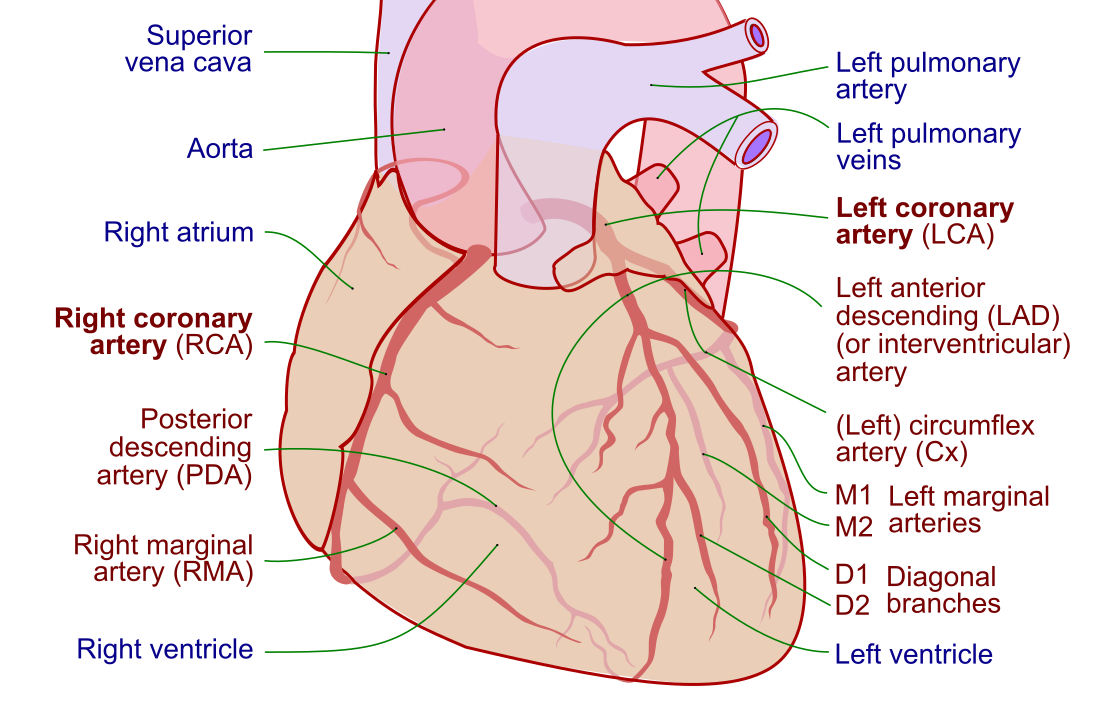
Coronary work dominates the caseload, which is why a solid grasp of coronary artery anatomy is non-negotiable. When the physician calls out a lesion in the mid-LAD or a dominant right coronary, the RCIS needs to know exactly what that means and anticipate the next move.
Where RCIS professionals work
The most common question from students is simple: where do RCIS professionals actually work? The short answer is anywhere invasive cardiac procedures happen — but that covers more ground than most people expect, and the settings differ meaningfully in pace, pay, and lifestyle.
| Setting | What the RCIS does there | Feel of the role |
|---|---|---|
| Hospital cardiac cath lab | Diagnostic angiography, PCI, right-heart cath | Core setting; call and high acuity |
| Electrophysiology (EP) lab | Support ablations and device implants | Sub-specialized, detail-intensive |
| Structural heart / hybrid OR | TAVR, mitral repair, closures | Cutting-edge, team-heavy |
| Academic medical center | Complex cases, teaching, research | High volume, more sub-specialties |
| Community / regional hospital | Bread-and-butter coronary work | Steadier pace, broad generalist role |
| Outpatient / office-based lab (OBL) | Elective diagnostic and peripheral cases | Mostly daytime, less call |
The hospital cath lab is the classic RCIS home base, and it is where most careers begin. From there, specialists often branch. The EP lab is a natural step for those who love rhythm work — supporting a cardiac ablation or a pacemaker implant demands deep familiarity with the cardiac conduction system and arrhythmias like atrial fibrillation and ventricular tachycardia.
Structural heart programs represent the fastest-growing frontier. As transcatheter valve replacement and repair expand, hybrid rooms need technologists who can bridge cath-lab and OR workflows. And at the other end of the spectrum, office-based labs and outpatient centers are multiplying as payers push lower-acuity procedures out of hospitals — appealing to specialists who want a predictable daytime schedule with less overnight call.
Job settings: hospitals vs. everything else
Because most RCIS jobs live inside hospitals, it is worth unpacking how hospital settings vary — and how they compare to the growing non-hospital options. The job setting you choose shapes your paycheck, your call burden, and your daily stress far more than the job title alone.
A large academic medical center offers the widest range of cases: complex chronic total occlusions, structural interventions, research protocols, and a teaching environment where you are constantly learning. The trade-off is volume and intensity — these labs run hot, and the call can be heavy. A community hospital, by contrast, delivers steadier bread-and-butter coronary work. You will become a confident generalist, and the pace is often more humane, though you may see fewer exotic cases.
Then there is the STEMI factor. Any hospital that runs a 24/7 heart-attack program needs an RCIS reachable at 3 a.m., because door-to-balloon time is measured in minutes. Being the specialist who can walk in, read the STEMI ECG, and have the room ready for an emergent percutaneous coronary intervention is a large part of what makes hospital cath-lab work both demanding and well compensated. That responsibility — recognizing an evolving myocardial infarction and moving fast — is not something an outpatient lab typically asks of you.
Non-hospital settings — office-based labs, ambulatory surgery centers, and industry roles — round out the picture. Some experienced specialists leave the bedside entirely for clinical applications or field-service positions with device and imaging manufacturers, traveling to train other labs on new equipment. Those roles reward deep procedural knowledge with a different lifestyle and, often, a different kind of income.
Salary and demand: what the numbers say
Now for the part everyone scrolls to: salary and demand. The RCIS credential sits within the broader BLS occupation of cardiovascular technologists and technicians, which reports a median annual wage in the low-to-mid $60,000s, with the middle of the workforce spanning roughly the high $40,000s to the high $80,000s and the top tenth clearing about $100,000 or more.
But that umbrella figure understates the invasive track. Because RCIS-credentialed specialists work the highest-acuity procedures, take call, and earn shift differentials, they tend to cluster in the upper half of that band — and experienced cath-lab specialists in high-cost markets frequently push into six figures once call pay is included. For a deeper regional and specialty breakdown, see our companion analysis of the cardiovascular technologist salary.
| Factor | Effect on RCIS pay |
|---|---|
| Invasive / cath-lab role | Upper half of the wage band |
| Call, nights, weekend differentials | Can add five figures per year |
| High-cost coastal metros | Highest nominal wages |
| Sub-specialty (EP, structural) | Premium for scarce skills |
| Travel / contract assignments | Highest hourly, no permanence |
| Outpatient / office-based lab | Lower base, better hours |
On the demand side, the outlook is genuinely favorable. The BLS projects steady employment growth for cardiovascular technologists over the coming decade, propelled by an aging population, the rising burden of coronary artery disease and heart failure, and the relentless shift of cardiac care toward catheter-based procedures. Every new structural-heart program and every expanded EP service needs credentialed specialists at the table. When skilled workers lag open positions — which is the current reality in many markets — wages, sign-on bonuses, and negotiating leverage all rise. Our look at the cardiovascular technologist job outlook digs into the forces behind that growth.
The skills and knowledge employers screen for
Getting hired into an RCIS job is not only about holding the credential — it is about demonstrating the specific competencies a cath-lab manager needs to trust you in the room. Interviews and skills checklists tend to probe the same core areas, so it pays to know them cold.
First is hemodynamics. You should be able to talk through normal pressures, recognize abnormal waveforms, and explain how the lab derives numbers like cardiac output, cardiac index, and systemic vascular resistance. Being comfortable with the concepts behind a hemodynamic calculator — where the numbers come from and what they mean at the bedside — signals real understanding rather than rote memorization.
Second is ECG and rhythm interpretation. An RCIS must catch a rhythm deteriorating on the monitor and know when to speak up. Solid ECG interpretation skills, reinforced with our ECG guide and rhythm practice bank, are table stakes. Third is anatomy and pathophysiology — the cardiac anatomy a physician assumes you already know when they call out a vessel or chamber.
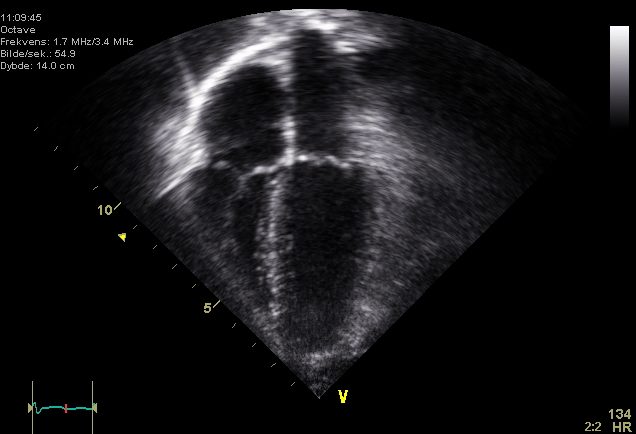
Finally, employers screen for pharmacology and safety judgment: familiarity with cath lab medications — anticoagulants, vasoactive drugs, contrast — and a disciplined approach to radiation protection. A candidate who can speak fluently about all four domains stands out immediately from one who simply lists a credential on a résumé.
How to get hired: a practical roadmap
Landing your first RCIS job follows a fairly predictable path. Here is a practical, ordered roadmap — most successful candidates move through these steps in roughly this sequence.
- Complete the right education. Most RCIS candidates finish an accredited cardiovascular technology program (often a two-year associate degree) or come in through a related allied-health background with documented invasive experience.
- Log clinical hours. The cath lab is learned by doing. Clinical rotations or an entry-level lab position build the case exposure the registry and employers expect.
- Pass the RCIS exam. Earn the credential from CCI. This is the gate — plan and study deliberately, because it validates everything above.
- Build a targeted résumé. Foreground your case types, hemodynamic and monitoring competencies, and any STEMI or call experience. Speak the lab's language.
- Network into a lab. Many cath-lab hires come through clinical rotations, referrals, and word of mouth. The relationships you build as a student often become your first job offer.
- Interview to your strengths. Be ready to talk waveforms, rhythms, coronary anatomy, and safety — the four domains hiring managers probe.
- Keep credentialing. Once hired, stack skills toward EP, structural, or lead roles to keep moving up the pay band.
The single highest-leverage step is passing that exam with genuine mastery rather than a bare pass — because interviewers can tell the difference, and confident answers about hemodynamics and ECGs are what get you the offer. Our free RCIS practice questions are built to reinforce exactly the material the registry and the interview will probe. If you are still mapping the entry route into the field, our guide on how to become a cardiovascular technologist lays out the education and credentialing path in more detail.
Career growth and adjacent roles
An RCIS job is a starting line, not a ceiling. The credential opens onto a wide field of advancement, and the specialists who plan their growth deliberately reach the top of the pay scale years faster than those who coast.
The most common upward moves are sub-specialization and leadership. Sub-specializing into electrophysiology or structural heart makes you scarcer and more valuable; stepping into a charge, lead, or clinical-educator role trades bedside hours for management-tier pay. Some experienced specialists move laterally into related invasive and imaging roles, or into the diagnostic-imaging world alongside a cardiovascular ultrasound technologist team, broadening their case mix.
Beyond the lab, there are whole career lanes fed by RCIS experience. Clinical applications specialists and field-service engineers at device and imaging companies rely on deep procedural knowledge to train and support hospital labs. Educators and program directors train the next generation of technologists. And in every one of these paths, the through-line is the same competency employers valued in the first place: a specialist who truly understands the physiology behind the procedure. Reinforcing that foundation — through resources like our PCI versus catheterization explainer and the broader hemodynamics and ECG guides — is what keeps a career compounding rather than plateauing.
Key takeaways
- RCIS jobs center on the Registered Cardiovascular Invasive Specialist credential and place you at the table for invasive cardiac procedures — scrubbing, monitoring hemodynamics, watching rhythms, and managing safety.
- Where RCIS work: primarily hospital cardiac cath labs, plus EP labs, structural-heart and hybrid rooms, academic and community hospitals, and growing outpatient office-based labs.
- Job settings vary widely — academic centers offer the most complex cases and heaviest call; community and outpatient settings trade some pay and complexity for a steadier, more predictable schedule.
- Salary sits in the upper half of the cardiovascular-technologist band (BLS median low-to-mid $60,000s), with call pay and sub-specialization pushing experienced specialists into six figures. Verify current figures with the BLS.
- Demand is favorable, driven by an aging population, rising heart disease, and the shift toward catheter-based procedures.
- Employers screen for four domains: hemodynamics, ECG/rhythm interpretation, anatomy and pathophysiology, and pharmacology plus radiation safety.
- To get hired: complete accredited education, log clinical hours, pass the RCIS exam with real mastery, build a targeted résumé, network through rotations, and keep credentialing toward advanced roles.
- This article is educational career guidance, not medical, financial, or employment advice.
Land the role — get credentialed
Practise free, exam-style RCIS questions to prepare for certification.
Start Free Practice →Frequently asked questions
What jobs can you get with an RCIS credential?
An RCIS credential qualifies you for invasive cardiovascular roles, most commonly as a cath-lab technologist performing diagnostic angiography and PCI support. It also opens doors to electrophysiology labs, structural-heart and hybrid-OR programs, lead and charge positions, clinical education, and clinical-applications or field-service roles with device and imaging manufacturers.
Where do RCIS professionals work?
Most RCIS professionals work in hospital cardiac catheterization labs. Beyond that, they work in electrophysiology labs, structural-heart and hybrid operating rooms, academic medical centers, community and regional hospitals, and a growing number of outpatient office-based labs and ambulatory surgery centers. Some move into industry applications and education roles.
How much do RCIS jobs pay?
RCIS jobs fall within the broader cardiovascular technologist occupation, which the BLS reports at a median in the low-to-mid $60,000s, with most workers between the high $40,000s and high $80,000s. Because RCIS specialists work high-acuity invasive cases and take call, they tend toward the upper half of that band, and experienced specialists in high-cost markets often clear six figures with differentials. Always confirm current figures with the BLS.
Is there demand for RCIS professionals?
Yes. The U.S. Bureau of Labor Statistics projects steady growth for cardiovascular technologists over the coming decade, driven by an aging population, rising rates of coronary artery disease and heart failure, and the expansion of catheter-based and structural-heart procedures. Many markets currently have more open cath-lab positions than credentialed specialists to fill them.
How do I get hired for an RCIS job?
Complete an accredited cardiovascular technology program, log clinical hours in a cath lab, pass the RCIS exam from CCI, and build a résumé that foregrounds your case types and monitoring skills. Networking through clinical rotations is one of the most effective routes, and interviewing well on hemodynamics, ECGs, coronary anatomy, and safety often clinches the offer.
What skills do employers look for in RCIS candidates?
Cath-lab managers screen for four core areas: hemodynamic monitoring and waveform interpretation, ECG and rhythm recognition, cardiac anatomy and pathophysiology, and pharmacology paired with radiation-safety discipline. A candidate who can speak fluently about all four stands out far more than one who simply lists the credential.
Do RCIS jobs require working on call?
In most hospital cath labs, yes. Facilities that run 24/7 STEMI heart-attack programs need an RCIS reachable overnight and on weekends, because door-to-balloon time is critical. Call comes with extra pay through differentials, but it is a real lifestyle factor. Outpatient and office-based labs typically involve little or no overnight call.
Is an RCIS job a good career?
For many people, yes. The training runway is relatively short, the pay lands well above the national median, and demand is strong and growing. The trade-offs are on-call schedules, standing for long procedures in lead aprons, and occupational radiation exposure. Those who keep credentialing and sub-specializing tend to find the career both stable and financially rewarding.
What is the difference between an RCIS and a cardiac sonographer?
An RCIS works invasive procedures in the cath lab — catheterization, angiography, and PCI — focusing on hemodynamics and procedural support. A cardiac sonographer (echocardiographer) performs non-invasive heart ultrasounds. They are distinct credentials and skill sets, though both fall under the cardiovascular technology field, and some specialists cross-train across both.
Sources & further reading
- Cardiovascular Credentialing International (CCI)
- American College of Cardiology
- American Heart Association
- MedlinePlus (U.S. National Library of Medicine)
External links are provided for reference; always confirm current details with the official source.