Cardiovascular Technologist Salary
A cardiovascular technologist salary sits comfortably above the median wage for all U.S. occupations, but the number on your paycheck depends heavily on your specialty, your experience, and the part of the country you call home.
- Cardiovascular technologist salary at a glance
- Pay by specialty: not all techs earn alike
- How experience moves the needle
- Where you work: pay by region and setting
- Credentials, certification, and the wage bump
- How to increase your cardiovascular technologist salary
- Job outlook: why demand supports pay
- Is the pay worth the path?
- Key takeaways
Cardiovascular technologist salary at a glance
If you are weighing a career acquiring echocardiograms, threading catheters, or recording ECGs, the first question is usually blunt: what does a cardiovascular technologist actually earn? The honest answer is that there is no single figure — pay spans a wide band — but the profession pays well above the national median wage, and the top of the range rivals what some allied-health roles with far longer training earn.
According to the U.S. Bureau of Labor Statistics (BLS), cardiovascular technologists and technicians earn a median annual wage in the low-to-mid $60,000s, with the middle half of the workforce clustered roughly between the high $40,000s and the high $80,000s. The lowest tenth earn under about $40,000, while the highest tenth clear roughly $100,000 or more. Because the BLS updates these figures every May, always confirm the current numbers on the official Occupational Outlook Handbook before quoting them in an interview or a program application.
The single biggest driver of where you land in that band is specialty. An entry-level ECG or monitor technician sits near the bottom; an experienced invasive cardiovascular specialist working in a busy cath lab sits near the top. Everything else — geography, credentials, shift, employer — layers on from there.
Pay by specialty: not all techs earn alike
"Cardiovascular technologist" is really an umbrella covering several distinct jobs, and the gap between the lowest- and highest-paid branches is substantial. Understanding the sub-specialties is the fastest way to understand the pay.
| Specialty | What they do | Typical earning tier |
|---|---|---|
| Invasive cardiovascular technologist (cath lab) | Assist in cardiac catheterization, angiography, and PCI | Highest |
| Cardiac sonographer (echocardiographer) | Perform diagnostic heart ultrasounds | High |
| Vascular technologist / sonographer | Image arteries and veins outside the heart | High |
| Electrophysiology (EP) technologist | Support ablations and device implants | High |
| Non-invasive / cardiographic technician | ECGs, stress tests, Holter monitors | Lower |
The invasive track — the work of an invasive cardiovascular technologist in the cath lab — generally tops the pay scale. These technologists work sterile cases, manage hemodynamic monitoring, and support high-acuity procedures such as percutaneous coronary intervention, which explains both the higher compensation and the on-call demands. Fluency in cath lab hemodynamics and ECG interpretation is part of what makes this role command a premium.
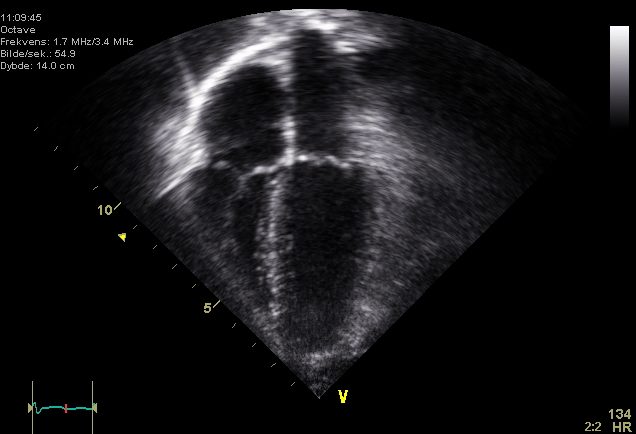
Cardiac sonographers — the cardiovascular ultrasound technologists who acquire echocardiograms — also earn strong wages, often overlapping with or exceeding the invasive range in ultrasound-heavy markets. Ultrasound is a technically demanding, image-optimization skill, and registered sonographers are consistently in short supply.
At the other end sit non-invasive cardiographic technicians, who run resting ECGs, treadmill stress tests, and Holter monitors. The work is essential and a common entry point, but the shorter training and lower acuity translate into lower pay. The upside is that this role is a natural springboard: many technicians add credentials and cross-train into echo, vascular, or invasive work over time.
How experience moves the needle
Few factors reshape a cardiovascular technologist salary as predictably as time on the job. Compensation in this field follows a fairly steep experience curve, especially in the invasive and imaging specialties where independent competence takes years to build.
| Career stage | Rough experience | Where pay tends to fall |
|---|---|---|
| Entry-level | 0–2 years | Bottom quartile |
| Mid-career | 3–7 years | Around the median |
| Experienced | 8–15 years | Upper quartile |
| Senior / lead | 15+ years or lead role | Top decile |
New graduates usually start near the lower third of the range while they build speed, earn their registries, and become comfortable working independently. The jump between year one and year five is often the largest of an entire career, because that is when a technologist transitions from needing supervision to carrying cases alone, taking call, and scrubbing complex procedures.
Beyond a decade, raw clinical experience delivers diminishing returns unless it is paired with something extra: a lead or charge role, a second registry, a move into a specialized lab (structural heart, electrophysiology), or a step into education, applications, or management. Those who plateau in pay are usually the ones who stopped adding credentials or responsibilities — a theme we return to in the section on raising your income.
Where you work: pay by region and setting
Geography can swing a cardiovascular technologist salary by tens of thousands of dollars for the exact same job title. Two forces are at play: local cost of living and local supply and demand for skilled techs.
The highest wages tend to cluster in high-cost, high-demand states — California, Washington, Oregon, Massachusetts, New York, and other coastal and metropolitan markets routinely report the top figures in BLS state data. Lower nominal wages are common across parts of the South and Midwest, though a smaller paycheck there often stretches further once housing is factored in. When comparing offers across cities, always adjust for cost of living rather than chasing the biggest headline number.
| Factor | Effect on pay | |
|---|---|---|
| High-cost coastal metros | Highest nominal wages | |
| Rural / underserved areas | Signing bonuses, but variable base | |
| Large academic medical centers | Competitive pay, more sub-specialties | |
| Outpatient / physician-office clinics | Often lower, but daytime hours | |
| Travel / contract assignments | Premium pay, no permanence |
Setting matters as much as state. A large academic hospital with a busy cath lab and a structural-heart program pays differently than a suburban outpatient echo clinic — the hospital offers higher acuity, call pay, and shift differentials, while the clinic offers predictable daytime hours at a lower base. Travel technologists occupy a category of their own: contract assignments can pay a sizeable premium over staff wages, trading job security and benefits continuity for higher hourly rates and the freedom to move between cities.
One more regional wrinkle: shift differentials and on-call pay can materially change take-home for invasive techs. A cath lab that runs a 24/7 STEMI program pays extra for nights, weekends, and callbacks — and for a technologist who is comfortable being paged in at 3 a.m. for a STEMI activation, that differential adds up quickly over a year.
Credentials, certification, and the wage bump
In cardiovascular technology, letters after your name translate fairly directly into dollars. Employers reward registries because they signal verified competence, reduce liability, and are often required for accreditation and insurance reimbursement.
- RCIS (Registered Cardiovascular Invasive Specialist) — the flagship credential for cath-lab technologists, offered by Cardiovascular Credentialing International (CCI).
- RCS / RDCS — registered cardiac sonographer credentials for echocardiographers, from CCI and ARDMS respectively.
- RVT / RVS — registered vascular technologist/sonographer for vascular imaging.
- RCES / CEPS — electrophysiology credentials for EP-lab specialists.
Earning the RCIS credential is one of the clearest ways an invasive technologist can move up the pay band, and many hospitals attach a formal pay differential or a one-time bonus to it. If you are preparing for that exam, our free RCIS hemodynamics practice questions and ECG practice bank are built to reinforce exactly the material the registry tests. Stacking a second registry — say, adding vascular to your invasive credential — widens the range of cases you can work and makes you harder to replace, both of which support higher pay.
How to increase your cardiovascular technologist salary
If your goal is to grow your income, the levers are concrete and largely within your control. Here is a practical, ranked playbook — most techs who break into the top decile have pulled several of these at once.
- Move into (or up within) the invasive specialty. The cath lab pays a premium for a reason. Mastering procedural support, sterile technique, and real-time hemodynamic monitoring is the surest route to the top of the scale.
- Earn and stack registries. Get your primary credential, then add a second. Each registry unlocks a new class of higher-paying cases.
- Sub-specialize. Structural heart, electrophysiology, and complex coronary work are in high demand and short supply. Techs who can support a cardiac ablation or a device implant are worth more than generalists.
- Take call and work differentials. Night, weekend, and on-call pay can add five figures a year to an invasive tech's income.
- Consider travel or contract work. For a few years, a travel tech can out-earn a staff counterpart substantially — useful for paying down debt or building savings fast.
- Step into a lead, educator, or applications role. Charge-tech, clinical-education, and vendor applications-specialist positions reward experience with management-tier pay.
- Relocate strategically. If you are mobile, moving to a high-demand market — adjusted for cost of living — can be the single fastest raise available.
Notice a pattern: almost every lever comes back to skill depth. The technologist who understands not just how to run a case but why the numbers on the monitor mean what they do — who can read a pressure waveform, recognize a dangerous rhythm, and anticipate the physician's next move — is the one who gets promoted, retained, and paid. Building that depth is exactly what our cardiac anatomy and ECG interpretation guides are designed to help you do.
Job outlook: why demand supports pay
Salary does not exist in a vacuum — it is propped up by demand, and the demand outlook for cardiovascular technologists is favorable. The BLS projects employment in this field to grow over the coming decade, driven by an aging population, the rising burden of coronary artery disease and heart failure, and a steady expansion of both diagnostic imaging and minimally invasive cardiac procedures.
Two structural trends reinforce this. First, cardiac care keeps shifting toward catheter-based interventions — structural heart repairs, complex ablations, and image-guided procedures — all of which need trained technologists at the table. Second, echocardiography continues to expand as the first-line, radiation-free way to assess the heart, sustaining strong demand for sonographers. When the number of skilled workers lags the number of open positions, wages and signing incentives rise. That supply-demand gap is precisely why credentialed, sub-specialized techs enjoy leverage at the negotiating table.
The flip side is that demand is uneven across specialties. Basic ECG technician roles face more competition and slower wage growth, partly because the task is increasingly automated and folded into nursing duties. The techs with the strongest outlook are those in the imaging and invasive branches, where human skill and judgment are hardest to replace. For a deeper look at growth projections and the forces behind them, see our companion piece on the cardiovascular technologist job outlook.
Is the pay worth the path?
For most people entering the field, the return on investment looks attractive. Compared with many four-year degrees, the training runway is short — often a two-year associate degree or a shorter certificate for someone already in healthcare — and the resulting wages land well above the national median. That combination of modest upfront cost and solid pay is a big part of the profession's appeal.
It is worth being clear-eyed about the trade-offs, though. Invasive roles carry real demands: on-call schedules, standing for long procedures in a lead apron, occupational radiation exposure, and the pressure of high-acuity emergencies. The higher pay in the cath lab is, in part, compensation for those burdens. Imaging roles trade some of that intensity for the physical strain of scanning — sonographers face a genuine risk of repetitive-motion injury over a career. None of this should scare off a motivated candidate, but it should factor into which branch you choose.
The best way to protect your earning trajectory is the same advice that runs through this entire article: keep learning. The field rewards depth of knowledge, and the technologists who treat their credential as a starting line rather than a finish line are the ones who reach the top of the pay scale. If you are just starting out, our overview of what a cardiovascular technologist does and the routes into the field is a useful next stop.
Key takeaways
- A cardiovascular technologist salary runs from the high $40,000s to over $100,000, with a BLS median in the low-to-mid $60,000s — always verify current figures on the BLS Occupational Outlook Handbook.
- Specialty is the biggest driver: invasive (cath lab) and imaging (echo, vascular) roles pay the most; non-invasive ECG technician roles pay the least.
- Experience matters most in years one through five, when techs move from supervised to independent practice; beyond a decade, credentials and leadership drive further gains.
- Region swings pay dramatically — high-cost coastal metros pay the most nominally, but adjust every offer for cost of living.
- Credentials pay off: the RCIS and other registries unlock higher-acuity, higher-paying roles and often carry a formal differential.
- To increase your pay: move invasive, stack registries, sub-specialize, take call, consider travel work, step into lead roles, and relocate strategically.
- A favorable BLS job outlook, driven by an aging population and more catheter-based procedures, continues to support wages for skilled techs.
- This article is educational career information, not financial or employment advice.
Frequently asked questions
How much does a cardiovascular technologist make?
Cardiovascular technologists and technicians earn a median annual wage in the low-to-mid $60,000s according to the U.S. Bureau of Labor Statistics, with most earning between the high $40,000s and high $80,000s. The top 10 percent clear roughly $100,000 or more. Your exact pay depends on specialty, experience, credentials, and location, so check the current BLS figures for the latest numbers.
Which cardiovascular technologist specialty pays the most?
Invasive cardiovascular technologists who work in the cath lab generally earn the most, because they support high-acuity procedures such as catheterization and PCI, take call, and work sterile cases. Cardiac sonographers (echocardiographers) and vascular technologists also earn strong wages. Non-invasive ECG and stress-test technicians typically earn the least.
Do cardiovascular technologists make more than nurses?
It varies. An experienced invasive cardiovascular technologist or registered sonographer can earn as much as or more than a staff registered nurse, especially with call pay and differentials. On average, however, registered nurses have a higher median wage. The gap narrows or reverses in specialized, high-demand cardiovascular roles.
How can I increase my cardiovascular technologist salary?
The most effective steps are moving into the invasive (cath lab) specialty, earning and stacking registries such as the RCIS, sub-specializing in structural heart or electrophysiology, taking call and working shift differentials, considering travel contracts, and stepping into lead or educator roles. Relocating to a high-demand market, adjusted for cost of living, can also deliver a fast raise.
Does the RCIS credential increase pay?
Often, yes. Many hospitals attach a formal pay differential or a one-time bonus to the Registered Cardiovascular Invasive Specialist (RCIS) credential, and credentialed techs get first access to the higher-paying, higher-acuity cath-lab roles. Over a career, certification compounds because it unlocks positions that uncredentialed staff cannot fill.
What is the job outlook for cardiovascular technologists?
The U.S. Bureau of Labor Statistics projects employment growth for cardiovascular technologists over the coming decade, driven by an aging population, rising rates of heart disease, and the expansion of imaging and catheter-based procedures. Demand is strongest in the imaging and invasive specialties; growth is slower for basic ECG technician roles.
Where do cardiovascular technologists earn the most?
The highest nominal wages tend to be in high-cost, high-demand states such as California, Washington, Oregon, Massachusetts, and New York, along with large academic medical centers and busy urban cath labs. Travel and contract assignments can pay a premium over staff wages. Always adjust these figures for local cost of living before comparing offers.
How long does it take to become a cardiovascular technologist, and is the pay worth it?
Most people complete a two-year associate degree or, if already in healthcare, a shorter certificate program. Given that relatively short training runway, the resulting pay — well above the national median — makes the return on investment attractive for many. The trade-offs are call schedules, radiation exposure in invasive roles, and repetitive-motion strain in imaging roles.
What is the difference in pay between an ECG technician and a cath lab technologist?
An ECG (cardiographic) technician performs resting ECGs, stress tests, and Holter monitoring, and typically sits near the bottom of the pay range because the training is shorter and the acuity lower. A cath lab (invasive) technologist assists in catheterization and PCI, requires more training and credentialing, and sits near the top of the range. The difference can be tens of thousands of dollars per year.
Sources & further reading
- Cardiovascular Credentialing International (CCI)
- American College of Cardiology
- American Heart Association
- MedlinePlus (U.S. National Library of Medicine)
External links are provided for reference; always confirm current details with the official source.