Ventricular Tachycardia (VT): ECG Features, Types & Treatment
Ventricular tachycardia is a fast, wide-complex rhythm that starts in the ventricles — and because it can degrade into cardiac arrest within seconds, recognizing it quickly on the monitor is one of the most important skills in the cath lab and on the RCIS exam.
What Is Ventricular Tachycardia?
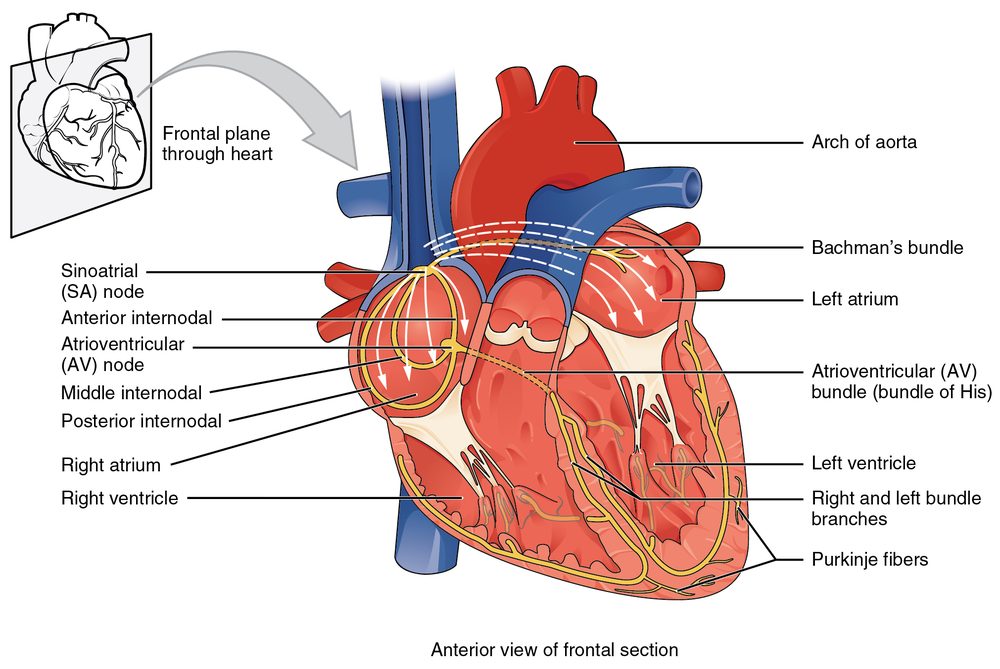
Ventricular tachycardia (VT) is a rapid heart rhythm that originates from a focus or circuit below the bundle of His — that is, in the ventricular myocardium or the Purkinje network rather than in the atria or AV node. Because the electrical impulse skips the normal, fast-conducting pathway and spreads cell-to-cell through muscle instead, the ventricles depolarize slowly and out of sync. That is why the hallmark of VT on the surface tracing is a wide QRS complex at a fast rate.
By convention, VT is defined as three or more consecutive ventricular beats at a rate above 100 beats per minute, though sustained VT usually runs faster — commonly 130 to 250 bpm. The clinical weight of VT comes from what it does to the heart's pumping. Fast, disorganized ventricular contraction shortens filling time and uncouples the atria from the ventricles, so cardiac output can fall off a cliff. Understanding how rate and filling drive output is worth reviewing alongside our primers on cardiac output and stroke volume.
VT lives on a spectrum. Some patients tolerate a slower, well-formed VT for minutes with only palpitations, while others collapse instantly. And VT can deteriorate into ventricular fibrillation, the chaotic rhythm behind most sudden cardiac deaths. That range — from nuisance to lethal — is exactly why the RCIS blueprint expects you to identify it on sight and know the first move.
This article is educational and written for RCIS exam preparation. It is not medical advice; clinical decisions belong to the treating team following current protocols.
Recognizing VT on the ECG
Reading VT on a 12-lead or monitor strip comes down to a short checklist. The classic picture is a run of wide, regular complexes with no clear preceding P waves. If you want to shore up the fundamentals first, our guides to ECG interpretation and ECG rhythm interpretation walk through the basics that make VT easier to spot.
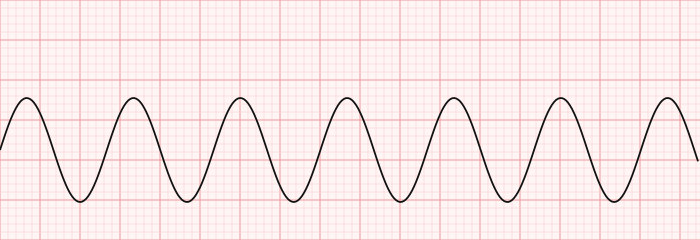
Here is what to look for when you suspect VT ECG findings:
- Wide QRS — typically ≥ 120 ms, often much wider (140–200 ms).
- Rapid rate — usually 100–250 bpm; monomorphic VT is fairly regular.
- AV dissociation — P waves marching independently of the QRS complexes, when you can find them.
- Fusion and capture beats — occasional normal-looking or hybrid beats that betray an atrial impulse sneaking through; these strongly favor VT.
- Concordance — QRS complexes all pointing the same direction across the precordial leads (V1–V6).
- Extreme axis — a northwest ('no man's land') axis supports VT.
Several formal algorithms (Brugada, Vereckei) exist to separate VT from supraventricular tachycardia with aberrancy, but the practical exam-level rule is blunt and safe: a wide-complex tachycardia is VT until proven otherwise, especially in a patient with known heart disease. Treating a misread VT as SVT can be fatal, whereas treating SVT as VT is rarely harmful.
Monomorphic vs Polymorphic VT
Sorting VT into monomorphic vs polymorphic VT is more than academic — the two behave differently and are managed differently. The distinction comes down to whether every QRS looks the same.
Monomorphic VT has QRS complexes of uniform shape, because a single stable circuit or focus drives every beat. It most often arises from a scar — classically an old myocardial infarction — where slowed conduction around dead tissue sets up a reentrant loop. The rhythm tends to be regular and, at least briefly, more tolerable.
Polymorphic VT has continuously changing QRS morphology, reflecting an unstable, shifting activation pattern. It is usually faster, less organized, and far more likely to collapse into ventricular fibrillation. The most recognizable subtype is torsades de pointes, whose complexes appear to twist around the baseline.
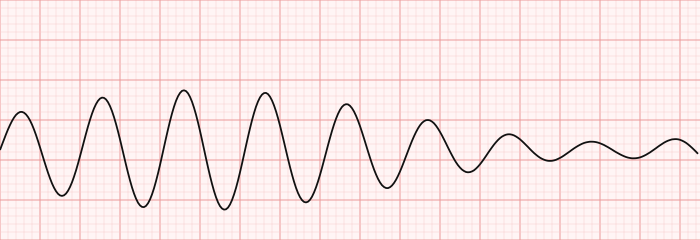
Torsades is tied to a prolonged QT interval — from drugs, electrolyte disturbance, or inherited long-QT syndromes — and is treated differently from other polymorphic VT (intravenous magnesium is the go-to). If QT measurement is fuzzy for you, review our dedicated pages on the QT interval and the corrected QT calculator. Polymorphic VT with a normal QT, by contrast, usually signals acute ischemia and points you toward the coronary arteries.
| Feature | Monomorphic VT | Polymorphic VT |
|---|---|---|
| QRS shape | Uniform, beat to beat | Continuously changing |
| Typical mechanism | Reentry around scar | Unstable repolarization / ischemia |
| Common trigger | Prior MI, cardiomyopathy | Long QT, drugs, electrolytes, acute ischemia |
| Regularity | Fairly regular | Irregular |
| Torsades subtype | No | Yes (with long QT) |
| Risk of degenerating to VF | Moderate | High |
Sustained vs Nonsustained VT
Duration matters too. Nonsustained VT (NSVT) is a run of three or more ventricular beats that terminates on its own within 30 seconds and does not cause hemodynamic collapse. Sustained VT lasts longer than 30 seconds or causes hemodynamic compromise that forces intervention before 30 seconds are up.
Why the 30-second line? It roughly separates a rhythm the heart can ride out from one that demands action. NSVT is common and is often a marker of underlying disease rather than an emergency in itself — though in a patient with reduced ejection fraction or structural heart disease, frequent NSVT raises the stakes and prompts a workup for sudden-death risk.
It is also worth separating VT from its lesser cousin, the isolated premature ventricular contraction (PVC). A single PVC is one early wide beat; three in a row at speed becomes a run of VT. Patterns like ventricular bigeminy — every other beat a PVC — sit on the same continuum and can herald more organized VT in the right setting.
- NSVT: ≥ 3 beats, self-terminates < 30 s, no collapse.
- Sustained VT: > 30 s or requires termination for instability.
- Incessant VT: recurs almost as soon as it is stopped — an ominous, unstable state.
Causes and Risk Factors
Most sustained VT occurs in a diseased heart. The single biggest substrate is scar from coronary artery disease and prior infarction — the border zone around old scar conducts slowly and unevenly, the perfect kindling for reentry. That is why a patient rolling into the cardiac cath lab with an acute coronary syndrome is a VT risk in real time.
Beyond ischemic scar, common contributors include:
- Cardiomyopathy — dilated, hypertrophic, or infiltrative disease with a low ejection fraction.
- Electrolyte disturbances — low potassium and low magnesium in particular.
- QT-prolonging drugs — many antiarrhythmics, some antibiotics, antipsychotics, and antiemetics.
- Acute ischemia — an evolving STEMI can throw polymorphic VT.
- Inherited channelopathies — long-QT syndrome, Brugada syndrome, catecholaminergic polymorphic VT.
- Idiopathic VT — in structurally normal hearts (e.g., outflow-tract VT), which is generally more benign.
Procedural triggers matter to the cath-lab tech as well: catheter contact with the ventricular wall, reperfusion after opening an occluded artery, and contrast injection can all provoke ventricular ectopy or short VT runs. Knowing the patient's baseline rhythm and having a defibrillator ready are part of standard lab discipline.
Symptoms and Hemodynamic Impact
How a patient looks in VT depends almost entirely on rate, duration, and how healthy the underlying heart is. Slower, monomorphic VT in a preserved heart may produce only palpitations, lightheadedness, or chest discomfort. Faster VT, or VT in a weak heart, collapses cardiac output and blood pressure — leading to syncope, pulseless arrest, or degeneration into VF.
The hemodynamic problem is twofold. First, the very fast rate slashes diastolic filling time, so each beat ejects less. Second, VT dissociates the atria from the ventricles, discarding the atrial 'kick' that normally tops off ventricular filling. Together these can drop output into the range of cardiogenic shock. Reviewing how pressure and flow interact in our hemodynamics guide makes it clearer why some patients crash and others don't.
Clinically you are triaging one question above all: is the patient stable or unstable? Signs of instability include hypotension, altered mental status, ischemic chest pain, and signs of acute heart failure. That single determination drives the entire treatment algorithm below.
VT Treatment: Acute and Long-Term
The first branch point in VT treatment is always the same: does the patient have a pulse, and are they stable? Current resuscitation guidance splits management along these lines.
Pulseless VT is a cardiac-arrest rhythm. It is managed exactly like ventricular fibrillation: immediate high-quality CPR, unsynchronized defibrillation, epinephrine, and an antiarrhythmic such as amiodarone or lidocaine per ACLS.
Unstable VT with a pulse — hypotension, chest pain, altered mentation, or heart failure — calls for prompt synchronized cardioversion, typically with sedation if time allows.
Stable monomorphic VT gives you room for a pharmacologic approach. Intravenous antiarrhythmics (amiodarone, procainamide, or lidocaine) are reasonable first steps, with cardioversion held in reserve if the patient deteriorates or the drug fails. Procainamide has performed well for stable, well-tolerated VT in comparative data, though the choice is individualized.
Polymorphic VT is handled by its cause. Torsades with a long QT gets intravenous magnesium, correction of electrolytes, withdrawal of offending drugs, and sometimes pacing or isoproterenol to raise the rate. Polymorphic VT with a normal QT usually means acute ischemia — the priority becomes revascularization and antiarrhythmic support, which is where an understanding of PCI versus diagnostic catheterization comes into play.
| Scenario | First-line action |
|---|---|
| Pulseless VT | CPR + unsynchronized defibrillation (ACLS) |
| Unstable VT, has pulse | Synchronized cardioversion |
| Stable monomorphic VT | IV antiarrhythmic (amiodarone / procainamide / lidocaine) |
| Torsades (long QT) | IV magnesium, correct electrolytes, stop QT drugs |
| Polymorphic VT, normal QT | Treat ischemia — revascularize |
Long-term, the goal shifts to preventing sudden death and recurrence. For patients with reduced ejection fraction or resuscitated VT, an implantable cardioverter-defibrillator (ICD) is the cornerstone — it does not prevent VT but reliably terminates it. Antiarrhythmic drugs and beta-blockers reduce episode frequency, and catheter ablation targets the reentrant circuit directly, an increasingly first-line option for recurrent monomorphic VT. For device basics and how they interact with the conduction system, see our overview of the pacemaker and the cardiac conduction system. The medications used in the lab to stabilize these patients are collected in our cath-lab medications reference.
VT in the Cath Lab and on the RCIS Exam
For the registered cardiovascular invasive specialist, VT is not a textbook abstraction — it can appear on the monitor mid-procedure. Manipulating a catheter in the right or left ventricle mechanically irritates the myocardium and can trigger PVCs or short VT runs that usually stop the moment the catheter is pulled back. Reperfusion during PCI is another classic moment for ventricular arrhythmia.
That reality shapes lab readiness: continuous rhythm monitoring, defibrillator pads on high-risk patients, corrected electrolytes, and an operator watching the trace. If you support hemodynamic assessment, being fluent with the Swan-Ganz catheter and mechanical support like the intra-aortic balloon pump matters, because unstable VT patients may need circulatory backup.
On the exam itself, expect to distinguish VT from supraventricular tachycardia with aberrancy, to separate monomorphic from polymorphic patterns, and to pick the correct first action based on stability. To drill these, work through our targeted RCIS ECG practice questions and the ECG strip identification set, which include wide-complex rhythms like VT alongside atrial fibrillation and heart block.
Key Takeaways
- VT is a wide-complex, fast rhythm arising below the His bundle; treat a wide-complex tachycardia as VT until proven otherwise.
- On the VT ECG, look for wide QRS, a rapid rate, AV dissociation, and capture or fusion beats.
- Monomorphic vs polymorphic VT: uniform complexes point to scar-related reentry; changing complexes point to long QT (torsades) or acute ischemia.
- Nonsustained VT self-terminates within 30 seconds; sustained VT lasts longer or causes collapse.
- VT treatment hinges on stability: defibrillate pulseless VT, cardiovert unstable VT, use IV antiarrhythmics for stable monomorphic VT, and give magnesium for torsades.
- Long-term protection against sudden death centers on ICDs, with ablation and antiarrhythmics reducing recurrence.
- In the cath lab, catheter contact and reperfusion can provoke VT — monitoring and defibrillator readiness are standard.
- This is educational content for RCIS preparation, not medical advice.
Practise arrhythmia recognition
Test VT, SVT, and emergency rhythms with instant feedback.
Practise ECG →Frequently asked questions
Is ventricular tachycardia life-threatening?
It can be. VT ranges from brief, well-tolerated runs to a pulseless cardiac-arrest rhythm. Because fast VT can collapse blood pressure and degenerate into ventricular fibrillation within seconds, it is always treated as a potential emergency and assessed immediately for stability.
What is the difference between monomorphic and polymorphic VT?
Monomorphic VT has QRS complexes that all look the same, driven by a single stable circuit — usually reentry around old scar. Polymorphic VT has continuously changing QRS shapes, is less stable, and is often caused by a long QT interval (torsades de pointes) or acute ischemia.
How do you tell VT from SVT with aberrancy on the ECG?
Both are wide and fast, but features favoring VT include AV dissociation, capture and fusion beats, an extreme (northwest) axis, precordial concordance, and a very wide QRS. Formal algorithms exist, but the safe clinical rule is to treat any wide-complex tachycardia as VT until proven otherwise — especially in a patient with known heart disease.
What is the first treatment for ventricular tachycardia?
It depends on the patient. Pulseless VT gets immediate CPR and unsynchronized defibrillation. VT with a pulse but instability (low blood pressure, chest pain, confusion) gets synchronized cardioversion. Stable monomorphic VT can be treated first with an IV antiarrhythmic such as amiodarone, procainamide, or lidocaine.
Why is torsades de pointes treated with magnesium?
Torsades is a polymorphic VT tied to a prolonged QT interval. Intravenous magnesium stabilizes the ventricular membrane and is effective at suppressing torsades even when serum magnesium is normal. Management also includes correcting potassium, stopping QT-prolonging drugs, and sometimes raising the heart rate with pacing.
What causes ventricular tachycardia?
The most common cause is scar from prior heart attack or coronary artery disease, which sets up reentry. Other causes include cardiomyopathy with a low ejection fraction, low potassium or magnesium, QT-prolonging medications, acute ischemia, and inherited channelopathies such as long-QT and Brugada syndromes.
What is the difference between sustained and nonsustained VT?
Nonsustained VT is a run of three or more ventricular beats that stops on its own within 30 seconds without causing collapse. Sustained VT lasts longer than 30 seconds or causes hemodynamic compromise that requires termination sooner.
Can ventricular tachycardia happen during a cardiac catheterization?
Yes. Catheter contact with the ventricular wall and reperfusion after opening a blocked artery can trigger PVCs or short VT runs. These usually stop when the catheter is withdrawn, but continuous monitoring and an available defibrillator are standard cath-lab precautions.
Do patients with VT need an ICD?
Many do. An implantable cardioverter-defibrillator does not prevent VT but reliably terminates it, and it is a cornerstone of sudden-death prevention in patients with reduced ejection fraction or resuscitated VT. Antiarrhythmic drugs and catheter ablation are used alongside to reduce how often episodes occur.
Sources & further reading
- Cardiovascular Credentialing International (CCI)
- American College of Cardiology
- American Heart Association
- MedlinePlus (U.S. National Library of Medicine)
External links are provided for reference; always confirm current details with the official source.