How to Become a Cardiovascular Technologist
Becoming a cardiovascular technologist means learning to see the heart from the inside — its rhythms, its pressures, and the arteries that keep it alive. This guide walks you through every step, from the education you need to the credentials that open doors and how long the whole path really takes.
- What a cardiovascular technologist actually does
- The steps to become a cardiovascular technologist
- Education and program requirements
- Credentials: RCIS, RCS, RVT and more
- Choosing invasive, echo, or vascular
- Timeline: how long does it take?
- The skills and knowledge you'll need
- Job outlook, pay, and where to work
- How to get started this year
- Key takeaways
What a cardiovascular technologist actually does
A cardiovascular technologist is the allied-health professional who runs the tests and assists with the procedures that let physicians diagnose and treat heart disease. Depending on where you work, that might mean threading catheters alongside an interventional cardiologist in the cath lab, capturing detailed ultrasound images of the heart's chambers, or recording the electrical activity that reveals a dangerous rhythm. It is a hands-on, high-stakes career that sits right at the point of care.
The field splits into a few broad tracks. Invasive technologists work in the catheterization laboratory, assisting with angiograms, stent placement, and structural heart procedures — this is the world of the RCIS credential and the day-to-day of a busy cardiac cath lab. Non-invasive cardiac technologists, often called cardiac sonographers, perform echocardiograms and stress tests. Non-invasive vascular technologists image the arteries and veins outside the heart. Some people use "cardiovascular technologist" as an umbrella term covering all of these, which is worth keeping in mind as you research programs and job listings.
Whichever track you choose, the core is the same: you are the person who turns a patient's living physiology into images and numbers a physician can act on. That takes a solid grasp of cardiac anatomy, comfort with technology, and the calm to work in an emergency. This article is educational career guidance, not medical or professional-licensing advice — always confirm the current requirements with the credentialing bodies and your state.
The steps to become a cardiovascular technologist
People arrive in this field by more than one route, but almost every path runs through the same handful of milestones. If you want the short version of how to become a cardiovascular technologist, here are the steps in order:
- Finish high school or earn a GED, with as much biology, anatomy, physics, and math as you can take. These subjects underpin everything that follows.
- Complete an accredited education program — usually an associate degree in cardiovascular technology, though certificate and bachelor's options exist. Accreditation matters enormously, as we'll see below.
- Log clinical hours during your program, gaining supervised, real-patient experience in a lab. This is where classroom knowledge becomes muscle memory.
- Earn a professional credential such as the RCIS, RCS, or RVT that matches your chosen specialty. Credentials prove competence to employers and, in some settings, are effectively required to be hired.
- Get hired and keep learning, then maintain your credential through continuing education and, if you wish, add more credentials over time.
That's the skeleton. The rest of this guide fleshes out each stage — what the education looks like, which credentials to chase, and how many months and years to budget. Think of the ordered list above as your map and the sections below as the terrain.
Education and program requirements
The most common entry point is a two-year associate degree in cardiovascular technology from a community college or a hospital-based program. Certificate programs — often aimed at people who already hold a healthcare credential, such as nurses or radiologic technologists — can be shorter, while a handful of universities offer a four-year bachelor's degree for those who want to deepen their science background or move toward leadership.
Whatever the format, the education credential that opens the most doors comes from a program accredited by CAAHEP (the Commission on Accreditation of Allied Health Education Programs), typically on the recommendation of the JRC-CVT committee. Accreditation isn't a bureaucratic checkbox: graduating from an accredited program is often a prerequisite for the professional certification exams and for employment at many hospitals. Enrolling somewhere unaccredited can quietly close off the credentials you're working toward, so verify a program's status before you sign anything.
Coursework blends the science with the hands-on. Expect classes in cardiac and vascular anatomy, physiology, pharmacology, and pathology, layered onto the practical skills of your specialty — catheterization technique, ultrasound physics, or ECG acquisition. The hemodynamics and ECG interpretation you learn in the classroom are the same skills you'll be tested on in the credentialing exam and use on every shift.
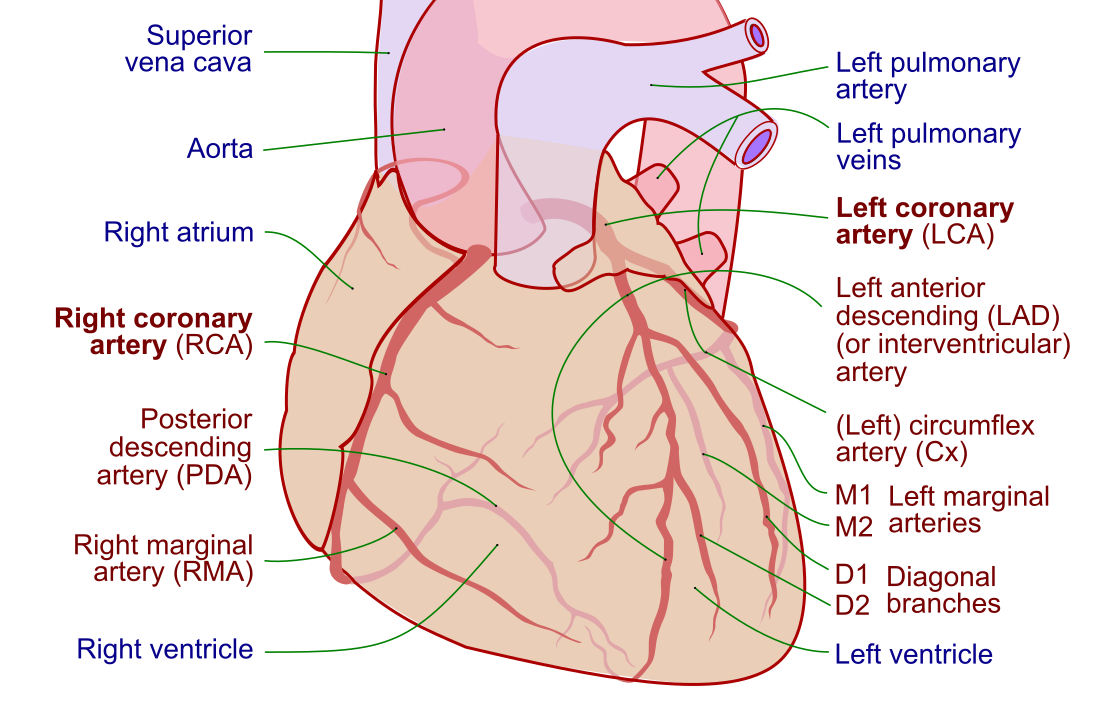
The other half of your education happens in the clinic. Accredited programs build in supervised clinical rotations where you work with real patients under experienced technologists and physicians. These hours are non-negotiable — they're where you learn to sterilize a field, manage a nervous patient, and recognize when a case is going sideways. For cath-lab-bound students, seeing how diagnostic catheterization differs from a PCI up close is worth more than any textbook chapter.
Credentials: RCIS, RCS, RVT and more
Credentials are the currency of this profession. When people compare RCIS RCS RVT, they're really asking which specialty they want to certify in, because each credential maps to a different corner of cardiovascular work. Two main organizations award them: Cardiovascular Credentialing International (CCI) and the American Registry for Diagnostic Medical Sonography (ARDMS).
- RCIS — Registered Cardiovascular Invasive Specialist. The gold-standard credential for cath-lab technologists, awarded by CCI. It certifies competence in invasive procedures, hemodynamic monitoring, and the ECG and pharmacology knowledge those require.
- RCS — Registered Cardiac Sonographer. The CCI credential for adult echocardiography, for technologists who image the heart with ultrasound.
- RVT — Registered Vascular Technologist. Awarded by ARDMS, this certifies vascular ultrasound of arteries and veins throughout the body.
There are others worth knowing. RCES (Registered Cardiac Electrophysiology Specialist) covers the EP lab, where rhythm disorders are mapped and treated with procedures like cardiac ablation. CCT (Certified Cardiographic Technician) is an entry-level CCI credential often earned early. And ARDMS offers RDCS for echocardiography as a parallel to CCI's RCS. You don't need all of them — you need the one that matches your job — but many technologists collect a second credential over their careers to broaden their options.
| Credential | Full name | Awarding body | Specialty |
|---|---|---|---|
| RCIS | Registered Cardiovascular Invasive Specialist | CCI | Cath lab / invasive |
| RCES | Registered Cardiac Electrophysiology Specialist | CCI | EP lab |
| RCS | Registered Cardiac Sonographer | CCI | Adult echo |
| RDCS | Registered Diagnostic Cardiac Sonographer | ARDMS | Echocardiography |
| RVT | Registered Vascular Technologist | ARDMS | Vascular ultrasound |
| CCT | Certified Cardiographic Technician | CCI | Entry-level / ECG |
Eligibility for these exams typically hinges on a mix of accredited education and documented clinical experience, and the exact pathways change from time to time. Always check the current requirements directly with CCI or ARDMS before you plan around them.
Choosing invasive, echo, or vascular
Because the RCIS RCS RVT credentials point to genuinely different jobs, the choice among them shapes your daily life. It's worth thinking honestly about what kind of work suits you before you commit.
The invasive path (RCIS) puts you in the cath lab, often in fast-paced, sometimes emergent situations — a patient having an active heart attack rolls in and the clock is running. You'll assist with catheters, monitor pressures, and hand off equipment during procedures like cardiac catheterization and stenting. It rewards people who thrive under pressure and don't mind wearing lead aprons for radiation protection. If reading a STEMI on the ECG and knowing exactly which artery is occluded excites you, this may be your track.
The echo path (RCS or RDCS) is quieter and more image-focused. You'll spend your day acquiring and optimizing ultrasound views of the heart, measuring chamber sizes and valve function, and calculating things like ejection fraction. It suits detail-oriented people who enjoy the craft of producing a beautiful, diagnostic image and building rapport with awake patients.
The vascular path (RVT) takes you beyond the heart to the arteries and veins of the whole body — screening for blockages, clots, and aneurysms. Like echo, it's ultrasound-based and generally less frantic than the cath lab. If you'd rather explore the closely related cardiovascular ultrasound technologist role in depth, that overlaps heavily with the echo and vascular tracks.
Timeline: how long does it take?
The honest answer to "how long?" is: it depends on your starting point and the route you take, but most people reach a working, credentialed role in two to four years. Here's a realistic timeline broken down by pathway.
| Pathway | Typical length | Best suited to |
|---|---|---|
| Associate degree in cardiovascular technology | ~2 years | Most newcomers to the field |
| Certificate program | ~1–1.5 years | Those already holding a healthcare credential |
| Bachelor's degree | ~4 years | Those wanting depth or a leadership track |
| On-the-job training (limited, employer-specific) | Varies | Rare; some hospitals train internally |
Layer the credential on top of the education, and the picture fills in. After finishing an accredited program, you'll sit for the relevant certification exam — many candidates pass within a few months of graduating, using targeted review to prepare. That's where structured study makes a real difference; working through banks of hemodynamics practice questions and ECG strip drills turns shaky recall into exam-day confidence.
So a common, concrete timeline looks like this: two years of associate coursework and clinical rotations, followed by a few months of focused exam prep, landing you in a credentialed job roughly 24 to 30 months after you start. A certificate holder with a prior healthcare background might compress that considerably; someone pursuing a bachelor's stretches it out but gains breadth. Job-market conditions and your local hospital's hiring practices also affect how quickly you convert a credential into a paycheck, so treat these figures as typical rather than guaranteed.
The skills and knowledge you'll need
Beyond degrees and credentials, this job demands a specific blend of knowledge and temperament. The technical foundation is deep cardiovascular science — you can't monitor what you don't understand.
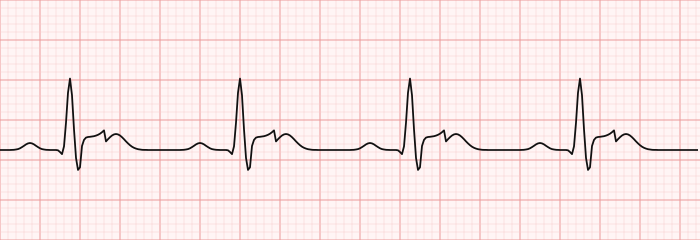
On the knowledge side, you'll need fluency in ECG rhythm interpretation — spotting atrial fibrillation, ventricular tachycardia, and heart block at a glance. You'll need to understand pressures and flows well enough to recognize when the numbers on the monitor spell trouble, drawing on the same physiology behind cardiac output and systemic vascular resistance. And you'll need working knowledge of cath-lab medications, because the drugs given during a case change the hemodynamics you're watching.
The human skills matter just as much. You'll be caring for frightened patients, communicating clearly with a busy procedural team, and maintaining sterile technique without fail. Physical stamina helps — long cases on your feet, sometimes in lead — as does the emotional steadiness to stay useful during a code. Precision and attention to detail run through all of it: a mislabeled measurement or a missed rhythm change has real consequences.
Job outlook, pay, and where to work
The career outlook for cardiovascular technologists is generally favorable, driven by an aging population and the stubborn prevalence of heart disease. Government labor projections have consistently placed employment growth for cardiovascular technologists and technicians at a healthy clip, though exact figures shift year to year, so check current data when you're planning.
Pay varies widely by specialty, credential, experience, region, and setting. Invasive cath-lab technologists with an RCIS often sit toward the higher end of the range, reflecting the acuity and call responsibilities of the work; echo and vascular sonographers are also well compensated. Holding more than one credential, working in a high-cost metro area, and taking on call all tend to push earnings up. Because the numbers move, treat any single salary figure you read as a ballpark and cross-check several current sources.
Most technologists work in hospitals — in cath labs, echo suites, EP labs, and vascular labs — but you'll also find roles in outpatient cardiology clinics, imaging centers, and physicians' offices. Some experienced technologists move into education, applications and sales for device manufacturers, or lab management. The credential you earn tends to travel well between these settings, which is part of what makes the field a stable long-term bet.
How to get started this year
If you're ready to act, the path forward is refreshingly concrete. Start by researching accredited programs near you, confirming their CAAHEP status and asking pointed questions about clinical placement rates and how their graduates fare on the credentialing exams. A program's job is to get you both educated and eligible — make it prove it can.
Next, shore up your prerequisites. If your science background is thin, knock out anatomy, physiology, and algebra at a community college first; you'll thank yourself when the pathophysiology comes fast. While you're at it, begin building familiarity with the material you'll live and breathe later. Getting comfortable now with core topics through free resources — reviewing the cardiac anatomy guide or testing yourself against ECG practice questions — makes your first semester far less overwhelming.
Then apply, immerse yourself in the clinicals, and treat every rotation as an extended job interview, because it often is. As graduation nears, pick your credential, build a study plan, and drill relentlessly. Finally, sit the exam and apply for jobs — ideally at a site where you rotated and already know the team. The whole arc, from first prerequisite to first paycheck, is genuinely achievable in a couple of focused years. The heart isn't going to run out of patients who need people who understand it.
Key takeaways
- How to become a cardiovascular technologist: finish high school, complete an accredited program, log clinical hours, earn a matching credential, and get hired — those are the core steps.
- The most common education credential is a two-year associate degree from a CAAHEP-accredited program; certificate and bachelor's routes also exist, and accreditation is often required for certification and employment.
- Match your credential to your specialty when weighing RCIS RCS RVT: RCIS for the cath lab, RCS/RDCS for echo, RVT for vascular ultrasound — with RCES, CCT, and others for specific niches.
- The typical timeline is about two to four years, and many people reach a credentialed job roughly 24–30 months after starting an associate program plus exam prep.
- Success rests on deep cardiovascular knowledge — ECG, hemodynamics, pharmacology — plus sterile technique, communication, and composure under pressure.
- The job outlook is generally strong, pay varies by specialty and region, and most roles are hospital-based with room to grow.
- This article is educational career guidance, not medical or licensing advice; always confirm current requirements with CCI, ARDMS, accreditors, and your state.
Frequently asked questions
How long does it take to become a cardiovascular technologist?
Most people reach a working, credentialed role in about two to four years. A two-year associate degree is the most common route, after which you sit for a certification exam that many candidates pass within a few months of graduating. Certificate programs for those already in healthcare can be shorter, while a bachelor's degree takes about four years. A realistic end-to-end timeline is roughly 24 to 30 months from your first course to your first job.
What education do you need to be a cardiovascular technologist?
The standard entry point is an associate degree in cardiovascular technology from a program accredited by CAAHEP. Certificate programs exist for people who already hold a healthcare credential, and some universities offer a four-year bachelor's degree. Accreditation is important because graduating from an accredited program is often required both to sit the certification exams and to be hired at many hospitals.
What is the difference between RCIS, RCS, and RVT?
They are credentials for different specialties. RCIS (Registered Cardiovascular Invasive Specialist) certifies cath-lab and invasive procedure work through CCI. RCS (Registered Cardiac Sonographer) is CCI's credential for adult echocardiography. RVT (Registered Vascular Technologist) is awarded by ARDMS for vascular ultrasound of arteries and veins. You choose the one that matches the job you want, and many technologists add a second over time.
Do you need to be certified to work as a cardiovascular technologist?
Certification isn't universally mandated by law, but in practice it is close to essential. Many hospitals require a credential such as the RCIS, RCS, or RVT for hiring, and some make it a condition of continued employment within a set timeframe. Earning the credential proves your competence to employers and significantly widens your job options, so it's a step worth planning for from the start.
Is cardiovascular technology a good career?
For many people, yes. The work is meaningful and hands-on, the job outlook is generally favorable given an aging population and ongoing heart disease, and pay is solid — especially for invasive cath-lab technologists holding an RCIS. It also offers room to grow into new specialties, education, or management. The trade-offs include on-call demands, working around radiation in the cath lab, and the emotional weight of critically ill patients.
What is the fastest way to become a cardiovascular technologist?
The quickest route is usually a certificate program if you already hold a related healthcare credential, since it can take around a year to a year and a half instead of two. Otherwise, an accelerated or full-time accredited associate program followed by prompt, focused exam preparation is the fastest realistic path. Speeding up prerequisites at a community college beforehand can also shorten your overall timeline.
Can you become a cardiovascular technologist without a degree?
It's uncommon. A small number of hospitals train technologists on the job, and some entry-level credentials like the CCT are more accessible, but most employers and certification pathways expect graduation from an accredited education program. Skipping formal, accredited education can quietly block you from the credentials and hospital jobs you're aiming for, so a degree or certificate is the reliable route.
What skills does a cardiovascular technologist need?
You'll need strong cardiovascular knowledge — ECG rhythm interpretation, hemodynamics, and pharmacology — plus practical skills like sterile technique and equipment handling. Just as important are the human skills: clear communication with the procedural team, calm reassurance of anxious patients, and steady composure during emergencies. Attention to detail and physical stamina round out the profile, since accuracy and long cases on your feet are part of daily life.
Where do cardiovascular technologists work?
Most work in hospitals, staffing catheterization labs, echocardiography suites, electrophysiology labs, and vascular labs. You'll also find roles in outpatient cardiology clinics, imaging centers, and physicians' offices. With experience, some technologists move into teaching, device-company applications and sales, or lab management, and credentials generally transfer well between these settings.
Sources & further reading
- Cardiovascular Credentialing International (CCI)
- American College of Cardiology
- American Heart Association
- MedlinePlus (U.S. National Library of Medicine)
External links are provided for reference; always confirm current details with the official source.