Cardiovascular Technologist Schooling
Cardiovascular technologist schooling is the accredited training that turns a science-minded student into a cath-lab or echo professional — here is exactly what to study, how long each path takes, why CAAHEP accreditation is non-negotiable, and how online and hybrid formats really work.
- What cardiovascular technologist schooling actually involves
- Program options and length
- CAAHEP accreditation: why it is non-negotiable
- Prerequisites and admission requirements
- The curriculum: what you will study
- Invasive vs non-invasive tracks: choosing your concentration
- Are there online cardiovascular technologist programs?
- Cost, financial aid, and return on investment
- After school: from graduate to credentialed professional
- Key takeaways
What cardiovascular technologist schooling actually involves
Cardiovascular technologist schooling is formal, accredited training that prepares you to assist with the diagnosis and treatment of heart and blood-vessel disease. It blends classroom science with heavy hands-on clinical work — you do not simply read about the heart, you learn to record its electrical signals, image it with ultrasound, and help physicians thread catheters through it in real time. That mix of academic depth and supervised practice is the defining feature of every legitimate program.
The field splits into three broad tracks, and the schooling differs for each. The invasive track prepares you for the cardiac catheterization laboratory, where you support angiography, stenting, and structural procedures; graduates typically pursue the RCIS credential. The non-invasive (echocardiography) track trains you to perform heart ultrasounds as a cardiovascular ultrasound technologist. The vascular track focuses on imaging arteries and veins outside the heart. Many programs let you concentrate in one area while giving you a shared foundation in all three.
Whichever direction you choose, the through-line is the same: mastery of cardiac anatomy, the physics of how blood moves, and the practical skills to work safely at the bedside. This article is educational and written to help prospective students and exam candidates plan their training. It is not medical or career-licensing advice — always confirm current requirements with the specific program and credentialing body you are targeting, because accreditation standards and eligibility rules are periodically updated.
Program options and length
There is no single road into this career, and the right one depends on where you are starting. The most common entry point is a two-year associate degree, but certificates and bachelor's degrees each have a place. Here is how the main options compare.
| Program type | Typical length | Best suited for |
|---|---|---|
| Associate degree in cardiovascular technology | About 2 years (18–24 months) | The standard entry route for most new students |
| Certificate program | About 12–18 months | People who already hold an allied-health degree or license (RN, RT, paramedic) |
| Bachelor's degree | About 4 years | Those wanting broader career mobility, leadership, or education roles |
| On-the-job / employer training | Varies | Less common today; often paired with formal coursework |
The associate degree is the workhorse of the field. Over roughly two years you complete general-education courses, cardiovascular science, and — critically — hundreds of hours of supervised clinical rotations. Because it is offered at many community colleges, it is usually the most affordable accredited route.
A certificate program compresses the timeline for candidates who already have a healthcare background. A registered nurse or radiologic technologist has already covered much of the general science and patient-care groundwork, so a focused 12- to 18-month certificate can bridge them into cardiovascular work efficiently. If you are weighing specific schools, our overview of RCIS programs walks through what to look for.
A bachelor's degree takes about four years and is worth considering if you want the widest long-term options — supervisory roles, program education, applications engineering with device companies, or a stepping stone toward advanced practice. It is not required to work as a technologist, but it can open doors later.
CAAHEP accreditation: why it is non-negotiable
If you remember one thing from this article, make it this: attend a CAAHEP-accredited program. The Commission on Accreditation of Allied Health Education Programs (CAAHEP) accredits cardiovascular technology programs based on recommendations from the Joint Review Committee on Education in Cardiovascular Technology (JRC-CVT). Accreditation is not a bureaucratic formality — it is your assurance that the curriculum, faculty, equipment, and clinical placements meet a recognized national standard.
Accreditation matters for three concrete reasons. First, it protects the quality of your clinical training: accredited programs must provide substantial, supervised, hands-on rotations in real cardiovascular settings. Second, it directly affects your credentialing eligibility. Cardiovascular Credentialing International (CCI), which awards the RCIS, and the ARDMS, which awards echo and vascular credentials, both offer their most direct eligibility pathways to graduates of accredited programs. Graduating from a non-accredited program can force you onto a longer, work-experience-heavy route to sit the same exam. Third, employers know the accreditation logos, and many hospital HR systems screen for them.
Before enrolling, verify a program's current accreditation directly on the CAAHEP website rather than trusting a school's marketing page, since accreditation status can change. Confirm two things specifically: that the program is accredited in the concentration you want (invasive, non-invasive, or vascular can be separate), and that it guarantees clinical placement rather than leaving you to find your own rotations.
Prerequisites and admission requirements
Cardiovascular technology programs are competitive, and admission is about more than a diploma. While exact requirements vary by school, a consistent pattern shows up across accredited programs.
- High-school diploma or GED with completed coursework in biology, chemistry, algebra, and ideally physics.
- Prerequisite college courses — many programs require or strongly prefer college-level anatomy and physiology (often two semesters), medical terminology, and sometimes college algebra or basic physics before you can start the core sequence.
- A minimum GPA, commonly around 2.5–3.0, in prerequisite science courses.
- Healthcare exposure — volunteering, shadowing, or prior roles such as CNA, EMT, medical assistant, or phlebotomist strengthen an application and confirm you understand the environment.
- Background check, immunizations, CPR (BLS) certification, and drug screening — required before clinical rotations, since you will be working directly with patients.
A strong grasp of the underlying science pays off long before graduation. Students who arrive comfortable with how the heart's chambers, valves, and conduction pathways fit together tend to move through the clinical material far more smoothly. If your anatomy is rusty, reviewing the cardiac conduction system and coronary artery anatomy before you apply is time well spent.
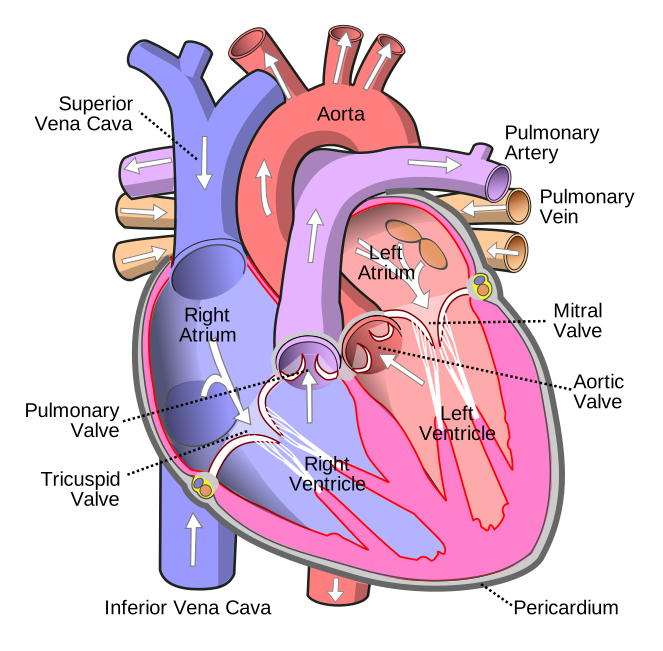
The curriculum: what you will study
An accredited program is deliberately front-loaded with science and then layered with progressively more specialized clinical skill. The curriculum is where the abstract anatomy of your prerequisites becomes the practical fluency you will use every shift.
Foundational science comes first — detailed cardiac anatomy and physiology, cardiovascular pathophysiology (how disease alters normal function), medical terminology, and patient care and safety. From there the coursework becomes recognizably cardiovascular:
- Electrocardiography — reading the electrical activity of the heart, from basic rhythm strips to the 12-lead. This is a cornerstone skill covered in our ECG guide and the deeper ECG interpretation pillar. You will learn to recognize atrial fibrillation, dangerous rhythms like ventricular tachycardia, and the ST-elevation pattern of an acute MI, which we cover in STEMI ECG interpretation.
- Hemodynamics — the physics of pressure and flow through the heart and vessels, including waveform recognition and pressure measurement. Our hemodynamics guide maps out exactly what this involves.
- Cath-lab procedures, equipment, and devices — the workflow of the cardiac cath lab, sterile technique, catheters, and adjunct devices such as the intra-aortic balloon pump.
- Cardiovascular pharmacology — the drugs used during procedures and in cardiac care.
- Radiation safety and physics (for the invasive track) or ultrasound physics and instrumentation (for the echo and vascular tracks).
- Supervised clinical rotations — the largest and most important component, where everything comes together on real patients.
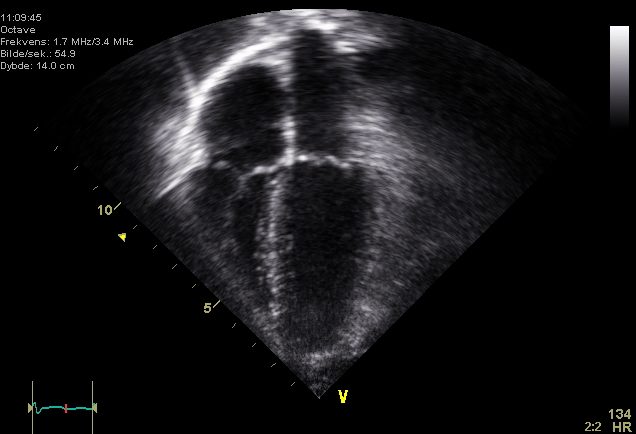
The clinical rotations are what separate cardiovascular technology from a purely academic health-science degree. You rotate through real cath labs and echo suites, accumulating a required number of supervised procedure hours, and you gradually take on more responsibility under a preceptor's eye. Many programs also fold in exam-style question banks — you can practice the same domains for free in our hemodynamics and ECG question sets.
Invasive vs non-invasive tracks: choosing your concentration
One of the most important decisions you make in schooling is your concentration, because it shapes both your daily work and the credential you will pursue. Programs are often accredited separately for each track, so choosing early keeps you from enrolling in the wrong one.
| Track | What you do | Primary credential | Key coursework emphasis |
|---|---|---|---|
| Invasive (cath lab) | Assist with angiography, PCI, structural procedures | RCIS (via CCI) | Hemodynamics, radiation safety, procedures |
| Non-invasive (echo) | Perform cardiac ultrasound studies | RCS / RDCS | Ultrasound physics, echo acquisition |
| Vascular | Image peripheral arteries and veins | RVT / RVS | Vascular ultrasound, Doppler physics |
The invasive track suits people who thrive in a fast, procedural, team-based environment. You will be part of the sterile team during procedures, monitoring pressures and rhythms while a physician works. It leans heavily on hemodynamics and radiation safety, and the distinction between a diagnostic catheterization and an intervention — explained in our comparison of PCI versus cardiac catheterization — becomes second nature. This track feeds directly into the RCIS certification.
The non-invasive echo track suits those drawn to imaging and detailed measurement. You spend your days acquiring high-quality ultrasound views and Doppler tracings, a skill described in our echocardiogram overview. It is less physically intense than the cath lab and does not involve radiation, but it demands patience and a keen eye for image optimization.
Are there online cardiovascular technologist programs?
This is one of the most common questions prospective students ask, and the honest answer requires nuance. Because so much of the job is physical and hands-on, fully online cardiovascular technologist programs essentially do not exist in any legitimate, accredited form. You cannot learn to thread a pressure line, sterilize a field, or optimize an echo window through a video alone.
What does exist — and is increasingly common — is the hybrid format. In a hybrid program, the didactic (lecture-based) coursework is delivered online, while the laboratory skills and clinical rotations happen in person. This can be a genuine convenience: you might complete anatomy, physiology, pharmacology, and ECG theory from home on a flexible schedule, then travel to campus and to clinical sites for the hands-on components. For working adults and rural students, hybrid delivery can make an otherwise inaccessible program feasible.
If you are considering a hybrid or online-heavy program, vet it carefully:
- Confirm CAAHEP accreditation for the specific concentration — this is where questionable programs cluster.
- Ask exactly how clinical rotations are arranged. Does the program place you at partner sites, or are you expected to find your own? Self-arranged clinicals are a burden and a risk.
- Verify the volume of required clinical hours matches what credentialing bodies expect.
- Beware of any program marketed as "100% online" that still claims to prepare you to sit a credentialing exam — that combination should not exist.
In short: online didactics, yes; online clinicals, no. A reputable program will always require you to prove your skills on real equipment with real patients before you graduate.
Cost, financial aid, and return on investment
Cost varies enormously with the type and setting of the program. A community-college associate degree is typically the most economical accredited route, while a private institution or a bachelor's program costs considerably more. Beyond tuition, budget for prerequisites, textbooks, uniforms, immunizations, a background check, BLS certification, and eventually the credentialing exam fee.
Because accredited programs qualify for federal financial aid, most students combine grants, subsidized loans, and sometimes employer tuition assistance. Hospitals facing staffing shortages occasionally sponsor students in exchange for a work commitment after graduation — worth asking about directly. Scholarships from professional societies in cardiovascular technology are another underused source of funding.
The return on investment tends to be favorable relative to the training time. In roughly two years you can enter a skilled, in-demand allied-health role. We discuss earnings and growth in detail in our ultrasound technologist career material and across the broader career cluster. As always, treat any salary figures as general guidance rather than a promise, since pay depends heavily on region, setting, specialty, and experience — and the labor market shifts over time.
After school: from graduate to credentialed professional
Graduation is the finish line for schooling but the starting line for your career. The final step that makes you employable is earning the specialty credential that matches your track. For most invasive graduates, that means passing the RCIS exam administered by CCI.
The transition typically unfolds like this: you confirm your eligibility pathway (accredited-program graduates usually have the most direct route), you register for the exam, and you prepare with focused study. A structured plan built around question banks and domain review is the most reliable way to pass on the first attempt. You can begin immediately and for free — sharpen your rhythm recognition with our ECG strip practice, drill pressure-and-flow concepts in the hemodynamics question set, and use interactive tools like the hemodynamic calculator to reinforce the math you learned in class.
For the complete roadmap from enrollment through your first job, see our step-by-step guide on how to become a cardiovascular technologist. Once credentialed, most technologists maintain their certification through continuing education, and many go on to sub-specialize — in electrophysiology, structural heart, or pediatric cardiology — building on the same foundation their schooling laid down.
Key takeaways
- Cardiovascular technologist schooling combines cardiovascular science with heavy, supervised clinical training across invasive, non-invasive (echo), and vascular tracks.
- Program length: about two years for an associate degree, 12–18 months for a certificate (with a related background), and about four years for a bachelor's degree.
- CAAHEP accreditation is non-negotiable — it protects your training quality and gives you the most direct pathway to sit credentialing exams like the RCIS.
- Prerequisites commonly include high-school sciences, college-level anatomy and physiology, a minimum GPA, healthcare exposure, and pre-clinical clearances (background check, immunizations, BLS).
- The curriculum covers anatomy, ECG, hemodynamics, procedures, pharmacology, radiation safety or ultrasound physics, and — most importantly — clinical rotations.
- Fully online programs are not legitimate for this hands-on field; hybrid formats deliver didactics online but require in-person labs and clinicals.
- Choose your concentration early: invasive leads to the RCIS, echo to RCS/RDCS, and vascular to RVT/RVS.
- School ends with a credential, not just a diploma — begin exam prep early with free practice questions.
- This content is educational, not medical or career-licensing advice; always verify current accreditation and eligibility rules with the program and credentialing body.
Frequently asked questions
How long is cardiovascular technologist school?
Most students complete an associate degree in about two years. Certificate programs run roughly 12 to 18 months and are designed for people who already hold a related allied-health degree or license. A bachelor's degree takes about four years and offers broader long-term career options.
What is CAAHEP accreditation and why does it matter?
CAAHEP is the Commission on Accreditation of Allied Health Education Programs, which accredits cardiovascular technology programs on the recommendation of the JRC-CVT. Accreditation matters because it guarantees a quality, clinically grounded curriculum and gives graduates the most direct eligibility pathway to sit credentialing exams such as the RCIS. Always verify a program's current accreditation on the CAAHEP website before enrolling.
What are the prerequisites for a cardiovascular technology program?
Programs typically require a high-school diploma or GED with science and math coursework, and many require college-level anatomy and physiology, medical terminology, and a minimum GPA. Healthcare exposure such as shadowing, volunteering, or work as a CNA or EMT strengthens an application. Before clinical rotations you will also need a background check, immunizations, and BLS/CPR certification.
What will I study in cardiovascular technologist school?
The curriculum covers cardiac anatomy and physiology, pathophysiology, electrocardiography, hemodynamics, cath-lab procedures and equipment, cardiovascular pharmacology, and either radiation safety (invasive track) or ultrasound physics (non-invasive and vascular tracks). The largest component is supervised clinical rotations, where you build hands-on skills on real patients.
Are there online cardiovascular technologist programs?
There are no legitimate, accredited fully online programs, because the job is hands-on and requires supervised clinical training. Some programs offer a hybrid format in which the lecture-based coursework is online while labs and clinical rotations happen in person. Be very cautious of any program that claims to prepare you for a credential without an in-person clinical component.
What is the difference between the invasive and non-invasive tracks?
The invasive track prepares you for the cardiac catheterization lab, assisting with procedures like angiography and stenting, and leads to the RCIS credential. The non-invasive track trains you to perform cardiac ultrasound (echocardiography) and leads to the RCS or RDCS credential. A separate vascular track focuses on imaging peripheral arteries and veins. Programs are often accredited separately for each concentration.
Do I need a college degree to become a cardiovascular technologist?
In most cases you need to complete an accredited program, which is commonly an associate degree, but a certificate can suffice if you already have a related allied-health background. A bachelor's degree is not required to work as a technologist, though it can broaden long-term career options. The credential you earn after school, such as the RCIS, is usually what employers require most.
How much does cardiovascular technologist schooling cost?
Cost varies widely by program type and setting, with community-college associate degrees generally the most affordable accredited route and private or bachelor's programs costing more. Beyond tuition, budget for prerequisites, textbooks, clinical clearances, and the credentialing exam fee. Accredited programs qualify for federal financial aid, and some hospitals sponsor students in exchange for a post-graduation work commitment.
What credential do I need after finishing school?
It depends on your track. Invasive (cath-lab) graduates typically pursue the RCIS from Cardiovascular Credentialing International, echo graduates pursue the RCS or RDCS, and vascular graduates pursue the RVT or RVS. Graduating from an accredited program gives you the most direct eligibility pathway, and passing the credentialing exam is usually what makes you employable.
Sources & further reading
- Cardiovascular Credentialing International (CCI)
- American College of Cardiology
- American Heart Association
- MedlinePlus (U.S. National Library of Medicine)
External links are provided for reference; always confirm current details with the official source.