Nitroglycerin: How It Works, Uses & Contraindications
Nitroglycerin is the fast-acting nitrate that has calmed chest pain in cardiology for well over a century — a tiny tablet under the tongue that unloads the heart, opens the coronary arteries, and buys a struggling myocardium precious time. Understanding how it works, when it helps, and the one drug combination that can turn it deadly is essential knowledge for anyone in the cath lab.
- What nitroglycerin is and why it matters
- How nitroglycerin works: the mechanism of action
- Clinical uses and indications
- Nitroglycerin and angina: relieving ischemic chest pain
- The one caution in a heart attack: inferior/right-ventricular MI
- Contraindications: the PDE5 inhibitor rule and others
- Side effects and the problem of nitrate tolerance
- Forms, routes, and practical administration
- Nitroglycerin on the RCIS exam: how to study it
- Key takeaways
What nitroglycerin is and why it matters
Nitroglycerin (also spelled glyceryl trinitrate) is an organic nitrate that has been a mainstay of cardiovascular medicine since the 1870s. The same compound that makes dynamite explosive becomes, in tiny medical doses, one of the most reliable ways to relieve the chest pain of angina. It works within minutes, wears off quickly, and can be given in almost every route imaginable — under the tongue, as a spray, a skin patch, an ointment, or a continuous intravenous drip.
At its core, nitroglycerin is a vasodilator: it relaxes the smooth muscle in blood vessel walls, widening veins first and, at higher doses, arteries too. That single action ripples outward into everything the drug does — it lowers the workload of the heart, improves blood delivery to the myocardium, and eases the squeezing pain of ischemia. Because it acts so fast and its effects are so predictable, nitroglycerin is one of the first drugs learned by every cardiovascular professional and a frequent guest on the RCIS exam.
If you are just building your foundation in cardiac pharmacology, it helps to see how nitroglycerin fits alongside the other agents you will meet in the procedure room — our overview of cath lab medications places it in context with heparin, contrast, and the vasoactive drugs used during catheterization.
How nitroglycerin works: the mechanism of action
The mechanism is elegant. Once absorbed, nitroglycerin is metabolized inside vascular smooth muscle into nitric oxide (NO) — the same signaling molecule the healthy endothelium produces on its own. Nitric oxide then activates an enzyme called soluble guanylate cyclase, which boosts levels of a second messenger, cyclic GMP (cGMP). Rising cGMP relaxes smooth muscle, and the vessel dilates. In effect, nitroglycerin donates the nitric oxide that a diseased, dysfunctional endothelium can no longer supply.
The clinically important detail is which vessels respond and in what order:
- Veins first (low doses): Nitroglycerin is a preferential venodilator. Dilating the venous system pools blood in the periphery, so less blood returns to the heart. This drop in preload is the drug's single most important effect for relieving angina.
- Coronary arteries: It dilates the large epicardial coronary arteries and relieves coronary spasm, redistributing blood toward ischemic areas of muscle.
- Systemic arteries (higher doses): At larger doses it also relaxes arterioles, lowering afterload — the resistance the left ventricle must pump against.
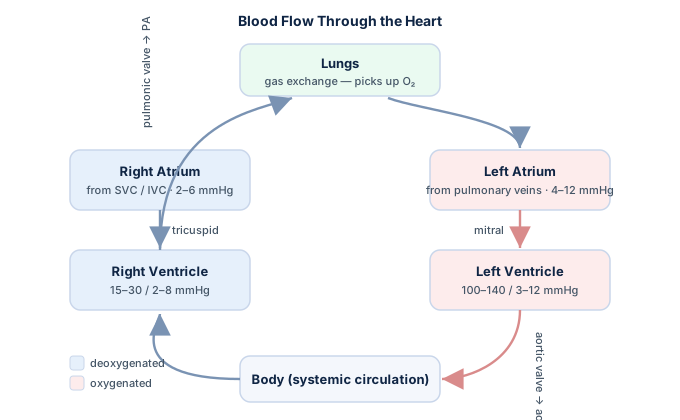
By shrinking preload and afterload, nitroglycerin cuts the heart's oxygen demand. At the same time, coronary dilation improves oxygen supply. Reducing demand while boosting supply is exactly the balance a starving myocardium needs, and it is why the drug relieves ischemic pain so reliably. The concept of afterload here is the same one that governs systemic vascular resistance in the cath lab — nitroglycerin is, in essence, a controlled way to nudge that resistance downward.
Clinical uses and indications
Nitroglycerin's fast onset and clean, short-lived action make it a versatile tool. Its uses span from the outpatient pocket tablet to the intensive-care infusion pump.
| Indication | Typical role of nitroglycerin |
|---|---|
| Acute angina attack | Sublingual tablet or spray for rapid relief of chest pain; the classic "rescue" use. |
| Stable angina prophylaxis | Taken just before exertion, or long-acting nitrate patches for ongoing prevention. |
| Acute coronary syndrome / unstable angina | IV infusion, titrated to relieve pain and control blood pressure. |
| Coronary vasospasm (Prinzmetal angina) | Directly reverses spasm of the coronary arteries. |
| Acute heart failure / pulmonary edema | Reduces preload and afterload, easing congestion and breathlessness. |
| Hypertensive emergencies | IV infusion to lower blood pressure in a controlled way. |
| Cath lab (intracoronary) | Injected directly into a coronary artery to relieve spasm or assess vessel size before stenting. |
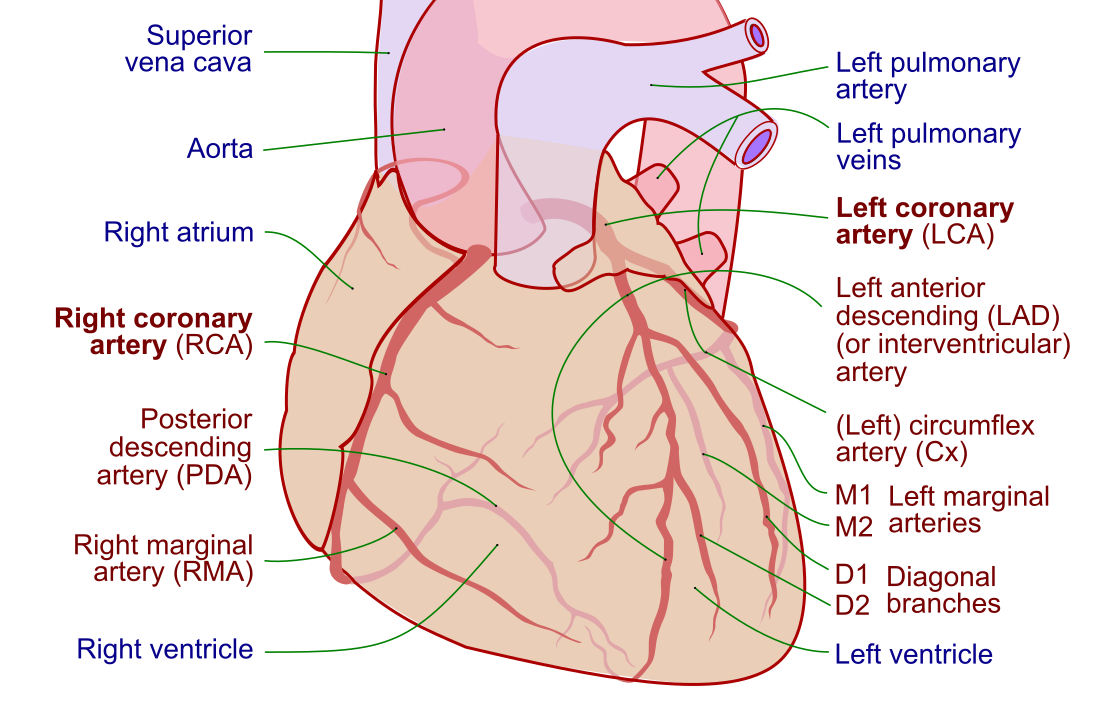
In the catheterization laboratory specifically, intracoronary nitroglycerin is a routine tool. Operators use it to relieve catheter-induced or disease-related spasm and to dilate a vessel to its true diameter before choosing a stent. Understanding this ties directly into the anatomy you must know — reviewing the coronary artery anatomy makes it clear why relieving spasm in a specific vessel maps to a specific region of myocardium at risk.
Nitroglycerin is a symptomatic and hemodynamic treatment: it relieves pain and unloads the heart, but it does not dissolve clots or reopen a blocked artery the way reperfusion does. When a coronary artery is truly occluded, definitive treatment is mechanical or pharmacologic reperfusion, a topic explored in our comparison of PCI versus diagnostic cardiac catheterization.
Nitroglycerin and angina: relieving ischemic chest pain
Angina is the pain of a heart muscle that is not getting enough oxygen — usually because coronary artery disease has narrowed the vessels feeding it. When demand outstrips supply, the myocardium becomes ischemic and signals distress as a crushing, squeezing, or pressure-like chest discomfort that may radiate to the arm, jaw, or back.
Nitroglycerin attacks this mismatch from both sides. By pooling blood in dilated veins, it shrinks the volume the heart must handle and lowers wall tension — the biggest driver of oxygen consumption. By dilating coronary arteries and relieving spasm, it improves the flow of oxygenated blood to the muscle. The result, in a classic anginal attack, is relief within one to three minutes.
There is an important diagnostic caveat that current guidance stresses: relief of chest pain with nitroglycerin does not confirm the pain is cardiac. Esophageal spasm and other conditions can also ease with nitrates, and dangerous cardiac pain sometimes fails to respond. So the old teaching that "if nitro helps, it's the heart" is unreliable and should not steer diagnosis. The distinction between stable and unstable presentations, and how ischemia is confirmed, is central to understanding coronary artery disease and its more acute cousin, myocardial infarction.
The one caution in a heart attack: inferior/right-ventricular MI
Nitroglycerin is widely used in acute coronary syndromes, but there is a specific situation where it can be dangerous: a right-ventricular (RV) infarction, which typically accompanies an inferior wall myocardial infarction.
Here is the problem. A failing right ventricle depends heavily on adequate preload — it needs that venous return to push blood forward into the lungs. Nitroglycerin's signature effect is to drop preload. Give it to a preload-dependent RV infarct and blood pressure can collapse precipitously, causing profound hypotension. For this reason, current guidance urges caution or avoidance of nitrates in suspected RV involvement, and in any patient who is already hypotensive.
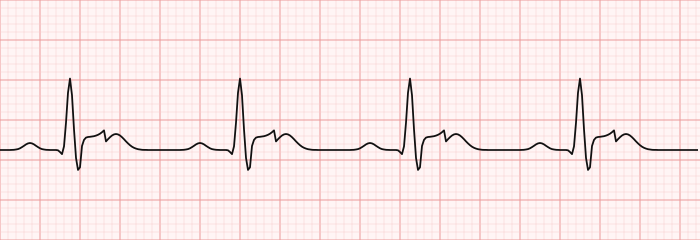
This is where ECG skills become lifesaving. An inferior STEMI (ST elevation in leads II, III, and aVF) should always prompt a look for right-ventricular involvement, often with right-sided leads. Sharpening your STEMI ECG interpretation is directly relevant to safe nitrate use, and the broader skill of reading the 12-lead ECG underpins every decision at the bedside.
The takeaway is not "never give nitroglycerin in a heart attack" — it remains valuable for pain and blood pressure control in many presentations. The takeaway is that it demands a blood pressure check and an ECG-informed awareness of RV involvement first.
Contraindications: the PDE5 inhibitor rule and others
Some contraindications to nitroglycerin are absolute, and the most heavily tested one on any cardiology exam involves phosphodiesterase type 5 (PDE5) inhibitors — the erectile-dysfunction and pulmonary-hypertension drugs sildenafil (Viagra), tadalafil (Cialis), and vardenafil.
The interaction is a mechanistic trap. Recall that nitroglycerin works by raising cGMP to relax vessels. PDE5 inhibitors work by blocking the enzyme that breaks cGMP down. Combine the two and cGMP accumulates unchecked — producing profound, refractory, potentially fatal hypotension. This combination is absolutely contraindicated.
Other important contraindications and cautions include:
- Hypotension — nitroglycerin lowers blood pressure and can push an already-low pressure to dangerous levels.
- Right-ventricular / inferior MI — the preload-dependence problem described above.
- Severe aortic stenosis and hypertrophic obstructive cardiomyopathy — in a fixed-outflow obstruction, dropping preload can dangerously reduce cardiac output. This links to the physiology behind aortic valve area and outflow obstruction.
- Elevated intracranial pressure and severe anemia — traditional cautions.
- Suspected cardiac tamponade or other obstructive states — where output is critically preload-dependent, echoing the physiology of cardiac tamponade hemodynamics.
This is educational material, not medical advice — real prescribing decisions rest with the treating clinician, who weighs each of these factors against the clinical picture in front of them.
Side effects and the problem of nitrate tolerance
Because nitroglycerin's effects flow from vasodilation, so do its side effects. The most common are direct, predictable consequences of opening up blood vessels:
- Headache — the most frequent complaint, caused by dilation of cerebral vessels. It often eases with continued use but can be significant early on.
- Hypotension and dizziness — from the blood-pressure-lowering effect; patients should sit or lie down when taking a sublingual dose.
- Reflex tachycardia — a faster heart rate as the body compensates for the drop in pressure.
- Flushing and lightheadedness — from cutaneous vasodilation.
- Syncope — fainting, especially if the patient is standing or volume-depleted.
The more subtle and clinically important challenge is nitrate tolerance. When nitroglycerin is given continuously — a 24-hour patch worn around the clock, or a prolonged IV infusion — its effect fades over hours to days. The vessels stop responding. The mechanisms are still being worked out but involve depletion of the enzymes that liberate nitric oxide and a buildup of oxidative stress within the vessel wall.
Continuous IV nitroglycerin in the ICU carries the same caveat: escalating the drip to overcome fading effect can create a spiral of tolerance. Recognizing when a rising nitroglycerin requirement reflects tolerance rather than worsening disease is part of the clinical judgment that separates rote dosing from true understanding.
Forms, routes, and practical administration
Few drugs come in as many forms as nitroglycerin, and each route suits a different clinical need. Choosing the right one is largely about how fast you need the effect and how long you want it to last.
| Form / route | Onset | Typical use |
|---|---|---|
| Sublingual tablet | 1–3 minutes | Acute angina attack, rapid rescue. |
| Sublingual/oral spray | 1–3 minutes | Same as tablet; longer shelf life, easier for arthritic hands. |
| Transdermal patch | 30–60 minutes | Long-acting angina prophylaxis (with a nitrate-free interval). |
| Topical ointment | 15–30 minutes | Inpatient angina control; dose adjustable. |
| Intravenous infusion | Immediate | ACS, acute heart failure, hypertensive emergency; titratable. |
| Intracoronary | Seconds | Cath lab: relieve spasm, size a vessel. |
A few practical points come up constantly in training. Sublingual tablets are absorbed through the mucous membrane under the tongue, bypassing the liver's first-pass metabolism that would otherwise destroy most of an oral dose — this is why nitroglycerin is not given as a simple swallowed pill for acute relief. Tablets are also notoriously sensitive to light, heat, and moisture; a bottle left open or carried loose can lose potency, which is why patients are taught to store it properly and replace it periodically. A faint tingling under the tongue is often a sign the tablet is still active.
Intravenous nitroglycerin is adsorbed by ordinary PVC tubing, so special non-absorbent tubing and glass or specific plastic containers are used to deliver an accurate dose. These bedside details are exactly the kind of practical knowledge that distinguishes a competent cardiovascular technologist and the broader cath-lab team, and they surface regularly in scenario questions.
Nitroglycerin on the RCIS exam: how to study it
Nitroglycerin is a reliably high-yield pharmacology topic on the Registered Cardiovascular Invasive Specialist exam. Questions tend to cluster around a handful of predictable themes, so targeted study pays off.
- Mechanism: nitric oxide → cGMP → smooth muscle relaxation → venodilation → reduced preload. Know the cascade in order.
- The PDE5 contraindication: the sildenafil/tadalafil interaction and its 24/48-hour windows. Expect this to be tested.
- The RV/inferior MI caution: why a preload-dependent right ventricle makes nitrates risky.
- Nitrate tolerance: the need for a daily nitrate-free interval.
- Side effects: headache as the classic complaint; hypotension and reflex tachycardia.
To make these stick, connect the drug to the physiology rather than memorizing facts in isolation. Nitroglycerin's whole story is a lesson in preload and afterload, so studying it alongside the RCIS hemodynamics guide reinforces both. Because ischemia and its ECG signatures decide when nitrates are safe, keep your rhythm and infarct recognition sharp with focused RCIS ECG practice questions. And to test pharmacology directly under exam conditions, work through scenario-based hemodynamics practice questions where drug effects meet real numbers.
A sensible study sequence: learn the mechanism, attach the contraindications and cautions to that mechanism, then drill exam-style questions until you can reason from physiology to the right answer without hesitation. That path — understand, connect, apply — is how the strongest candidates master cardiac pharmacology.
Key takeaways
- Nitroglycerin is a vasodilator that becomes nitric oxide, raises cGMP, and relaxes vascular smooth muscle — dilating veins first.
- Its main benefit is preload reduction: less venous return means a smaller, less oxygen-hungry heart, which relieves angina.
- Uses span acute angina, stable angina prophylaxis, acute coronary syndromes, heart failure, hypertensive emergencies, and intracoronary spasm relief.
- Absolute contraindication with PDE5 inhibitors: avoid within 24 hours of sildenafil/vardenafil or 48 hours of tadalafil — the combination causes life-threatening hypotension.
- Use caution in right-ventricular/inferior MI and any hypotensive or preload-dependent state such as severe aortic stenosis.
- Most common side effect is headache; hypotension, dizziness, and reflex tachycardia also occur.
- Nitrate tolerance develops with continuous use — a daily 10–12 hour nitrate-free interval preserves effectiveness.
- Educational only: this is study material, not medical advice; management decisions belong to the treating clinician.
Practise cardiovascular drugs
Test nitrates, antiplatelets, and cath-lab medications.
Practise Pharmacology →Frequently asked questions
How does nitroglycerin work to relieve chest pain?
Nitroglycerin is converted into nitric oxide inside blood vessel walls, which raises cyclic GMP and relaxes vascular smooth muscle. It dilates veins first, which reduces the amount of blood returning to the heart (preload). A smaller, less stretched ventricle needs less oxygen, and dilated coronary arteries deliver more — this combination of lower demand and higher supply relieves the ischemic pain of angina, usually within one to three minutes.
Why can't you take nitroglycerin with Viagra?
Viagra (sildenafil) and similar PDE5 inhibitors block the enzyme that breaks down cyclic GMP, while nitroglycerin increases cyclic GMP. Taken together, cGMP accumulates unchecked, causing severe, potentially fatal low blood pressure. Nitroglycerin should not be given within 24 hours of sildenafil or vardenafil, or within 48 hours of the longer-acting tadalafil (Cialis). Always ask about ED medication use before giving nitrates.
What is the most common side effect of nitroglycerin?
Headache is the most common side effect, caused by dilation of blood vessels in the head. It often improves with continued use. Other frequent effects include low blood pressure, dizziness, flushing, and a reflex increase in heart rate. Patients are usually advised to sit or lie down when taking a sublingual dose to avoid fainting.
What is nitrate tolerance and how is it prevented?
Nitrate tolerance is the loss of nitroglycerin's effect when it is used continuously, such as with a 24-hour patch or a prolonged IV infusion — the vessels stop responding over hours to days. It is prevented by building in a daily nitrate-free interval of about 10 to 12 hours, for example removing a skin patch overnight, which lets the blood vessels resensitize.
When should nitroglycerin be avoided in a heart attack?
Nitroglycerin should be used with caution or avoided in a suspected right-ventricular infarction, which often accompanies an inferior-wall (leads II, III, aVF) STEMI. A right ventricle in this situation depends on adequate preload to function, and nitroglycerin's preload-lowering effect can cause a dangerous drop in blood pressure. It should also be avoided in any patient who is already hypotensive.
Does relief with nitroglycerin prove the chest pain is cardiac?
No. This is a common misconception. Nitroglycerin can relieve non-cardiac pain such as esophageal spasm, and genuinely dangerous cardiac pain sometimes fails to respond. Current guidance is clear that a response to nitroglycerin should not be used to confirm or rule out a cardiac cause — diagnosis relies on the ECG, biomarkers, and the overall clinical picture.
Why is nitroglycerin given under the tongue instead of swallowed?
Sublingual (under-the-tongue) administration lets nitroglycerin absorb directly into the bloodstream through the mucous membrane, bypassing the liver's first-pass metabolism. If swallowed as a regular pill, the liver would break down most of the dose before it could act. Sublingual tablets and sprays also work fast — within one to three minutes — which is what you need for an acute angina attack.
How does nitroglycerin reduce the heart's workload?
Nitroglycerin lowers the heart's oxygen demand in two ways. Its dominant effect is venodilation, which reduces preload — the volume of blood returning to the heart — so the ventricle does less work with each beat. At higher doses it also dilates arteries, lowering afterload, the resistance the left ventricle pumps against. Less preload and afterload mean a smaller, less stressed heart that needs less oxygen.
Is nitroglycerin used in the cardiac cath lab?
Yes. Intracoronary nitroglycerin is routinely injected directly into a coronary artery during catheterization to relieve spasm — including spasm triggered by the catheter itself — and to dilate a vessel to its true size before an operator chooses a stent. Intravenous nitroglycerin is also used to control blood pressure and chest pain during acute coronary procedures.
Sources & further reading
- Cardiovascular Credentialing International (CCI)
- American College of Cardiology
- American Heart Association
- MedlinePlus (U.S. National Library of Medicine)
External links are provided for reference; always confirm current details with the official source.