Iodinated Contrast Media: Uses, Side Effects & Contrast-Induced Nephropathy
Iodinated contrast media are the injectable dyes that make coronary arteries, ventricles, and grafts light up under X-ray in the cath lab. They are remarkably safe in routine use — but understanding their side effects, allergy premedication, and kidney risks is core knowledge for anyone working around angiography.
What is iodinated contrast media?
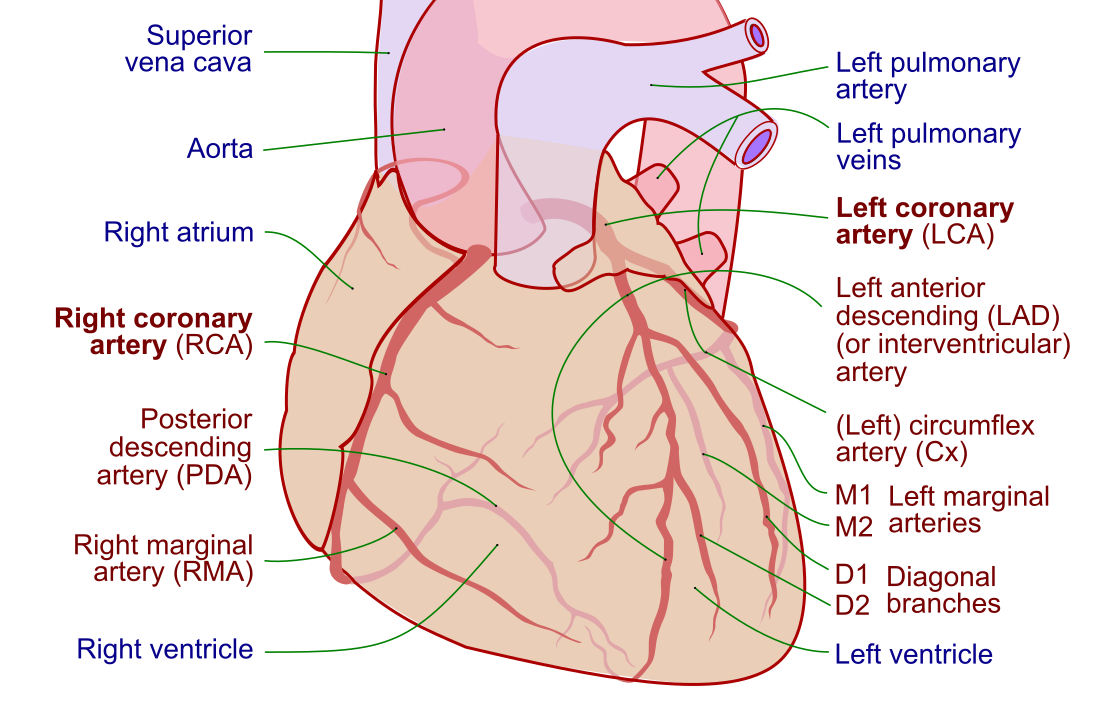
Iodinated contrast media are X-ray dyes built around the element iodine, which is dense enough to absorb X-rays and cast a bright shadow on fluoroscopy and CT. When a small volume is injected directly into a coronary artery, a graft, or the left ventricle, it briefly fills the lumen and outlines its shape — the difference between an invisible column of blood and a crisp, navigable roadmap of the vessel. Without contrast, there is no angiogram.
The chemistry matters more than it first appears. Every modern coronary contrast agent is a benzene ring carrying three iodine atoms, dressed up with side chains that make it water-soluble and, ideally, gentle on the body. The two properties clinicians care about most are osmolality (how concentrated the solution is relative to blood) and ionicity (whether the molecule dissociates into charged particles). Older high-osmolar ionic agents were far more likely to trigger heat, pain, nausea, and reactions. The agents used in cath labs today are almost all low-osmolar or iso-osmolar nonionic compounds, which the body tolerates much better.
Contrast is injected in tiny, targeted amounts for a diagnostic coronary study — often just a few milliliters per injection — and cleared almost entirely by the kidneys within a day. Understanding how it behaves is inseparable from understanding the vessels it fills, so a solid grounding in coronary artery anatomy and the broader cardiac anatomy fundamentals pays off every time you watch a dye run.
This article is educational and written for students and clinicians preparing for exams such as the RCIS — it is not medical advice or a dosing protocol. Always follow your institution's current policies and the manufacturer's labeling.
Types of contrast: osmolality and ionicity
If you only remember one classification scheme, make it osmolality, because it predicts tolerability. Blood sits at roughly 290 mOsm/kg. The further a contrast agent departs from that number, the more it pulls water around, irritates vessels, and provokes reactions.
| Class | Osmolality | Ionicity | Typical use today |
|---|---|---|---|
| High-osmolar (HOCM) | ~1,500–2,000 mOsm/kg | Ionic | Largely abandoned for angiography |
| Low-osmolar (LOCM) | ~600–900 mOsm/kg | Nonionic (mostly) | Workhorse of the cath lab |
| Iso-osmolar (IOCM) | ~290 mOsm/kg | Nonionic dimer | High-risk kidneys, large-volume studies |
The historical arc is worth knowing for exams. The first agents were high-osmolar ionic monomers — effective imaging agents but harsh, with a real burden of heat, discomfort, and reactions. The move to low-osmolar nonionic agents in the 1980s and 1990s dramatically cut reaction rates and made them the default. Iso-osmolar agents (nonionic dimers) go one step further, matching blood osmolality, and are often reserved for patients at higher risk of kidney injury or for procedures requiring large contrast volumes.
Nonionic matters because ionic agents dissociate into charged particles, which raises the effective particle count and adds to osmotic load and to potential effects on cardiac electrical activity. The practical takeaway: the contrast you draw up in a modern cath lab is almost certainly low- or iso-osmolar and nonionic, and that choice is the single biggest reason serious reactions have become uncommon.
How contrast behaves in the body
Once injected, iodinated contrast stays in the bloodstream and the extracellular space — it does not enter cells and is not metabolized. Its whole job is to be visible and then leave. The kidneys handle clearance almost exclusively through glomerular filtration, and in a person with normal renal function the vast majority is gone within 24 hours. This is exactly why kidney function sits at the center of contrast safety planning.
Physiologically, a bolus of hyperosmolar dye briefly pulls fluid into the vascular space, causing a transient rise in circulating volume and a fleeting sense of warmth or flushing that many patients describe as a whole-body heat wave. In the coronary circulation, a contrast injection momentarily displaces oxygenated blood, which can cause a short run of chest discomfort, a slowed heart rate, or transient ECG changes — usually harmless and self-limited as the dye washes through. Watching the hemodynamic tracing during injections is a skill in itself, and it builds on the core hemodynamics principles every cath lab tech relies on.
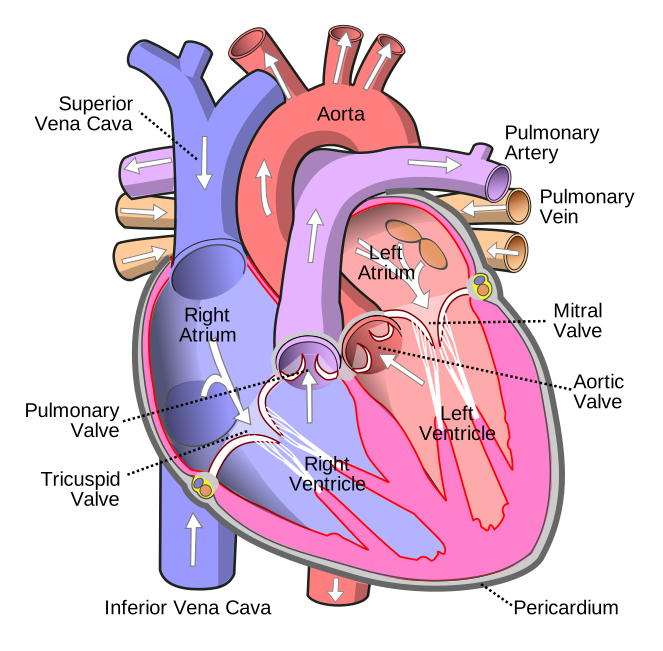
Because contrast transiently changes intravascular volume and can affect the myocardium, an eye on the rhythm during injection is routine. Bradycardia and brief conduction changes are recognized, if uncommon, effects — one reason familiarity with ECG interpretation and confident rhythm interpretation is part of the cath lab skill set. Left ventricular injections (ventriculography) deliver a larger, faster bolus and are the classic moment to warn a patient about that flush of warmth.
Side effects and adverse reactions
The side effects of iodinated contrast run a spectrum from trivial and expected to rare and life-threatening. Framing them by severity is the most useful way to hold them in your head.
Physiologic (non-allergic) effects are common, predictable, and dose-related. The warm flush, a metallic taste, transient nausea, and a sensation of needing to urinate are all normal responses to the osmotic load, not an allergy. They pass in seconds to minutes and require reassurance, not treatment.
Hypersensitivity (allergic-like) reactions are the ones that demand vigilance. Confusingly, these reactions are usually not true IgE-mediated allergies — they are anaphylactoid, meaning they look and behave like anaphylaxis but do not require prior sensitization. That distinction matters clinically but the emergency response is the same. They are graded by severity:
- Mild: limited hives, itching, mild flushing, nasal congestion. Often self-limited; treated with observation and antihistamines if needed.
- Moderate: more widespread hives, facial swelling, wheezing, or a drop in blood pressure that responds to treatment.
- Severe: laryngeal edema, profound bronchospasm, circulatory collapse, or full anaphylaxis. This is an airway-and-epinephrine emergency.
| Reaction type | Examples | General response |
|---|---|---|
| Physiologic | Warmth, metallic taste, nausea, flushing | Reassurance; usually none needed |
| Mild allergic-like | Scattered hives, itching, nasal congestion | Observe; antihistamine if bothersome |
| Moderate allergic-like | Diffuse hives, facial/laryngeal swelling, wheeze, hypotension | Treat promptly; may need epinephrine |
| Severe allergic-like | Anaphylaxis, airway compromise, shock | Epinephrine, airway support, emergency team |
Severe reactions are genuinely rare with modern low-osmolar agents — on the order of a fraction of a percent — but because they can escalate fast, every contrast injection happens in a setting stocked and staffed to treat anaphylaxis. Delayed skin reactions (a rash appearing hours to days later) also occur and are usually mild and self-limited. A rare, serious delayed reaction to be aware of on exams is contrast-induced thyroid storm in patients with untreated hyperthyroidism, and iodine's effect on the thyroid means contrast is used cautiously in that setting.
Contrast allergy and premedication
Contrast allergy premedication is one of the highest-yield practical topics in this whole area, and it hinges on a piece of history: a documented previous reaction to iodinated contrast is the strongest predictor of another one. Patients with a prior moderate or severe reaction carry a meaningfully higher risk on re-exposure, and this is where planned premedication earns its place.
The standard strategy pairs a corticosteroid — to blunt the inflammatory cascade — with an antihistamine given before the procedure. The corticosteroid needs time to work, which is why classic elective regimens start it well ahead of the injection. A widely taught elective approach gives oral prednisone at intervals before the study (commonly around 13, 7, and 1 hours beforehand) with an antihistamine roughly an hour before. When a study is urgent and there is no time for a 13-hour lead-in, accelerated intravenous regimens using a fast-acting steroid such as hydrocortisone or methylprednisolone plus an antihistamine are used instead — with the important caveat that emergency regimens are less proven and should never delay a truly life-saving procedure.
- Premedication is guided by a history of prior contrast reaction — not by shellfish or seafood "allergy," which is an outdated and now-discredited screening question.
- Steroids need lead time (hours) to be effective, so elective regimens are timed in advance.
- Premedication reduces but does not eliminate risk — breakthrough reactions still happen, so readiness to treat anaphylaxis is non-negotiable.
- When feasible, switching to a different low-osmolar agent is often combined with premedication in previously reactive patients.
A crucial myth to bury: the old belief that a shellfish or iodine "allergy" predicts contrast reactions. Current guidance is clear that seafood allergy does not specifically raise contrast-reaction risk beyond that of any other food allergy, and "iodine allergy" is not a real entity — iodine is an essential element in the body. Any general history of allergy or asthma modestly raises risk, but the decisive factor is a prior reaction to contrast itself.
It is also worth separating contrast hypersensitivity from other medication considerations in the lab. Antiplatelet and anticoagulant planning, sedation, and vasoactive drugs are their own topic; our overview of the cath lab medication toolkit puts contrast in the context of everything else that gets drawn up during a case.
Contrast-induced nephropathy (CIN)
Contrast-induced nephropathy — increasingly called contrast-associated acute kidney injury (CA-AKI) — is the deterioration of kidney function in the days after contrast exposure. Classically it is defined as a rise in serum creatinine (for example, a 25% relative or 0.5 mg/dL absolute increase) within 48 to 72 hours of contrast, with no other explanation. The creatinine typically peaks at three to five days and, in most patients, recovers.
An honest caveat that the field has been wrestling with: the true magnitude of contrast's independent contribution to kidney injury is debated. Much of the older literature could not separate the effect of the dye from the effect of the underlying illness, dehydration, and other nephrotoxins. Modern controlled data suggest that in many patients — especially those with only mildly reduced kidney function — the risk attributable to contrast alone is smaller than once feared. That is a reason for calibrated caution, not complacency, and certainly not a reason to withhold a life-saving angiogram.
The patients who genuinely warrant care are those with stacked risk factors:
- Pre-existing chronic kidney disease — by far the biggest driver, especially at lower eGFR.
- Diabetes, particularly with coexisting kidney disease.
- Dehydration or reduced effective circulating volume.
- Heart failure and low cardiac output states.
- Large contrast volumes and closely spaced repeat exposures.
- Concurrent nephrotoxic drugs and advanced age.
Because output and perfusion feed into kidney risk, patients with poor pump function or shock physiology are especially vulnerable — which ties this topic back to a working knowledge of cardiac output and the hemodynamics of shock. A struggling circulation and a contrast load are a combination worth respecting.
Reducing kidney risk in the cath lab
The good news is that the highest-value protective measures are simple, cheap, and well supported. The cornerstone is intravenous hydration — most commonly isotonic saline given before and after the procedure in at-risk patients. Good volume status maintains renal blood flow and dilutes the contrast delivered to the kidneys, and it remains the single most evidence-backed intervention.
The rest of the strategy is about minimizing exposure and stacking sensible habits:
- Use the smallest effective contrast volume. Contrast dose relative to kidney function is a strong predictor of injury, and disciplined injection technique matters.
- Choose low- or iso-osmolar agents in high-risk kidneys.
- Hold nephrotoxins where feasible and correct dehydration before elective cases.
- Space out contrast studies when a patient needs more than one, giving the kidneys time to recover.
- Identify risk in advance by checking kidney function (eGFR) and screening for the risk factors above before the case.
Some once-popular measures have faded. Routine oral N-acetylcysteine and sodium bicarbonate infusions were widely used but have not held up in large trials and are no longer broadly recommended for prevention. This is a good example of contrast safety being an evolving evidence base — practice has shifted toward the fundamentals of hydration and dose minimization rather than adjunct drugs.
For patients on metformin, the concern is not that contrast reacts with the drug but that if a patient does develop acute kidney injury, retained metformin can rarely contribute to lactic acidosis. Current guidance individualizes whether to hold metformin around contrast based on kidney function rather than stopping it reflexively in everyone. As always, follow local protocol.
Safe practice around contrast injection
Beyond allergy and kidney concerns, day-to-day contrast safety comes down to a handful of disciplined habits that protect patients from mechanical and procedural harm. Careful preparation turns a potentially eventful injection into a routine one.
Screening before the case is step one: ask specifically about prior contrast reactions, review kidney function, check for uncontrolled hyperthyroidism, and confirm the plan for at-risk patients. This is also the moment to confirm premedication was actually given on schedule for patients who needed it.
Extravasation — contrast leaking out of the vessel into surrounding tissue, usually with a peripheral IV rather than an intra-arterial catheter — causes pain and swelling and, in severe cases, tissue injury. Good IV placement, watching the site during power injections, and stopping at the first sign of trouble prevent most harm. Air embolism is a rare but serious hazard of any injection into the vascular system, which is why meticulous flushing and de-airing of lines and manifolds is drilled into cath lab practice.
Finally, the whole procedure lives inside the larger workflow of the catheterization lab — sterile technique, hemodynamic monitoring, radiation safety, and emergency preparedness. If you want the wider picture of where contrast injection fits, our primer on what happens in a cardiac cath lab and the comparison of diagnostic catheterization versus PCI set the scene, while broadening your hemodynamics practice questions sharpens the monitoring instincts that keep contrast cases safe.
Key takeaways
- Iodinated contrast media are iodine-based X-ray dyes that outline coronary arteries and chambers; modern agents are almost all low- or iso-osmolar and nonionic, which is why serious reactions are now uncommon.
- Osmolality is the property that tracks with tolerability: iso-osmolar is gentlest, then low-osmolar, then the largely abandoned high-osmolar agents.
- Side effects range from harmless physiologic warmth and metallic taste to rare anaphylactoid reactions; the allergic-like reactions are usually not true IgE allergies but are treated like anaphylaxis.
- Contrast allergy premedication pairs a corticosteroid (which needs hours of lead time) with an antihistamine, driven by a history of prior contrast reaction — not by shellfish or "iodine" allergy, both discredited predictors.
- Contrast-induced nephropathy is a rise in creatinine after exposure; risk is concentrated in chronic kidney disease, diabetes, dehydration, and large contrast loads, though contrast's independent contribution is smaller than once believed.
- Kidney protection rests on IV isotonic hydration and minimizing contrast volume; older adjuncts like N-acetylcysteine and bicarbonate are no longer broadly recommended.
- This content is educational and not medical advice; always follow current guidelines, manufacturer labeling, and your institution's protocols.
Estimate a safe contrast dose
Use the Cigarroa formula to estimate a maximum contrast volume.
Open the Contrast Calculator →Frequently asked questions
What is iodinated contrast media used for?
Iodinated contrast media are iodine-based dyes injected during angiography and CT to make blood vessels and chambers visible on X-ray. In the cath lab, small injections into the coronary arteries, bypass grafts, or left ventricle briefly fill the lumen so the anatomy shows up clearly on fluoroscopy, turning an invisible column of blood into a detailed roadmap for diagnosis and treatment.
What are the common side effects of iodinated contrast?
Most side effects are mild and expected: a warm flushing sensation, a metallic taste, transient nausea, and a brief feeling of needing to urinate. These are physiologic responses to the dye's osmotic load, not an allergy, and pass within seconds to minutes. Allergic-like (anaphylactoid) reactions such as hives, itching, or, rarely, more serious swelling and low blood pressure are less common but the reason contrast is always given where anaphylaxis can be treated.
Can you be allergic to contrast dye?
You can have an allergic-like reaction to iodinated contrast, but most of these are anaphylactoid rather than true IgE-mediated allergies, meaning they mimic anaphylaxis without prior sensitization. The strongest predictor of a future reaction is a previous reaction to contrast itself. Notably, shellfish allergy and so-called iodine allergy do not specifically predict contrast reactions and are no longer used to screen patients.
What is contrast allergy premedication?
Premedication is a planned regimen given to patients with a prior contrast reaction to lower the chance of another one. It combines a corticosteroid, such as prednisone, started hours in advance so it has time to work, with an antihistamine given closer to the procedure. Accelerated intravenous versions exist for urgent cases, but premedication reduces rather than eliminates risk, so staff remain ready to treat a reaction.
Does a shellfish or iodine allergy mean I cannot have contrast?
No. Current guidance is clear that shellfish allergy does not specifically raise the risk of a contrast reaction beyond that of any other food allergy, and iodine allergy is not a real entity because iodine is an essential element in the body. The relevant history is a previous reaction to iodinated contrast, not seafood. This old screening question has been discredited.
What is contrast-induced nephropathy?
Contrast-induced nephropathy, now often called contrast-associated acute kidney injury, is a decline in kidney function in the days after contrast exposure, typically defined as a rise in serum creatinine within 48 to 72 hours with no other cause. It usually peaks at three to five days and often recovers. Risk is concentrated in patients with pre-existing kidney disease, diabetes, dehydration, or large contrast loads.
How can the risk of kidney injury from contrast be reduced?
The most evidence-supported step is intravenous isotonic fluid hydration before and after the procedure in at-risk patients, which maintains kidney blood flow and dilutes the contrast. Using the smallest effective contrast volume, choosing low- or iso-osmolar agents, holding nephrotoxic drugs when feasible, and spacing out repeat studies all help. Older adjuncts like N-acetylcysteine and sodium bicarbonate are no longer broadly recommended.
Do I need to stop metformin before getting contrast?
Not always. Contrast does not react with metformin directly; the concern is that if a patient develops acute kidney injury after contrast, retained metformin can rarely contribute to lactic acidosis. Current guidance individualizes the decision based on kidney function rather than stopping metformin reflexively in everyone. Follow your local protocol and your clinician's instructions.
Is iodinated contrast safe?
For most people, yes. Modern low- and iso-osmolar nonionic agents are well tolerated, and serious reactions are rare. The main safety considerations are allergic-like reactions, which are managed with premedication in higher-risk patients and immediate treatment readiness, and kidney effects, which are minimized with hydration and careful dosing. As always, this is educational information, not medical advice.
Sources & further reading
- Cardiovascular Credentialing International (CCI)
- American College of Cardiology
- American Heart Association
- MedlinePlus (U.S. National Library of Medicine)
External links are provided for reference; always confirm current details with the official source.