Cardiac Pressure Waveform Poster
Every cath-lab pressure tracing on one visual reference — normal chambers first, then the pathology patterns the RCIS loves to test. Print it for the wall or your notes.
Print or share this poster
✓ Free to use in your class, blog, or study group — please credit us with a link:
<a href="https://rcispracticetest.com/cheat-sheets/pressure-waveform-poster.html">Cardiac Pressure Waveform Poster — RCIS Practice Test</a>Educational use only — not medical advice. Values are standard adult references; always confirm against current guidelines and your institution’s protocols.
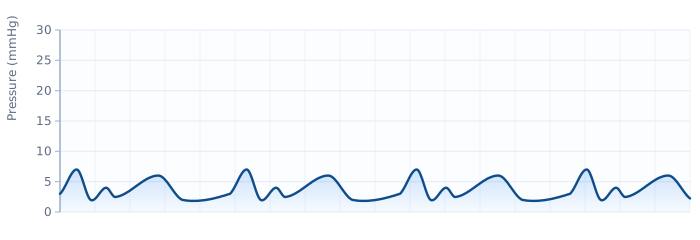
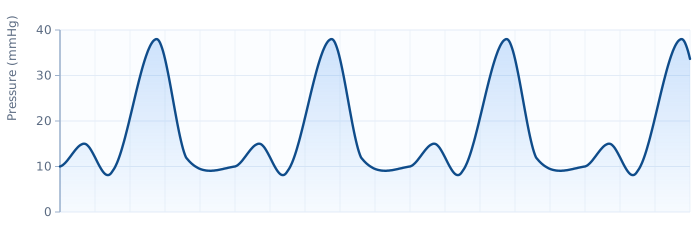
The a, c, and v waves
| Wave / descent | Cause |
|---|---|
| a wave | Atrial contraction |
| c wave | Tricuspid/mitral valve bulging in early systole |
| v wave | Atrial filling against a closed AV valve |
| x descent | Atrial relaxation |
| y descent | Rapid ventricular filling after AV valve opens |
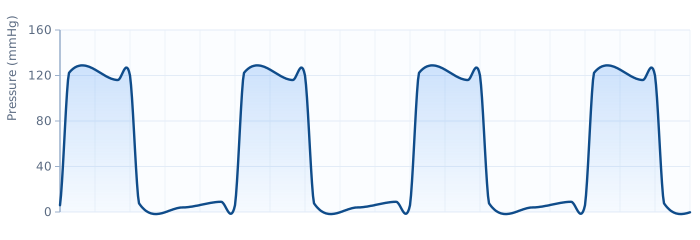
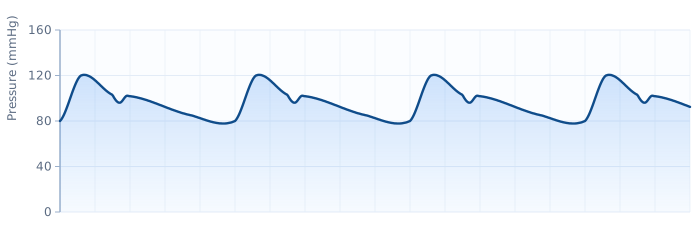
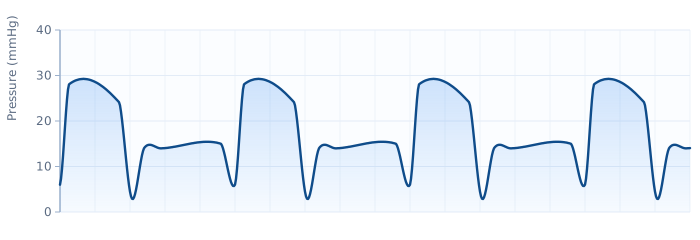
Normal waveforms (in catheter-advance order)
Pathologic patterns to recognize
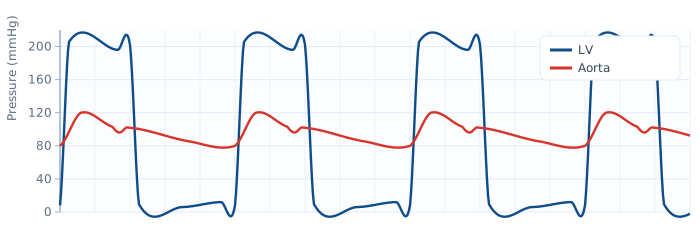
Practise identifying these live in the pressure-waveform question bank, and read the full hemodynamics guide.
Train your waveform eye
Free pressure-waveform identification questions with explanations.
Practise Waveforms →Frequently asked questions
What does a giant v wave on the wedge tracing mean?
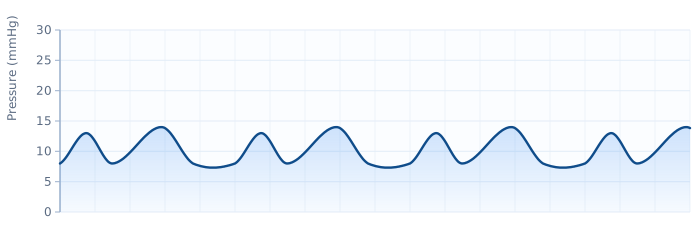
A large v wave on the PCWP tracing is characteristic of acute mitral regurgitation, where regurgitant flow fills a non-compliant left atrium during systole.
What is the square-root sign?
A diastolic dip-and-plateau ('square-root sign') in the ventricular tracing suggests constrictive pericarditis or a restrictive process with equalized diastolic pressures.
How do you tell the PA from the RV tracing?
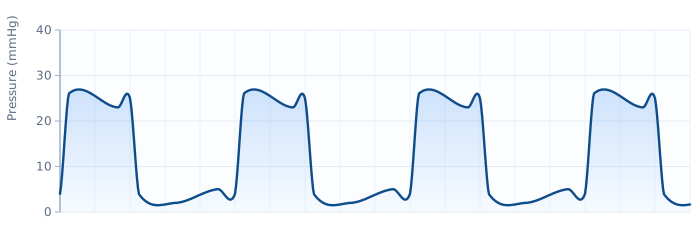
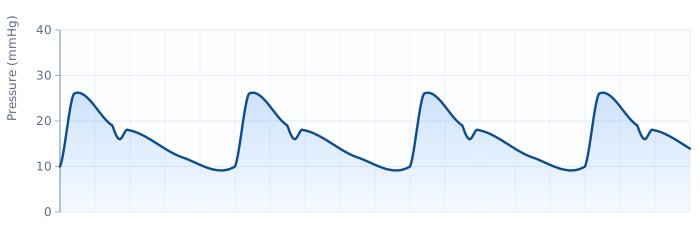
The pulmonary artery has a higher diastolic pressure (with a dicrotic notch), whereas the right ventricle's diastolic pressure falls toward zero.
Can I print this waveform poster?
Yes — use the 'Print / Save as PDF' button at the top. It prints the full set of labeled tracings.
Sources & further reading
- Cardiovascular Credentialing International (CCI)
- American College of Cardiology
- American Heart Association
- MedlinePlus (U.S. National Library of Medicine)
External links are provided for reference; always confirm current details with the official source.